What to Study to Become a Pilot in 2026
Jul 17, 2026
Wondering what to study for becoming a pilot? Whether you're dreaming of soaring the skies professionally or starting your flying career, the right education and training are crucial.
Discover the essential subjects, certifications, and skills you need to launch your pilot journey successfully in 2026 and beyond.
Introduction: What You Need to Study to Become a Pilot
If you are asking what to study for becoming pilot in 2026, the short answer is: Maths, physics, English, aviation theory, flight training, and exam preparation. If you're looking for a complete guide on How to become a pilot, understanding what to study is one of the first and most important steps in the journey.
Pursuing a career as a pilot involves training, certification and education, whether your goal is commercial pilot training, a regional airline pilot job, or a long-term career as a commercial airline pilot.
You should plan to study:
-
Core subjects: mathematics, physics, English and meteorology
-
Aviation theory: aerodynamics, navigation, aircraft systems, weather, air law and regulations
-
Practical flying: handling an aircraft, procedures, emergencies and flight conditions
-
Testing: the FAA knowledge test, knowledge test prep, and the FAA practical test
This guide focuses on the FAA route in 2026, because the Federal Aviation Administration sets regulations governing pilot conduct and training in the U.S. It also touches on GCSEs, a levels, college degree options, and the qualifications that help students become a pilot in the aviation industry.
School Subjects to Study Before Flight Training
For school students, the best preparation is not exotic. It is a strong base in the core subjects you already study.
-
Mathematics matters because pilots use math for calculations related to aircraft performance, navigation and fuel management. Flight training includes the development of mental math capabilities for estimations, and building quick mental estimations is important to cross-check aircraft instruments.
-
Physics is useful because understanding principles of motion, energy and matter is essential for aircraft operation. A strong background in math and physics is beneficial for flight training.
-
English is essential because English language proficiency is essential for pilot communications. Strong communication skills are crucial for communicating with air traffic control, crew and passengers.
-
Meteorology is important because understanding weather conditions is essential for safe flight planning.
In the UK, many programs expect at least 5 GCSEs, including Maths, English and a Science. U.S. flight schools usually expect a high-school diploma or equivalent. Geography builds map-reading and spatial awareness, while IT helps because flight decks are heavily computerized, necessitating basic IT literacy for pilots.
Recommended A Levels and Higher-School Courses for Aspiring Pilots
A levels, AP or IB courses are useful if you want university-linked pilot training or cadet training options. Good choices include:
-
Mathematics for performance, fuel, flying hours and navigation
-
Physics for aircraft motion, forces and energy
-
English or Geography for communication, meteorology and chart work
-
Computer Science for avionics and digital flight planning
Aviation courses require knowledge in mathematics and physics, so if those subjects are hard for you, aim for passing grades and get extra support early. Some airlines require specific requirements such as Maths and Physics at A level, often in a range like AAA–CCC depending on the school or program.
A pilot aptitude test may also assess skills like hand-eye coordination, reasoning and multitasking. Balance academics with clubs, sports or leadership roles, because airlines value teamwork as much as theory.
Degrees and College Majors That Help You Become a Pilot
A college degree is not required to become a pilot under FAA rules, but earning a bachelor’s degree significantly boosts competitiveness at major airlines. Many pilots earn a bachelor's degree in aviation or related fields, especially if they want broader career goals.
Useful aviation degree options include:
-
Aviation or Aeronautical Science: Aviation or aeronautical science teaches aircraft systems, meteorology and navigation.
-
Aviation Science: Studying aviation science covers aircraft technology, aerodynamics and aviation regulations.
-
Aviation Management: A BSc aviation management with flight training from year two can support both flying and operational roles.
-
Engineering or Computer Science: Aerospace engineering offers a deep understanding of aircraft design and performance.
Here's the good news getting an accredited aviation degree can get you some super helpful credits towards your Air Transport Pilot certificate, and a four year degree can even shave time off your ATP training some programs will even qualify you for a restricted airline transport pilot certificate with fewer hours than the standard 1,500.
But, there's a trade-off all this learning comes at a price. Training costs can range from a pretty affordable £10,000 to a small fortune over £100,000, and integrated training will set you back around £80 to £90,000.
And let's not forget the cost of university courses ATPL training can be around £70,000, and type rating costs can add up to £30,000 or more on top of that.
Core Theoretical Subjects Every Pilot Must Study
Regardless of your degree, every professional pilot studies the same body of aeronautical knowledge. The FAA’s Pilot’s Handbook of Aeronautical Knowledge is a key starting point.
-
Aerodynamics and principles of flight: Understanding aerodynamics is essential for how aircraft behave in the air. You will study lift, weight, thrust, drag, stability and stalls.
-
Aircraft systems and performance: You will learn engines, electrical systems, fuel systems, flaps, propellers, turbine vs piston aircraft, weight and balance, and takeoff/landing charts.
-
Aviation weather and meteorology: Meteorology covers understanding weather patterns and safety, including clouds, fronts, storms, icing, turbulence, METARs and TAFs.
-
Navigation and flight planning: You will study VFR, IFR, GPS, VOR, fuel planning, alternates, instrument flight, charts and basic flight management concepts.
-
Regulations and airspace: Air law and regulations include the Federal Aviation Regulations, airspace classes, right-of-way rules and limits for student pilots, private pilot privileges and commercial operations.
-
Human factors: Flight physiology helps understand how altitude affects human performance, including hypoxia, fatigue and spatial disorientation.
These topics expand through ground school, ground training and each training program.
FAA Exams and Practical Flight Training You Must Prepare For
Flight training's not over till you've got the right amount of flying hours under your belt and you've passed your FAA tests. Flight training's a mix of getting in the air and listening to ground instruction both are important.
If you're learning how to start getting your pilot's license, understanding these FAA exams, flight training requirements, and certification milestones will help you prepare for every stage of the journey.
Here is what to prepare for:
-
FAA Knowledge Tests: Pilots must pass the FAA knowledge test during training. Each certificate or rating, such as private pilot license, instrument rating, commercial pilot license and ATP, has a separate computer-based exam at approved centers. FAA knowledge tests generally require 70%, while pilots must pass multiple written exams with a 75% pass mark in many ATPL/EASA routes.
-
FAA Practical Tests: The FAA practical test includes an oral exam and flight portion. You answer questions, plan a route, demonstrate maneuvers and meet Airman Certification Standards.
-
Medicals: You need a Second-Class Medical Certificate to meet physical requirements for training toward commercial privileges. Pilots must pass a Class 1 medical certificate assessment for many airline roles.
-
Flight Hours: A private pilot typically needs at least 40 flight hours in the U.S.; commercial pilot applicants normally need about 250 flight time hours. Building flight hours is necessary to reach the license requirements for pilots.
-
Documents: A student pilot certificate is required before solo flights, and an instructor endorsement is required before you fly solo.
Using a computerized logbook is pretty normal now a days and the FAA is keeping up with the times with their computer based testing. So check out FAA testing guidance before booking.
Commercial Pilot Training Path: From Discovery Flight to Airline Pilot
Most pilots start with a discovery flight: a short lesson in a real plane with an instructor. It gives early flying experience before committing money to flight schools.
A common FAA path looks like this:
|
Stage |
What you study and obtain |
|---|---|
|
Student pilot |
Medical, student pilot certificate and basic controls |
|
Private Pilot License |
The Private Pilot License (PPL) is the first step for pilots; a private pilot learns basic navigation and solo flight |
|
Instrument Rating |
Weather, procedures and instrument flight |
|
Commercial Pilot License |
The Commercial Pilot License (CPL) allows paid pilot work |
|
Multi Engine Rating |
A multi engine rating prepares you for multi engine aircraft |
|
Flight Instructor |
Many pilots work as a flight instructor to build flight hours |
|
ATP / ATPL |
Airline Transport Pilot License (ATPL) is required for captains |
A minimum of 1,500 flight hours is required for an ATPL, and most U.S. airline roles require an airline transport pilot certificate. The Airline Transport Pilot License (ATPL) requires about two years to complete in many structured routes.
A Frozen ATPL is issued after completing ATPL exams but not hours; pilots need 1,500 hours to convert a Frozen ATPL to full ATPL.
The minimum age for an unrestricted FAA ATP is 23, or 21 for some restricted ATP paths, including qualifying degree routes or military service. Professional pilot training can take 9 to 12 months, and flight training typically takes 9–12 months in accelerated programs, though time-building takes longer.
Extra-Curricular Learning and Skills That Support Pilot Studies
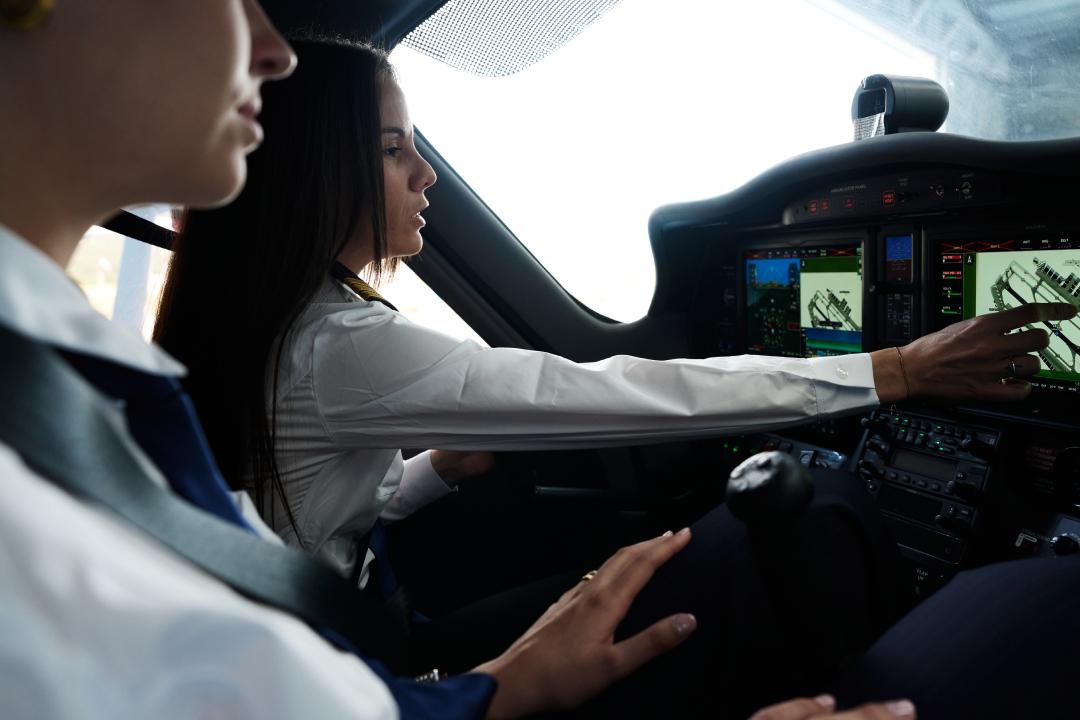
Extra activities make training pilots more confident and employable.
-
Join aviation cadets, Civil Air Patrol, Scouts or armed forces cadets to build discipline and leadership.
-
Use simulators carefully to practice checklists, radio calls and air traffic control phraseology.
-
Play team sports or join debate clubs to improve communication and cockpit teamwork.
-
Keep a study log for each knowledge test and review weak areas after every lesson.
These habits help aviation professionals stay organized. They also show airlines that you are building skills, not just chasing a pilot's license.
How Much Studying Is Required to Become a Pilot?
The estimated time depends on money, weather, aircraft availability and how often you fly. A private pilot may spend tens of hours in ground school and 40–70+ flying hours. Commercial and airline levels require much more knowledge, flight time and recurrent training.
The faster you connect theory to flying, the less you pay to relearn old lessons.
Use spaced repetition, question banks, FAA handbooks and practice planning. Study between lessons so every flight has a purpose. Successful completion of each stage depends on both knowledge and consistency.
Conclusion: Building Your Study Plan to Become a Pilot
To become a pilot in 2026, focus on subjects like science, navigation and communication, then add aviation theory, medicals, flight hours and certification. Your pathway may be school subjects and a levels, a degree, modular flight training, or an accelerated commercial route.
-
If you are in school, choose Maths, Physics and English.
-
If you are in college, compare an aviation degree with direct flight training.
-
If you are an adult learner, contact local flight schools and price different training options.
Your next step is simple: schedule a discovery flight, speak with a flight school, and check current FAA or CAA rules before you complete any enrollment. With a clear plan, the path from first lesson to transport pilot is demanding, but achievable.
