How to Become a Pilot: FAA Training Guide
Jun 30, 2026
If your dream is to fly, the process is more structured than mysterious. This guide explains how to become a pilot in the US in 2026, from your first step in a cockpit to a possible airline career.
How to Become a Pilot – Quick Answer for 2026
In FAA terms, to become a pilot usually means earning at least a private pilot certificate, which lets you act in command of a single engine aircraft under visual rules.
The Private Pilot License (PPL) is the first step in aviation; the Commercial Pilot License (CPL) allows pilots to fly professionally; and the Airline Transport Pilot License (ATPL) is required for airline captains.
Most aspiring pilots start by scheduling an Introductory Flight to experience flying, also called a discovery flight. Candidates typically need to complete structured flight training through an FAA-approved flight school, with most US pilots training under Part 61 or Part 141 with a certified flight instructor.
The basic process is
-
Take a discovery flight
-
Apply for an FAA Medical Certificate before training
-
Obtain a student pilot certificate
-
Choose a flight school
-
Complete flight training with a certified flight school
-
Pass the FAA Knowledge Test during training
-
Complete a practical test with a Designated Pilot Examiner
The same FAA process applies to recreational pilots, future pilots seeking a career, and anyone pursuing an airline pilot role.
Key Questions About Becoming a Pilot
How long does it take to become a pilot?
A Private Pilot Certificate can be completed in 3-4 months full-time, though a Private Pilot License typically takes around 7 months for many students.
Accelerated programs can take about 9–12 months, and Accelerated Flight Schools can take a student from no experience to commercial pilot in 12 to 18 months. A Commercial Pilot License can take about 2 years, or 18–24 months with 250–300 flight hours.
How much does it cost to become a pilot?
Private Pilot training often costs $12,000–$20,000 and averages 55-70 flight hours, while professional pilot training costs over $100,000 at some academies. Commercial pilot certificate plus instructor ratings often totals $55,000–$90,000, depending on aircraft, fuel, instructor rates, and training pace.
Do you need a college degree to become an airline pilot?
The FAA does not require a college degree, but many major airline employers still prefer a 4-year college degree. A college aviation program can also support Restricted ATP eligibility.
What can stop you?
FAA medical certificate denial, unmet FAA medical requirements, serious legal issues such as DUI or drug offenses, or failing the FAA knowledge test or FAA practical test can delay success. To become a pilot in the U.S., candidates must meet specific age, education, and medical requirements.
What are the age rules?
You can fly solo at 16, earn Private at 17, Commercial at 18, and the minimum age for an Airline Transport Pilot Certificate is 23 years. You must be at least 18 years old to become a pilot for many professional tracks.
A high school diploma is required to start pilot training, English proficiency at B2 level is essential for pilots, and solid math and physics knowledge is required for pilot training.
First Steps: Decide Your Pilot Career Path
First things first, you need to decide on the kind of pilot career path you're after: are you thinking weekend fly-bys, or is it commercial flying, airlines, military service, helicopters or corporate aviation? The training route to get there involves a string of licenses and ratings, so it's worth getting your goals straight.
-
Weekend recreational pilot: earn a private pilot certificate, rent an airplane, and fly at your own pace.
-
Corporate/business aviation: become a commercial pilot, add instrument rating and multi engine rating, and operate a specific aircraft for clients. If this path interests you, learning how to become corporate pilot can help you understand the ratings, skills, and experience needed for business aviation.
-
Regional or major airline pilot: plan for airline transport pilot eligibility, bases, seniority, schedule, officer upgrades, and lifestyle.
-
Flight instructor: become an instructor after the commercial pilot certificate; flight instructing is a common method for new commercial pilots to build flight hours.
-
Military pilot: competitive selection, intense training, and strong industry value later.
The thing is, you can train, fly solo with permission, and even carry passengers as a private pilot but you can't earn a living from it. As a commercial pilot, you can but you're still missing out on the top-level airline transport pilot is the highest FAA certificate you can get.
Before you start thinking about where to go to school or what cadet programs to join, take a bit of time to map out your career over the next 5 to 10 years.
Try a Discovery Flight and Research Ground Schools
A discovery flight is your chance to take to the skies for 30-60 minutes, usually setting you back $120-$250 by the time the year 2026 rolls around and it's flown alongside a real instructor.
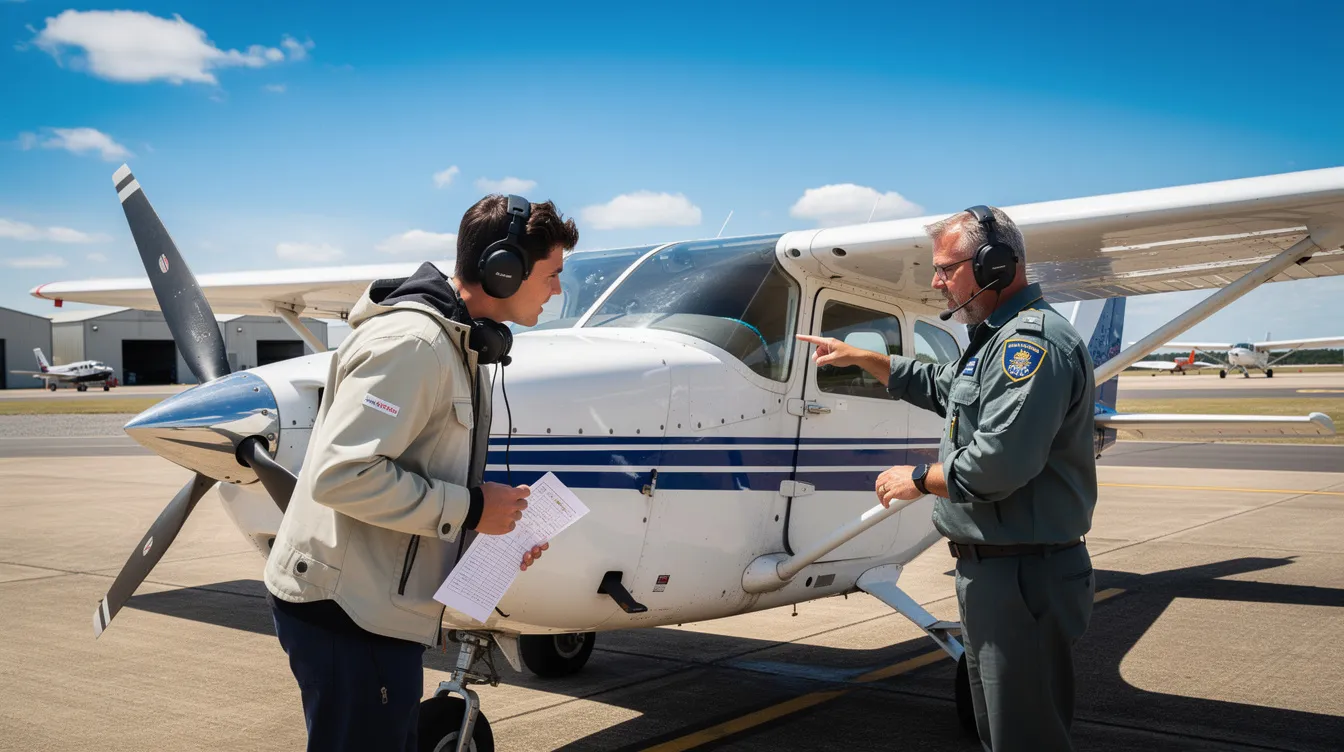
They'll give you the lowdown on safety, teach you the basics of how to fly, take you up for a whirl and let you get your hands on the controls while they keep a watchful eye out for you.
This is the ideal first step before signing a major financing contract. When comparing a flight school, review Part 61 vs Part 141, aircraft fleet such as Cessna 172 or Piper Archer, instructor experience, maintenance, schedule access, and first-time pass rates.
Part 61 Schools are all about giving you flexibility with your flight training you can show up when it suits you. Part 141 Schools are geared up for students who see flying as a career they'll stick a structured program in your hand and help you fly towards that airline job.
And as for where you're based airports close to home might be a bit cheaper, but the bigger center often have faster programs and are a lot better connected to the airlines.
Medical Certificate and Student Pilot Certificate
Without a medical certificate, you generally cannot act as pilot in command. Start early through FAA MedXPress, then visit an Aviation Medical Examiner with ID and medication history.
-
Class 1: required for professional flying and an airline pilot career
-
Class 2: common for commercial pilot jobs
-
Class 3: common for private pilots and recreational pilots
Vision correction, mild color blindness, and controlled blood pressure may be manageable with documentation.
The first step in pilot training is obtaining a Student Pilot Certificate through IACRA, usually with help from a CFI, school, or FSDO. It is required before first solo flight and usually takes 1–3 weeks, depending on TSA checks.
Start Flight Training: Ground School and Flight Lessons
Flight training has two tracks: ground training and flying lessons. Ground school covers aerodynamics, weather, navigation, airspace, regulations, aircraft systems, human factors, METARs, and sectional charts.
If you are trying to understand what to study for becoming pilot, these ground school subjects are the best place to start.
You can study in class, online, or one-on-one with an instructor. Early lessons include preflight inspection, climbs, descents, turns, takeoffs, landings, emergency procedures, and airport pattern work.
The FAA recommends a minimum of 40 flight hours to earn a Private Pilot License, though most students average 60 to 75 hours. First solo often happens around 10–25 hours, and solo cross-country flights around 30–40 hours. Flying 2–4 times weekly reduces cost and keeps skills sharp.
Pass the FAA Knowledge Test
The FAA knowledge test is a computer multiple-choice exam for your certificate: Private, Instrument, or Commercial. Complete ground training, get an endorsement, schedule at an approved center, and bring ID.
For Private Pilot Airplane, expect 60 questions, 2.5 hours, and a 70% passing score. Use FAA Airman Certification Standards, practice exams, and 15–30 focused study hours. Results are valid for 24 calendar months.
Pass the FAA Practical Test (Checkride)
The checkride it's the FAA practical test, a make or break deal that involves a nail biting flight with a Designated Pilot Examiner.
Your knowledge, safety sense and willingness to make tough calls all get put to the test, according to the ACS guidelines.
They'll check your documents, have a chat about the aircraft, and then after a grueling 1-2 hours of being prodded with oral questions you'll get to put your skills to the test in a flight that will cover steep turns, stalls, ground reference maneuvers, short-field and soft-field takeoffs and landings and that dreaded emergency descent.
You'll need to put in the prep mock orals, 5-10 hours of flight time, your logbook up to date and get your weight and balance sorted before you even think about stepping into that cockpit.
And if you don't quite pass don't worry, a bit of retraining and another fee to the DPE and you should be good to go.
Advancing Beyond Private: Building Your Pilot Career Path
Many pilots use Private as the foundation for an airline career or another professional pilot role. The common path is Private Pilot → Instrument Rating → Commercial Pilot single-engine → multi engine rating → CFI/CFII/MEI → airline transport pilot.
Obtain an Instrument Rating to fly in low visibility. An Instrument Rating (IR) allows flying in low visibility conditions and IFR weather, making you a more competitive candidate for commercial and corporate pilot positions. Commercial training adds precision, complex aircraft operating skills, and stricter standards.
The Multi-Crew Pilot License (MPL) is tailored for specific airlines in some training systems. Alternative paths include cargo, corporate aviation, aerial survey, and banner towing while building experience.
Costs, Financing, and College Degree Decisions
Pilot training requires clear budgeting. Typical 2026 ranges are: Private $12k–$20k, Instrument $8k–$15k, Commercial $20k–$35k, Multi-Engine $3k–$7k, and CFI/CFII $6k–$12k. Instrument Rating training costs vary based on aircraft type.
Fixed costs for pilot training range from $2,385 to $3,825 for items such as books, headset, medical, exams, and supplies. Variable costs for aircraft rental can exceed $28,500, especially when fuel, instructor time, and extra lessons add up. Many students fund training with savings, private loans, aviation scholarships, VA benefits, or airline-linked programs.
A sample 24-month path might be: Private $15,000, Instrument $12,000, Commercial $25,000, Multi-Engine $5,000, CFI/CFII $8,000-roughly $65,000 before living costs, or about $2,700 monthly. Expect tens of thousands, and sometimes more, depending on pace.
