What Does It Take to Get a Pilot License in 2026?
Jul 13, 2026
Quick Answer: What Does It Take to Get a Pilot’s License?
To become a pilot in 2026, you need eligibility, training, testing, and consistency. In the U.S., the federal aviation administration sets the FAA requirements, and most pilots start with a private pilot certificate, often called a private pilot license.
The basic path is:
-
Take a discovery flight.
-
Get the right medical certificate from an aviation medical examiner.
-
Apply for a student pilot certificate before solo flight.
-
Complete ground school and flight training.
-
Pass the FAA written exam, also called the knowledge test.
-
Build the required flight hours.
-
Pass the practical test, or check ride.
For a basic private pilot, expect about 3–10 months depending on pace. The private pilot license cost is commonly around $10,000–$18,000, though some areas run higher. Requirements differ for a sport pilot certificate, private pilot certificate, recreational pilot certificate, commercial pilot license, and airline transport pilot.
Introduction: Why People Decide to Become a Pilot
People learn to fly because of the freedom, travel, thrill of the challenge and the promise of new opportunities.
For some, it's a sport getting out on the weekend for some trips as a sport pilot or private pilot, while others see a whole career ahead, leading on to commercial pilot training, major airlines, or even how to become an aerobatic pilot through specialized flight training and advanced maneuver skills before eventually sitting in the captain's seat of a big airline.
Technically, what we're talking about is a pilot's license although the FAA issues a 'pilot certificate' and that comes with a range of ratings and endorsements on top.
In this guide we'll be looking at the training programs and costs involved, the number of flying hours you need to log, the medical requirements you have to meet, and the general path that aspiring pilots take when they start training.
What Is a Pilot License and How Does the FAA System Work?
A pilot's license is much like your driver's license but for an aircraft, and it comes with a whole lot more qualifications and testing to get through.
The FAA is the ones who regulate pilot certifications, and they're pretty strict about it plus there are federal regulations and standards to follow aircraft categories and training standards all have to meet their requirements.
Things to keep in mind:
-
Certificate: you get a choice of sport, recreational, private, commercial or an atp certificate.
-
Rating: you need a rating for added privileges like an instrument rating or multi engine rating.
-
Endorsement: an instructor has to give you the thumbs up for specific operations or aircraft.
Different certificates give you different privileges from flying small planes on your own to commanding a passenger jet each one unlocking a bit more of the world and a bit more freedom.
Types of Pilot Licenses: From Sport Pilot to Airline Transport Pilot
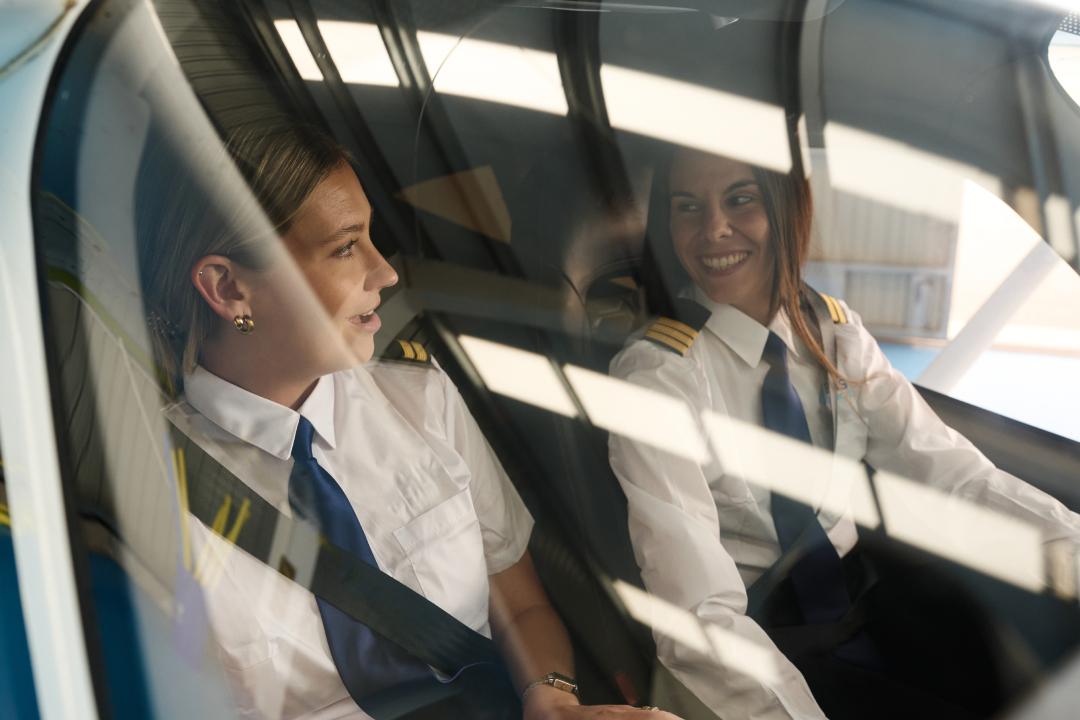
Here's how the main certificates compare to each other.
Sport Pilot Certificate
A sport pilot certificate is an entry-level option for light sport aircraft and recreational pilots.
-
Minimum age: 17.
-
Minimum requirement: at least 20 hours of flight training.
-
Must read, speak, and understand English.
-
In many cases, a valid U.S. driver's license can replace an FAA medical.
-
Limits: no night flying, no paid flying, restricted aircraft weight and speed, and simplified airspace access.
Private Pilot Certificate (PPL)
A private pilot certificate is your standard, garden-variety foundation for being a pilot. Having a private pilot license lets you take your family and friends on a trip, but you can't make a living out of it.
-
Minimum age: 17.
-
FAA minimum: 40 hours of flight time under Part 61; most students need 50–70+ hours of flight.
-
Requires at least a third-class medical certificate.
-
Training includes flight maneuvers, navigation, flight planning, cross-country work, night flying, emergency procedures, and solo flight.
-
A private pilot may share allowed operating expenses under FAA rules.
Commercial Pilot License (CPL)
A commercial pilot license is required to be paid to fly. If your goal is how to become private jet pilot, earning a Commercial Pilot License is one of the most important requirements before advancing to corporate or charter jet operations.
-
Minimum age: 18.
-
Must hold at least a private pilot certificate.
-
Requires about 250 total hours of flight time under Part 61, or 190 under Part 141.
-
Jobs can include charter, aerial survey, banner towing, and some cargo work.
-
Most commercial pilot candidates add an instrument rating and often a multi engine rating.
CPL training emphasizes precision, complex aircraft, safety procedures, and professional decision-making.
Airline Transport Pilot (ATP) Certificate
The airline transport pilot certificate is the highest FAA pilot certificate and is required to captain scheduled airline flights.
-
Minimum age: 23 for a full ATP.
-
Standard requirement: 1,500 hours of flight time.
-
Restricted ATP paths may allow 1,000–1,250 hours for qualifying military or approved college degree programs.
-
Requires a commercial pilot license, instrument rating, and rigorous written knowledge test and practical test.
This is usually the endpoint for someone who wants to become an airline pilot.
Step-by-Step: How to Become a Pilot (General Path)
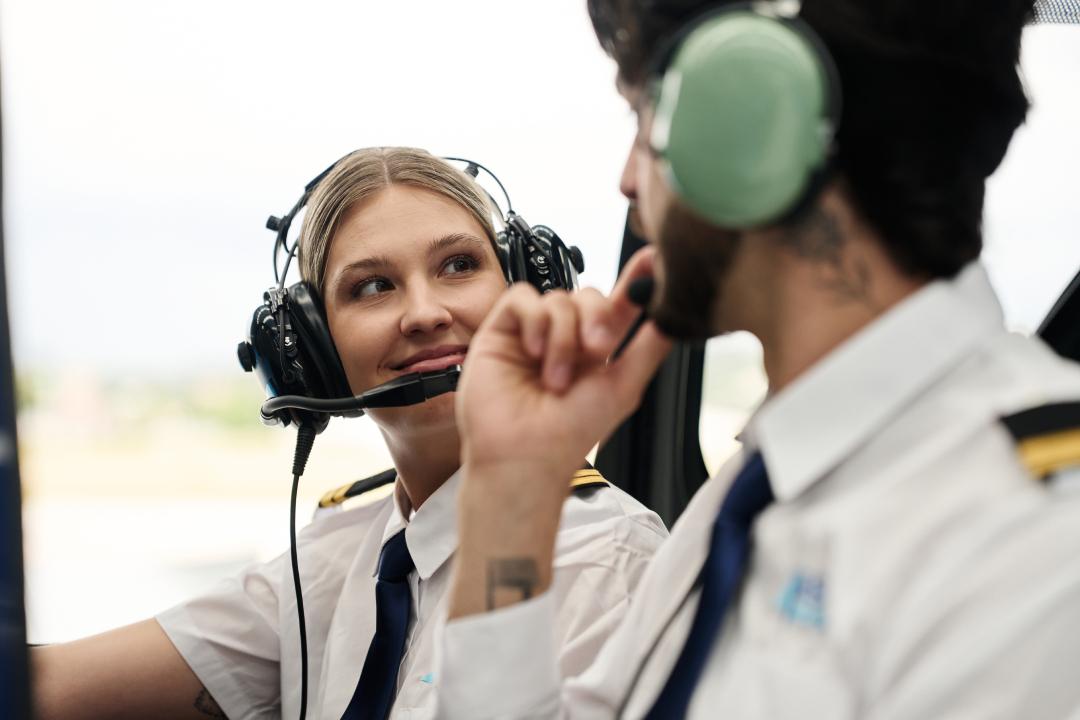
Where you end up as a pilot depends on what you're after, but most people start out by doing these same steps :
-
Research flight schools and choose a training environment.
-
Schedule a discovery flight.
-
Apply for a medical certificate early.
-
Get your student pilot certificate.
-
Start ground school classes.
-
Start flight training with a certified flight instructor.
-
Pass the FAA knowledge test.
-
Complete required training and flight hours.
-
Pass the oral exam and flight portion of the check ride.
Consistent training matters. Flying 2–3 times per week reduces skill decay, lowers review time, and often saves money.
Take a Discovery Flight
A discovery flight that's a 30-60 minute taster session with a flight instructor. You get to sit up front, do a basic preflight check, actually get to fly under supervision and then have a debrief afterwards.
Use it to get a feel for the aircraft, see how the instructor communicates and whether the whole shebang feels organised.
To book one just give a few local flight schools a ring, ask about the types of aircraft they have and what they charge, and don't forget to bring your sunglasses, a pair of closed toe shoes and plenty of questions.
Apply for an FAA Medical Certificate
Most student pilots pursuing a private pilot license start with a Third-Class Medical Certificate. Create an account in MedXPress, complete the form, then visit an aviation medical examiner AME. Professional-track students may get a First-Class medical early to confirm airline eligibility.
The FAA medical standards cover vision, hearing, heart health, and other conditions. Do this early because medical issues can delay or block training, though Special Issuance may help some applicants.
Get Your Student Pilot Certificate
A student pilot certificate is required before you fly solo, though dual flight lessons can begin first. Many people say student pilot license, but the official document is the student pilot certificate.
faa requires airplane student pilots to be at least 16, or 14 for gliders and balloons. Applications go through IACRA with help from a certified flight instructor, examiner, or FSDO. The plastic card usually arrives in a few weeks.
Start Ground School and Flight Training
Ground school teaches aeronautical knowledge: weather, aerodynamics, aircraft systems, regulations, navigation, and communications. Ground training may be online, in person, or part of a structured training program at a faa certified flight school.
Flight instruction combines dual lessons, solo practice, cross-country flights, and logbook tracking. Every lesson records flight time, aircraft, landings, and maneuvers. Instructor availability, inclement weather, and your schedule strongly affect progress.
Pass the FAA Knowledge Test
That written test you'll have to pass is a big hurdle to clear. It's a computer-based multiple-choice test that you take at one of the FAA's approved testing centers. First off you'll need an endorsement from your instructor, and then you'll need to score at least 70% on the test itself.
Studying for the test isn't that hard. Most people use a combination of textbooks, online courses, practice exams and question banks. And while some students like to take the test right in the middle of training, others prefer to get it out of the way early when the material is still fresh in their minds.
Complete Required Flight Hours and Pass Your Checkride
Every type of pilot's license has a minimum number of hours you've got to have flown before you can get certified. But don't get too hung up on that what the FAA really wants to see is that you can actually fly the aircraft safely and effectively not just that you've clocked up the right number of hours.
So the checkride, which is the culmination of your training, includes not just a written test, but also an actual flight with a Designated Pilot Examiner (DPE).
They're checking not just that you know your stuff, but that you can actually fly the plane, make the right decisions, and stay safe.
To get ready, most students like to do a few mock checkrides, review their logbook and practice any areas where they know they need to work on.
Time and Cost: How Long and How Much to Get a Pilot’s License?
Getting a private pilot's license will set you back around $10,000 to $18,000 and it's going to take you 3-10 months to finish.
If you're one of those super-eager students who decides to fly every single day, you might be able to get it done in a few months. But if you're flying only on weekends, it's going to take you a lot longer.
Costs depend on:
-
Aircraft rental rates and fuel.
-
Instructor fees.
-
Ground school materials.
-
Testing and checkride fees.
-
Extra hours caused by weather, gaps, or rescheduling.
Commercial pilot training, an instrument rating, a multi engine rating, and instructor certificates can push the total investment into the tens of thousands. Build a budget, ask schools for realistic average completion hours, and research scholarships, financing, or veteran benefits where available.
Key Ratings and Add-Ons That Expand What You Can Do
Ratings are often next step on the career ladder, building on what you've already achieved with a private pilot's license. Of course, the classic path is private pilot -> instrument rating -> commercial pilot -> multi engine rating -> flight instructor -> ATP - and that's not a bad way to go.
Instrument Rating (IR)
An instrument rating lets you fly in the clouds, when visibility is poor, and on those long cross-country flights all without relying on what you can see out the window. It's pretty much essential for any serious aviator.
Under US regulations (Part 61), you need around 40 hours of training on instruments and 50 hours of cross-country flying under your own command.
If you're serious about flying for a living, you'll probably want to get that sorted out pretty quickly after getting your private license.
Multi Engine Rating (ME)
Having a multi engine rating lets you get in the cockpit of planes with more than one engine and that means learning how to handle asymmetric thrust and engine failures, as well as all the other subtleties of twins like the Piper Seminole.
You can add this to either your private or commercial license, but it's particularly important if you're after turbine aircraft, jobs at the regional airlines, or big commercial operators.
Flight Instructor Certificates (CFI, CFII, MEI)
Want to teach student pilots and give them those all-important solo and checkride endorsements ? Then you need to become a certified flight instructor.
Want to teach instrument students ? That's a CFII. Want to teach multi-engine flying ? You need to be a MEI.
Lots of aspiring pilots get involved in teaching as a way to build hours towards that 1,500 hour ATP requirement. As a rule of thumb, you'll need to get that commercial pilot license sorted out first, along with any relevant ratings.
Choosing the Right Training Program and Flight School
First and foremost, pick a training program that's tailored to your goals, you can afford, and that fits into your lifestyle.
The Part 61 option is pretty flexible and works well for folks who can only take it on a part-time basis. And then there's Part 141 that one's got a syllabus that's been vetted by the FAA stage checks are part of the deal too, and some students can even shave a few hours off their minimum requirements.
When comparing flight schools, ask about:
-
Aircraft maintenance and dispatch reliability.
-
Instructor availability.
-
Average completion cost and hours.
-
Safety culture.
-
Accelerated vs. part-time options.
-
Weather patterns and cancellation policies.
-
Clear pathways from private through instrument, commercial, and instructor stages.
Get on campus, take a look around, and try to talk to some of the current students. And don't be afraid to ask how they handle delays, stage checks and lining up instructors all that stuff can make a big difference in the end.
