Required IFR Equipment: FAA Rules and GRABCARD Checklist
Sep 17, 2026
Flying by the numbers with Instruments requires something more than just expertise it demands the basic equipment be installed in your plane if you want to stay safe and avoid a world of trouble with the FAA. Learn what tools you need, in addition to some skill, to get by under IFR flight rules with confidence.
Quick Answer: What Equipment Is Required to Fly IFR?
For your average plane flying around the States, the bare essentials for IFR will include the usual VFR gear, plus a few other vital instruments. And you guessed it if you're out there in the dark, that VFR night kit will come in handy too. The precise details are all set out in 14 CFR § 91.205(d) so now you know where to dig up the rest of the specifics. We'll make it easy with our GRABCARD list of the bare essentials below.
GRABCARD: Required IFR Equipment
|
Letter |
Required Equipment |
|---|---|
|
G |
Generator or alternator of adequate capacity |
|
R |
Two-way radio communication and navigation equipment suitable for the route |
|
A |
Sensitive altimeter adjustable for barometric pressure |
|
B |
Ball, or slip-skid indicator |
|
C |
Clock displaying hours, minutes, and seconds, with a sweep-second pointer or digital presentation |
|
A |
Attitude indicator providing gyroscopic pitch and bank information |
|
R |
Gyroscopic rate-of-turn indicator, subject to applicable exceptions |
|
D |
Gyroscopic direction indicator, or equivalent |
Regulatory Framework: 14 CFR § 91.205 and Related Rules
14 CFR § 91.205 lays out the gear you've got to have on hand in any standard U.S. airworthiness certified powered civil plane. Section (b) covers the stuff you need for day flying in VFR conditions, while (c) adds more equipment for night VFR flying and (d) brings in the IFR gear. So if you're venturing into IFR territory, you'll need the VFR basics plus all the IFR extras.
Your aircraft's approved AFM/POH, along with its operating limitations and equipment list, might throw in some extra requirements to keep in mind. When evaluating IFR equipment, review its performance and environmental requirements alongside these approved operating limitations.
And then there are the other rules about inspecting things, checking your navigation and what to do when some of your equipment decides to go on the fritz more on that below. Keep in mind that this guide is geared towards your average US general aviation flying under Part 91, but the specifics can vary depending on your plane and what you're doing.
Performance Requirements, Inspections, and Equipment Status
Not only do you need to make sure all your equipment is installed and ready to roll, but it also has to pass the relevant inspections and maintenance checks. Before you take off, take a peek at your aircraft records it turns out not everything gets checked out the same way.
Required Inspections and Checks
|
Item |
Requirement |
|---|---|
|
Altimeter, static system, and automatic pressure altitude reporting system |
Tested within the preceding 24 calendar months for airplane or helicopter IFR operations in controlled airspace. Certain maintenance also triggers additional testing. § 91.411 |
|
ATC transponder |
Tested within the preceding 24 calendar months before use. Certain installation or maintenance work also requires testing. § 91.413 |
|
VOR equipment used for IFR navigation |
Operationally checked within the preceding 30 days, unless maintained under an approved procedure. Record the date, place, bearing error, and signature. § 91.171 |
|
GPS/RNAV database |
Verify currency and procedure validity according to the approved equipment limitations and intended operation. Database updates are separate from aircraft inspection intervals. |
|
Aircraft inspection status |
Verify the applicable annual or other authorized inspection program, plus any additional inspections required for the operation. |
Inoperative Equipment
When an aircraft is flying without a Minimum Equipment List (MEL) approved by the FAA, there's a specific set of rules that allow certain nonrequired gear to be turned off as long as all the right boxes are ticked. For an item to qualify, the equipment installed can't be equipment required by the aircraft certification rules, equipment list, operating regulations, or airworthiness directives before it can be deferred.
To make the cut, permitted items need to be properly removed or deactivated, and then have the appropriate placard and documentation and all of that has to be done with the right people involved. An experienced pilot or maintenance person has to give the green light, say that the missing gear doesn't pose any hazard.
A placard on its own doesn't magically make it okay to fly IFR with needed equipment on the fritz the rules from the MEL you are using are the ones that count.
Switching from VFR to IFR: The Essential Stuff You Still Need
When you fly IFR you need all the VFR day and night stuff plus a few more instruments that are specific to IFR flight. You don't get to just ditch the VFR requirements when you file for IFR every powered civil aircraft needs to meet the baseline VFR list before it can go IFR.
From VFR to IFR: Baseline Equipment You Still Need

IFR flight requires all VFR day and night equipment plus specific IFR instruments. You do not drop VFR requirements when you file IFR. Every powered civil aircraft operating under IFR must first satisfy the baseline VFR equipment list.
Core day VFR instruments (often remembered as ATOMATOFLAMES) include:
-
Airspeed indicator
-
Tachometer for each engine
-
Oil pressure system temperature gauge
-
Manifold pressure gauge (if applicable)
-
Altitude engine fuel gauge for each tank
-
Landing gear position indicator (retractable gear)
-
Magnetic direction indicator (magnetic compass)
-
Emergency locator transmitter (per § 91.207)
-
Safety belts and shoulder harnesses (if installed)
-
Anti-collision lights (aircraft certified after March 11, 1996)
For night flight, add:
-
Position lights
-
Anti-collision light system
-
Landing light (if operating for hire)
-
Adequate source of electrical power
-
Spare fuses (of the appropriate class and quantity)
Even if your plane doesn't need a landing light for VFR at night, most IFR pilots figure it's a good idea to get one installed and verified before you head into IMC because the same alternator that's keeping your avionics running at night is the one keeping your gyros and radios alive when you're in the clouds.
Generator or Alternator of Adequate Capacity
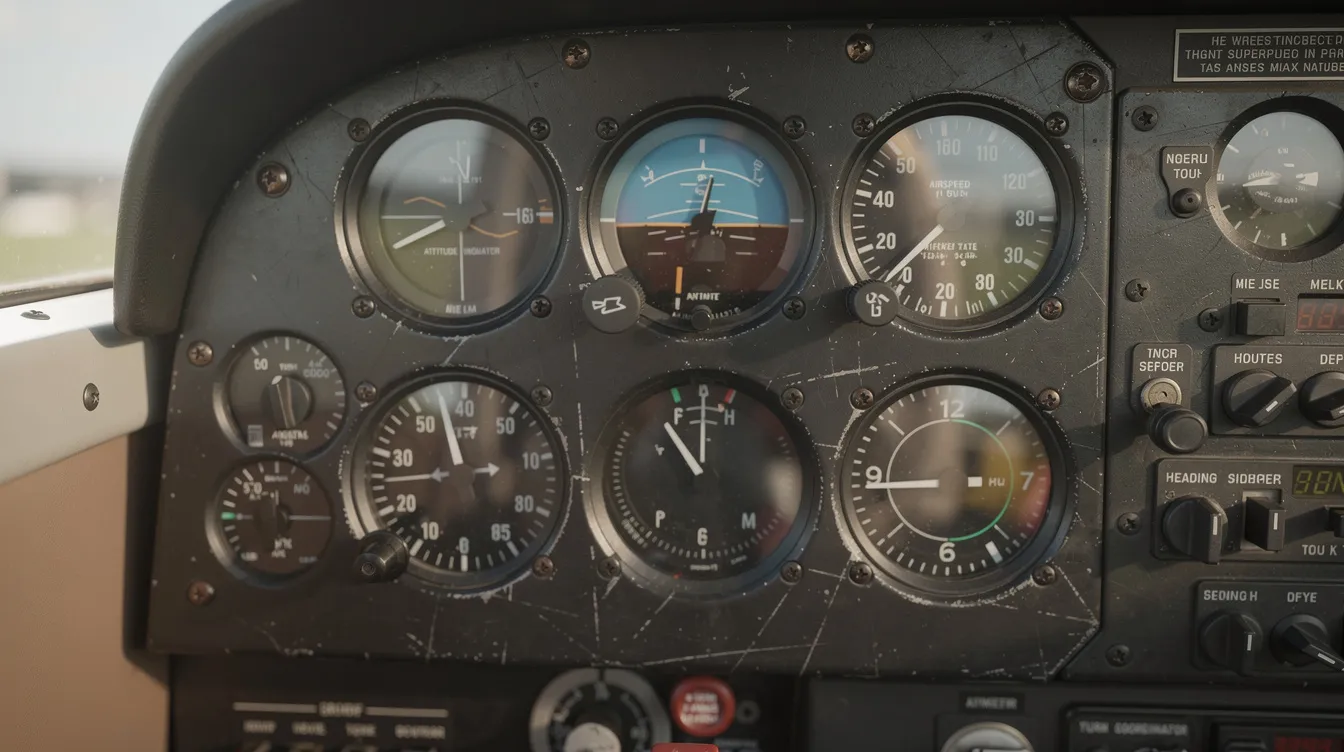
When flying IFR, its pretty obvious that you're going to need a generator or alternator that can put out some serious juice Nearly every single instrument on the plane depends on having a reliable source of electrical power.
We're talking about radios, gyros, navigation displays, all the lights, and even pitot heat everything gets pulled from the same electrical system. Lose your alternator in a bad weather situation and you could very well find yourself in a very tight spot indeed.
These days most civil aircraft use alternators rather than generators, which as it happens can produce usable current even at lower RPMs and do a much better job of keeping output under control.
Now, in aircraft like a Cessna 172 or Piper Archer that most train on you can usually expect the alternator to be putting out anywhere from 60 to 100 amps and that's more than enough to keep all that avionics, lighting, autopilot, and battery charging running continuously with a bit to spare
Key checkride and practical points
-
"Adequate capacity" is a pretty simple concept it just means the alternator has to be able to keep up with all the electrical loads continuously not just when things are running at peak capacity
-
Battery endurance planning is not to be underestimated you should have a good idea of how long your battery can keep your essential instruments going if the alternator were to fail
-
Before you even start to fly, you should do a quick check with your ammeter and voltmeter to make sure the system is charging and all good
-
Bottom line if your alternator goes down while you're flying IFR, things get pretty hairy, pretty fast - two-way radio communications and navigation equipment that can keep up with your route depend entirely on having the power, so its not just a good idea to have a functioning alternator, its required by law in many cases.
Two-Way Radio Communication and Navigation Equipment Suitable for the Route
Section 91.205(d)(2) requires two-way radio communication and navigation equipment suitable for the route to be flown. Your aircraft’s equipment must support the planned departures, en route segments, and approaches.
Equipment requirements depend on the procedures
-
VOR airways: A functioning VOR receiver or a suitable RNAV system used as an authorized substitute.
-
ILS approaches: Localizer and glideslope receiving capability.
-
RNAV (GPS) approaches: An IFR-approved GPS installation with the required approach capability and current navigation database.
-
Routes with limited ground facilities: Navigation equipment capable of supporting the route using the available navigation services.
A usual IFR training plane comes with a VHF radio and the right navigation gear to get the job done on the training routes. Adding extra radios and nav gear is a good idea but it's not always required by 91.205(d)(2).
Before you take off, make sure to check the Nav NOTAMs, do your research on whether the gear you've got will play nice with the planned procedures, and verify that the database is current and all the operating rules are being followed.
DME/RNAV at high altitude: In the US, any plane that's registered with the FAA and flying above FL240 needs to be equipped with approved DME or a suitable RNAV system if VOR is required. If your VOR gear goes out at that altitude you need to get in touch with ATC ASAP.
You can keep on flying to the next airport where you can get repairs done section 91.205(e) allows for that. But below 240, you might still need DME or a substitute for specific routes or procedures.
Inclinometer (Ball), Attitude Indicator, and Rate-of-Turn Indicator
These three instruments are the foundation of getting your bearings and keeping yourself in check when flying IFR without any visual cues. They keep you upright and coordinated even when the weather is closing in.
The bare essentials for IFR flying include a slip-skid indicator the ball in an inclinometer tube. Its role in all this is pretty straightforward: you need to keep it in the middle when turning. If you don't, you risk ending up in a skid which can lead to a stall, makes your turns a whole lot wider, and in a general mess of not knowing where you're heading.
The bare essentials for IFR flying also include an attitude indicator, commonly known as an artificial horizon. This thing is a gyroscopic marvel that shows you the pitch and bank in real time and displays the aircraft's flight attitudes - pretty handy when the clouds have swallowed up the real horizon and you can't see where you are in relation to the ground.
That attitude instrument system usable in IMC is what lets the pilot maintain orientation when outside references disappear.
There have been some pretty nasty accidents in old aircraft where pilots have lost their attitude instrument system reference and gotten caught out by spatial disorientation all because the vacuum pump failed.
The NTSB has been onto this for years and has been pushing for better vacuum system reliability, because of the obvious risks involved. Having a third attitude instrument system installed is a good idea - it can give you a separate source of truth and help meet some the tougher certification standards.
The bare essentials for IFR flying also include a rate of turn indicator usually bolted on to a turn coordinator. It lets you know you're doing about 3° per second when turning, with the turn coordinator also serving a bank indicator function for coordinated turns, which is exactly what you need when you're holding a turn or doing procedure turns and such.
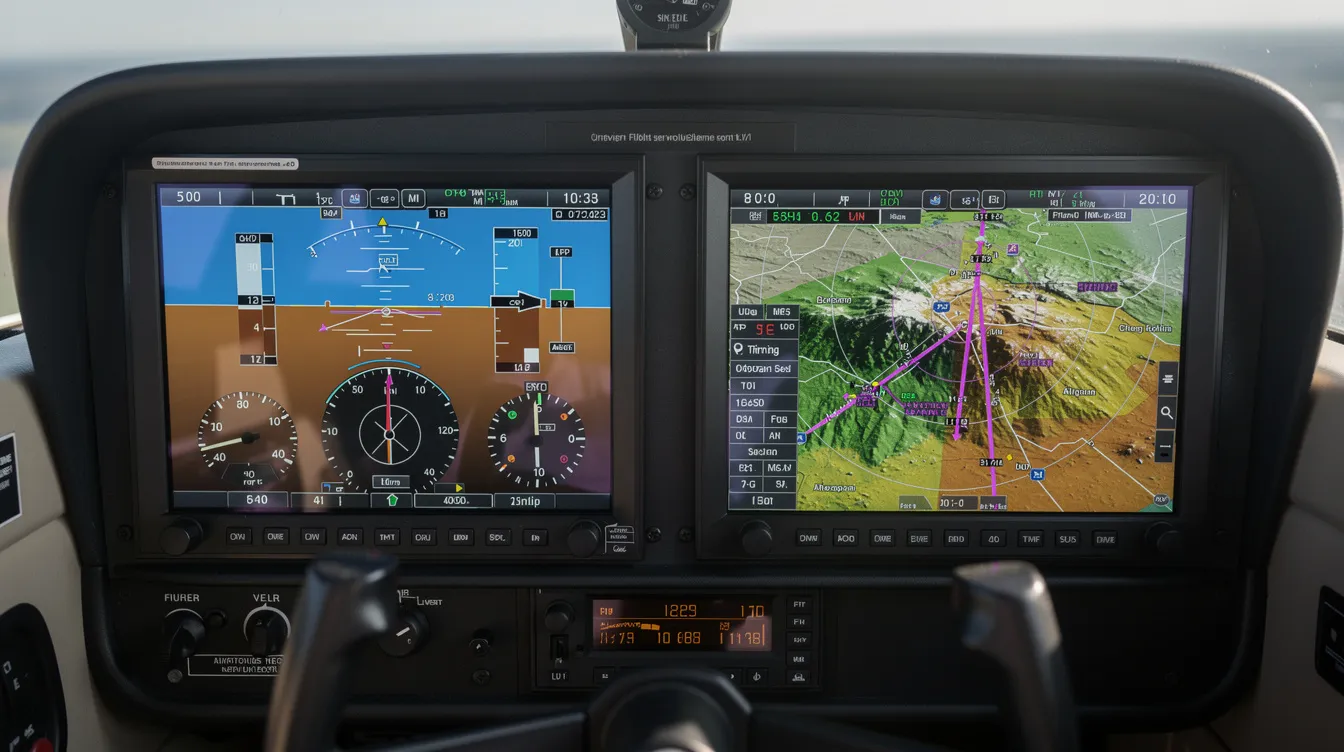
Modern glass cockpits do all this and more with AHRS (Attitude and Heading Reference Systems) which get all your data (attitude, slip and turn) sorted out electronically, provided they're certified in the AFM or STC. Even with all this modern tech, though, partial panel practice is still a must during IFR training.
Directional Gyro / Heading Indicator and Magnetic Compass

You need a magnetic compass for every flight, whether you're under Visual Flight Rules(VFR) or Instrument Flight Rules(IFR) but let's be honest, magnetic compasses aren't much use when things get hairy especially when you're turning.
The needle lags behind the aircraft, oscillates if you hit turbulence & wavers when you're accelerating or braking making it nearly impossible to get a precise heading. That's why 91.205(d) specifically requires a gyroscopic direction indicator which isn't actually a compass at all.
You can't fly IFR without a directional gyro a heading indicator that's commonly referred to as a heading indicator. Unlike the magnetic direction indicator this is one piece of kit that won't play up when you're turning or accelerating, it'll give you nice easy to read heading information all day long. Many of the old ones are vacuum driven, the newer ones are electric.
Because gyros do start to precess with time, pilots have to periodically align the heading indicator with the magnetic compass when they're flying straight and level. A pretty common practice is to check and reset every 15 minutes.
Nowadays, in modern glass cockpits heading information is coming from a magnetometer coupled AHRS its auto corrects for precession and you don't need to manually align it. These systems satisfy the gyroscopic heading requirement when installed and approved. Flying under IFR also requires the pilot to hold an instrument rating.
Things To Know for a Checkride
-
Know what to call those compass errors when you see them: variation, deviation, dip (that turning error), and acceleration error
-
Get comfy with timed turns using the rate of turn indicator - under standard rate a 180 degree turn takes 60 seconds
-
If your directional gyro packs in when you're IMC, you need to fall back on compass and timed turns a skill that every IFR pilot should have in their toolkit
Clock Requirements for IFR
Under rules laid out in 91.205(d)(6), to fly under Instrument Flight Rules, a clock that shows hours, minutes and seconds whether with a sweep-second hand or just a digital display is a must. The clock can either be a standalone thing or included in the avionics system and it's up to the manufacturer to decide which way to go.
Pilots use it to time when they're holding, turning the right way etc. and for the bits of approach that apply. Make sure your clock is ticking along nicely before taking off.
Sensitive Altimeter Adjustable for Barometric Pressure
14 CFR § 91.205(d)(5) requires a sensitive altimeter adjustable for barometric pressure. This adjustment allows the pilot to enter the appropriate altimeter setting for altitude reference.
The altimeter works by using air pressure, and that's the same thing that powers your air speed indicator, your vertical speed indicator and usually the box that tells the air traffic controller what your height is, including its altitude reporting capability. If there's something wrong with the tubes that bring in this air pressure or if there's a leak then you might find a load of your instruments aren't giving you the correct reading.
So, it's a good idea to make sure the tubes are clear and the system is working right, because when installed, automatic pressure altitude reporting also supports atc transponder equipment requirements in the applicable airspace.
Before you take off, check the altimeter is showing the right height after you've put in the current local pressure setting. And, look in the inspections section for how often you need to do the proper checks to make sure it's all working.
Required vs. Recommended IFR Equipment
The bare essentials for IFR flying are the minimum requirements that form the legal baseline for IFR operations. Most aircraft can legally fly IFR only when they are IFR certified rather than treated as VFR only aircraft. But if you want to improve your own safety and make flying less of a headache then you might want to consider some extras:
-
Two alternators or a backup battery
-
A spare attitude indicator that has its own power supply
-
A weather display connected to the air traffic net
-
A system to show you where other planes are
-
A two axis autopilot so you can have a break from the controls
These are all things that are not strictly required for Part 91 IFR flying, but recommended upgrades do not replace the IFR instrument requirements prescribed by the federal regulations.
Do check the plane's operating manual to make sure you're covered the rules that apply will depend on where and how you're flying, unlike a VFR flight where the equipment burden may be lower.
Checklist: Verifying Your Aircraft Is IFR-Ready Before Each Flight
Use this as a practical preflight verification sequence. It does not replace your AFM/POH or company procedures.
Inspections and paperwork:
-
Annual inspection current
-
24-month altimeter/static system test current (§ 91.411)
-
24-month transponder test current (§ 91.413)
-
GPS/RNAV database current for today's date
-
Airworthiness certificate displayed and valid
-
Operating limitations reviewed
Instruments and systems:
-
Clock displaying hours minutes and seconds - verify operation
-
Attitude indicator - erect, showing correct pitch and bank
-
Heading indicator / directional gyro - set to magnetic compass, processing normally
-
Sensitive altimeter - set local barometric pressure, within 75 feet of field elevation
-
Slip skid indicator (ball) - free and centered
-
Rate-of-turn indicator - responsive during taxi turns
-
Airspeed indicator - reading zero (or appropriate for wind)
-
Magnetic compass - fluid clear, card readable
Radios and navigation:
-
Comm radios transmitting and receiving
-
Nav receivers identifying stations / GPS acquiring satellites
-
Navigation equipment suitable for the planned route and approaches verified
-
Check NOTAMs for VOR outages, ILS maintenance, or GPS interference affecting ground facilities
Electrical:
-
Alternator of adequate capacity - ammeter showing charge
-
Battery voltage within limits
-
Spare fuses available (appropriate class)
Flight plan:
-
IFR flight plan filed with air traffic control