IFR Instrument Requirements: Required Equipment Guide
Sep 16, 2026
Introduction: What's Required for IFR Flight?
Instrument flight rules, or IFR, are the rules pilots follow when the conditions outside the cockpit are so poor they can't be trusted; IFR stands for Instrument Flight Rules. That means thick clouds, heavy fog, heavy rain and darkness all the situations where Visual Flight Rules just won't cut it.
Unlike VFR, where you rely on clear skies and outside references for navigation, IFR pilots have to put their faith in the aircraft's instruments and work closely with air traffic control to get clear of any other planes and find your way to your destination.
It's built for instrument meteorological conditions, when you can't rely on outside visual references, and nearly all commercial flights use it because the system's standardized routing and ATC structure make it efficient.
In the US, required IFR equipment is defined mostly by the regulations that make up 14 CFR § 91.205 and some others like § 91.207 for emergency locator transmitters § 91.215 for transponders, and §§ 91.411 and 91.413 for regular maintenance checks. It also requires pilots to file an IFR flight plan before takeoff.
Remember, all the individual bits of kit that add up to a full IFR spec are referenced with acronyms like GRABCARD and TOMATO FLAMES though to be honest I find that sort of memory aid a bit of a crutch.
At a high level, the main IFR items include
-
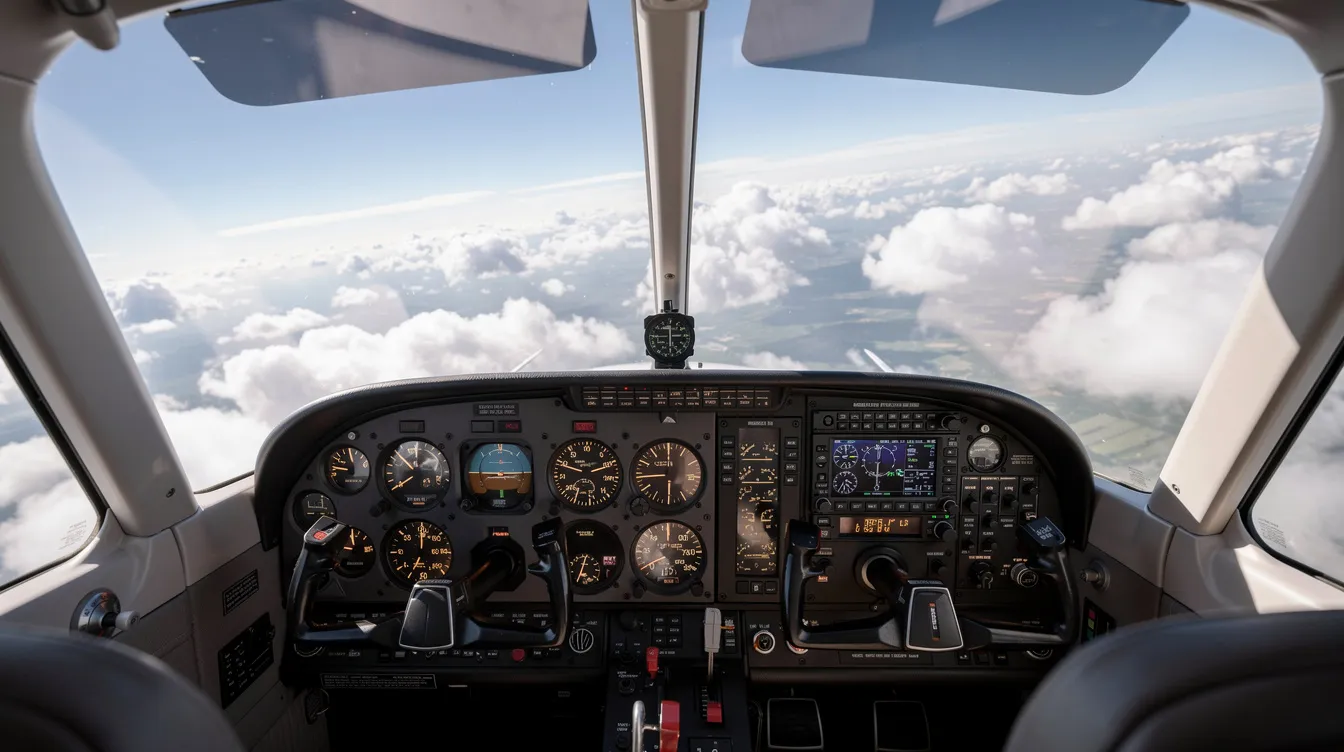
A GRABCARD kit (that's generator, radios, altimeter, ball, clock, attitude indicator, rate of turn indicator and directional gyro in case you were wondering!)
-
Navigation gear that'll see you all the way to your destination
-
An emergency locator transmitter
-
A transponder that's got ADS-B out
-
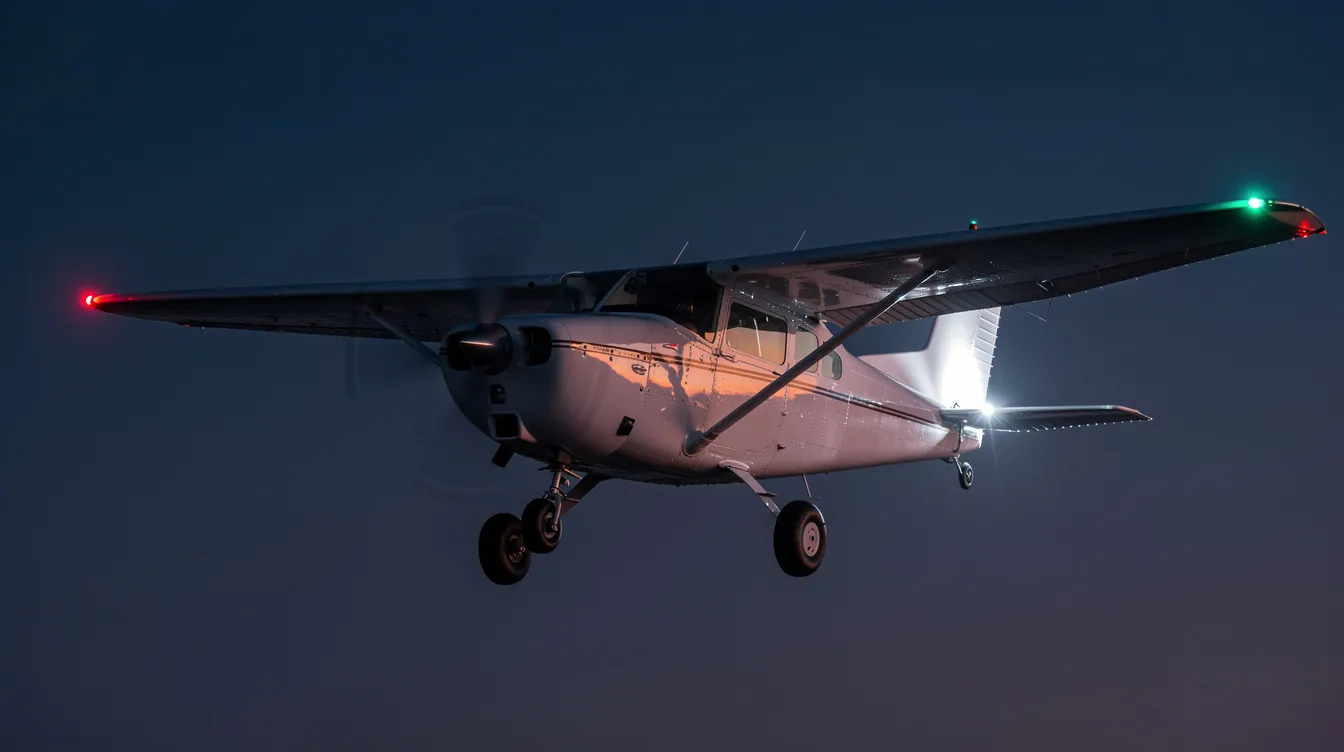
Position lights, anti-collision lights and think carefully about your landing light situation
-
Make sure the pitot-static, altimeter and transponder systems have had a good check recently
Its true this isn't just about listing the minimums required by law. Its trying to give you a real understanding of IFR rules the sort of knowledge you need to have under your belt, whether you are about to take your instrument rating test or just looking to make sure your aircraft is safe to take on the really poor weather.
The Legal Framework: Federal Regulations Governing IFR Equipment
Federal regulations governing IFR equipment can be found scattered across a few sections of Title 14 of the Code of Federal Regulations, which as of 2026 is up to date. The main rule here is 14 CFR 91.205 - it lays out the basic requirements for instruments and equipment on any powered civil aircraft.
Several other sections support this rule like 14 CFR 91.207 for Emergency Locator Transmitters (ELT), 14 CFR 91.411 for altimeter and static system inspections, 14 CFR 91.413 for transponder inspections, and the Federal Aviation Administration eligibility rules for an Instrument Rating in 14 CFR § 61.65.
The rules for IFR equipment build upon one another
-
First you've got VFR day equipment (91.205(b)), which applies when visibility is at least 3 statute miles\
-
Next, VFR night equipment (91.205(C)) is required whenever you're flying at night\
-
Then you need the extra IFR instruments (91.205(d)) to safely navigate in low visibility conditions
The rules mentioned here primarily apply to your average Part 91 general aviation operation. However, if you're flying under Part 121 or Part 135 (like airlines or charter companies), you can expect things to get a lot stricter in regards to redundancy, maintenance intervals, and minimum equipment needed.
And things get even more complicated across international borders, with Europe's EASA rules imposing slightly different rules but this article is based on FAA regulations.
IFR regulations are all about making sure you've got the right gear to keep flying safe, even when it's hard to see. Knowing where to find these rules is key to staying compliant.
VFR Baseline: Equipment Required Before You Can Add IFR
IFR flight gear you've got to have all the daytime VFR flight stuff covered first according to 14 CFR § 91.205 before you can start thinking about tossing in all the IFR extras. VFR flights must maintain at least 3 statute miles of visibility. Every single IFR flight needs the basic VFR day instruments & equipment in place before you even think about adding the IFR bits covered by GRABCARD.
To help you remember all the major VFR day flight gear, pilots most commonly use the old tomato flames trick to recall the essentials:
-
Tach for every engine
-
Oil pressure gauge
-
Manifold pressure gauge (need one per alt engine)
-
Airspeed indicator
-
Temperature gauge (liquid-cooled engine needs one)
-
Oil temperature gauge (air-cooled engine needs one)
-
Fuel quantity indicator for each tank
-
Landing gear indicator if you've got the gear
-
Anti-collision light system (if required)
-
Magnetic direction indicator
-
Emergency beacon (if required)
-
Approved seatbelts & shoulder harnesses (if required)
When you're flying IFR at night, the plane needs to meet all the VFR night requirements under § 91.205 (c) as well. This means:
-
Position lights that are up to snuff
-
Anti-collision light system
-
Landing light if you're flying for hire
-
Power system that can give you enough juice
-
Bright enough lights to see all the important dials & gauges
-
Spare fuses (or 3 of each kind so the pilot can easily swap out the ones that go)
IFR operations also require a sensitive altimeter adjustable for barometric pressure, rather than merely the basic altimeter required for VFR day flight. An aircraft restricted by its aircraft operating limitations or a “VFR Only” placard may not be operated under IFR simply because the required instruments have been installed.
Core IFR Instruments: The GRABCARD Acronym
GRABCARD summarizes the additional IFR equipment required by 14 CFR § 91.205(d). These items supplement VFR day equipment and, when flying at night, applicable VFR night equipment.
|
Letter |
Required Equipment |
|---|---|
|
G |
Generator or alternator of adequate capacity |
|
R |
Two-way radio equipment and navigational equipment suitable for the route to be flown |
|
A |
Sensitive altimeter adjustable for barometric pressure |
|
B |
Ball, or slip-skid indicator |
|
C |
Clock displaying hours, minutes, and seconds with a sweep-second pointer or digital display |
|
A |
Attitude indicator providing gyroscopic pitch and bank information |
|
R |
Gyroscopic rate-of-turn indicator, subject to applicable exceptions |
|
D |
Gyroscopic direction indicator, or equivalent |
For help reviewing these equipment requirements, see our IFR pilot cafe guide to using PilotsCafe alongside your FAA reference materials.
G – Generator or Alternator: Powering the IFR Panel
IFR flight is pretty much impossible without continuous power to your radios, navigation gear, gyro instruments and cockpit lights. Which is why you need an alternator system that can keep all those systems up and running at the same time. Most of the modern IFR trainers are set up with 14 volt or 28 volt alternator systems.
But here's the thing a basic battery just won't cut it. It's not meant to be the main power source - its job is to get your engine started and keep things going for a short while in case of an emergency, not to keep you flying by instruments.
Before you take off, make sure that alternator is working properly by checking the ammeter or voltmeter and making sure none of your warning lights are flashing.
Higher end IFR aircraft often come with not just one but two alternators, or a battery backup to make sure you've got power in case something goes wrong. Now they're not required for standard Part 91 flying. But trust us, if you're flying in instrument conditions and your electrical system fails, it's a whole lot safer to have these extra power sources kicking in to get you out of trouble.
R – Radios and Navigation Equipment Suitable for the Route
When flying IFR, you're going to need two-way radio equipment and navigational equipment suitable for the route to be flown. The aircraft's going to need to be able to handle departures, the in-between stuff, and instrument landings all day long, and that suitability also depends on the available ground facilities. You don't necessarily need to carry every single nav system round though. This comes from 14 CFR 91.205 (d) by the way.
Now when it comes to what you'll need for specific routes and procedures:
-
VOR and ILS: If you need to use a VOR you'll need a receiving unit that can do the job unless some sort of special permission covers you. If you're planning to do an ILS then you'll need to be able to get localizer and glideslope data.
-
IFR-approved GPS/GNSS: As long as you're doing a RNAV (GPS) approach this is a must have, and your GPS needs to be up to scratch with WAAS as well in order to get that LPV minimum. But just because you've got a portable tablet with a GPS it don't mean you've done away with needing the proper in plane navigation gear.
-
DME or RNAV that's up to the job: In the US, you'll need this from FL240 up, and it's 50 states and the DC area too, if you're using VOR navigation under 91.205 (d)(2).
Before you take off, take a quick look at NOTAMs for navigation outages, check everything's compatible with the route to be flown, and make sure those approach charts are in order for your destination and any alternates. If it's a GPS approach check the procedure is in the onboard database and check any operating limitations for your gear. The FAA AIM's got a bit to say about it all.
Having a spare radio and backup power can be handy, but they're not a requirement. And you don't need to be electronic with charts either. If there's an outage or a problem with your gear that stops you flying the route you've planned you'll need to pick a new one before you take off.
A & A – Sensitive Altimeter and Attitude Indicator
Altitude and attitude awareness are the foundation of safe instrument flying. An IFR flight requires a sensitive altimeter adjustable for barometric pressure. This instrument allows the pilot to set the local altimeter setting received from ATIS or ATC-or 29.92 inHg when operating at or above flight level 180 in the U.S.
During preflight, the altimeter should read within approximately 75 feet of the known field elevation when set to the current local barometric pressure. Under 14 CFR § 91.411, the static pressure system, altimeter instruments, and altitude reporting equipment must be tested within the preceding 24 calendar months for IFR flight in controlled airspace.
The attitude indicator-also known as the artificial horizon-is the primary instrument for pitch and bank reference when flying in clouds. Traditional vacuum-driven gyros are gradually being replaced by digital AHRS in glass cockpits, but the function remains the same.
Your instrument scan should cross-check attitude against airspeed, altitude, and the heading indicator constantly. When no horizon or ground reference is visible, the attitude indicator is what keeps the aircraft safely upright.
B, C, R & D – Coordination, Timing, Turning, and Heading
These four instruments are the key to getting the hang of controlled flying under IFR in instrument meteorological conditions, when you can't rely on a good view of the outside world.
The ball - or the slip skid indicator built into the turn coordinator or turn-and-bank instrument - is a great way to check if the aircraft is flying coordinated. In the murk of IMC, you can quickly lose your way if the aircraft starts skidding or slipping. And when that happens, all too often it can lead to spatial disorientation a right nasty feeling. So when you see the ball in the glass, give it a nudge to keep things running smoothly.
For any IFR flight, you'll need to be able to see the time to the second. Regulations require a clock displaying hours, minutes, and seconds, with either a sweep second hand or a digital display. This is no minor thing - seconds really can count when you're doing things like holding, procedure turns, or timed bits of non-precision approaches.
And then there's the rate-of-turn indicator, which is a must-have for IFR work. It helps pilots do standard-rate turns (that's 3° a second for those who don't know) and it becomes really essential when you're flying by instruments only like when your attitude indicator has gone on the fritz. Many aircraft use a turn coordinator: that's a gizmo that puts rate-of-turn and slip skid into the one instrument.
The heading indicator's a directional gyro which is basically a super-reliable heading reference, a whole lot better than a magnetic compass for turns, acceleration, or turbulence. But it does have one annoying trait it processes over time, so you need to realign it with the compass every now and then, when you're flying straight and level and not being shaken about.
Beyond GRABCARD: ELT, Transponder, ADS-B, and Other IFR Essentials
GRABCARD captures § 91.205(d), but an IFR aircraft must also comply with several additional equipment rules. An aircraft must have a current airworthiness certificate to fly IFR-that's the baseline for any legal flight.
An emergency locator transmitter is part of the supporting equipment for IFR. Under § 91.207, most aircraft must carry an approved ELT (typically a 406 MHz beacon) that activates on impact. ELT inspections are required every 12 calendar months, and batteries must be replaced when cumulative use exceeds one hour or 50% of useful battery life has expired.
A Mode C or Mode S transponder is required in most controlled airspace used for IFR. Since January 1, 2020, ADS-B Out has been mandatory in designated airspace including Class A, B, and C, as well as above 10,000 ft MSL and within Mode C veils.
Pitot-static and transponder tests under §§ 91.411 and 91.413 are mandatory every 24 calendar months for IFR operations in controlled airspace. If those inspections lapse, the aircraft is illegal for IFR even if everything appears to work fine.
Other recommended but not strictly required items for safe operations include:
-
Backup attitude indicators or standby AHRS
-
Onboard weather (datalink or radar)
-
De-icing or anti-icing equipment for flights in icing weather conditions
-
Terrain awareness and warning systems
Pilot Qualifications Still Matter
Having a properly equipped aircraft does not by itself authorize a pilot to act as pilot in command under IFR. The pilot must also hold the appropriate instrument rating and meet applicable currency requirements.
Under [federal aviation administration] rules, an applicant for an Instrument Rating must hold a current Private Pilot Certificate, pass the FAA Instrument Rating computerized knowledge test, log at least 50 hours of [cross country flight] time as [pilot in command], log 40 hours of actual or simulated instrument time, complete at least 15 hours of instrument training with an authorized instructor, log at least 3 hours of instrument training within the two calendar months before the practical test, and complete a long IFR cross-country flight of at least 250 nautical miles.
Training and ground study also cover IFR regulations, navigation systems, weather reports, aeronautical decision-making, air traffic control procedures, and flight planning.
An IFR flight plan and ATC clearance are required for IFR operations in controlled airspace. For eligibility, training, and testing details, see our guide to instrument rating requirements. Aircraft equipment and pilot qualifications are separate requirements both must be satisfied, and pilots must log six instrument approaches every six months to remain current or they may need an [instrument proficiency check].
Sample IFR Preflight: Verifying Required Equipment Before You Fly IFR
Here's an example of how a pilot might go through the necessary steps to make sure their aircraft is good to go for an IFR flight on a typical 2026 light aircraft that's got a mix of old and new avionics.
Check all the paperwork
Can you produce the registration, airworthiness certificate, and your plane's operating handbook plus information on weight and balance?
Make sure you've got all the necessary maintenance done
Is your annual inspection up to date? Have you run the pitot-static/altimeter check in the last 24 months like you're supposed to under § 91.411? What about your transponder when was the last time you had it serviced as per § 91.413? Give your ELT a once over and make sure its battery's good to go that should be done every 12 months. And finally, is your ADS-B Out system actually working?
Walk through the VFR day/night stuff
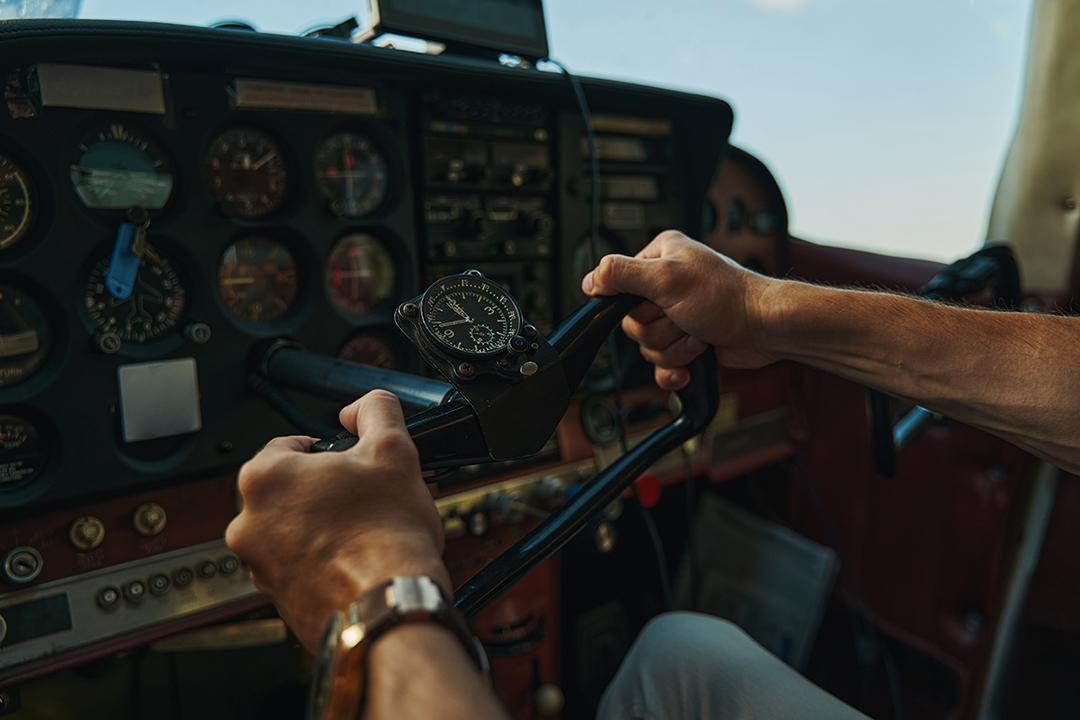
Can your airspeed indicator show a zero reading? Is your altimeter set to the local pressure? Does your magnetic compass actually work? Are your fuel gauges working? What about your oil pressure and temperature gauges what are they reading? Do your position lights work? How about your anti-collision lights?
And while you're at it, make sure the rest of your instrument lighting is working properly so you can see what you're doing. Oh and make sure you can get at a spare fuse in case you need it
Go over each of the GRABCARD items
Does your alternator seem to be working? Is your radio equipment and navigational equipment working properly and suitable for the route to be flown? Is your GPS database up to date? Is your sensitive altimeter set to the local barometric pressure? Is the ball in the center of the turn and roll indicator?
Is your clock displaying hours, minutes, and seconds and actually keeping time? Does your attitude indicator seem to be working and showing the right pitch and bank? What about the rate of turn indicator is it giving you the right reading? And is your directional gyro actually pointing in the right direction?
Check all the stuff you need for your route and approach
have you looked over the NOTAMs to make sure there are no navigation aid outages at the airport you're leaving from or arriving at? Have you loaded up the approach plates for the route to be flown? Have you filed the IFR flight plan before takeoff? Have you identified an alternate airport if the weather's not cooperating?
What if you find out the attitude indicator is busted? Well under Part 91, that's a required instrument for IFR flying so you're not going to be able to legally take off on an IFR flight.
Unless you've got some super rare third attitude instrument system that lets you figure out your pitch and roll over a full 360°, the flight's got to be delayed or cancelled. So either get the attitude indicator fixed or don't bother taking off - no cutting corners.
Modern IFR Panels: Minimum Legal vs. Practical Safe
Many GA aircraft in 2026 have glass cockpits, synthetic vision, integrated autopilots, and dual-screen EFIS setups that far exceed the legal minimums defined by federal aviation regulations. But there's an important distinction between what's required and what's prudent.
The minimum equipment required for IFR centers on GRABCARD plus basic radios, transponder, ADS-B Out, and ELT. In practice, most IFR pilots prefer at least:
-
Dual com/nav radios for redundancy
-
IFR-certified GPS with WAAS
-
A moving map display for situational awareness
-
Some form of backup attitude source (standby AHRS or vacuum-driven gyro)
Common upgrades like digital attitude/heading reference systems, engine monitors, and ADS-B In weather and traffic displays are safety enhancers-not legal requirements. They help pilots manage weather conditions, avoid other aircraft, and reduce workload during demanding IFR procedures like radar vectors to an instrument approach in low IMC.
Glass cockpit failures can be particularly insidious. A single AHRS failure may simultaneously remove your attitude indicator, heading indicator, and rate-of-turn display-knocking out multiple GRABCARD items at once. Understanding degraded modes and having a backup plan is essential for aircraft safely completing any IFR flight.
Equipment is only as effective as the pilot's training, proficiency, and disciplined adherence to instrument flight rules. A $100,000 avionics suite won't save a pilot who hasn't practiced partial-panel procedures or doesn't stay current on IFR approaches. Within six months, pilots must log six instrument approaches to remain current for IFR, a basic pilot in command responsibility for safe operations.
