Private Pilot Oral Test: Checkride Guide
Jun 09, 2026
Preparing for your private pilot oral test can feel overwhelming, but understanding what to expect is key to success.
This comprehensive guide breaks down the oral exam's core topics, common questions, and expert strategies to boost your confidence. Dive in to master the knowledge and ace your checkride with ease.
Documents, Eligibility, and Checkride Paperwork
Before you even think about asking a content question, your designated pilot examiner needs to satisfy themselves that you are actually qualified to take the private pilot checkride and begin the practical exam.
This is the admin bit that protects both of you and makes sure the checkride can go ahead in the first place.
You need to have your airworthiness ducks in a row, which includes getting to grips with the requirements for onboard documents (that's the ARROW thing) and the mandatory inspections (a.k.a. AVIATES).
Have these documents ready on the table:
-
Government-issued photo ID
-
Student pilot certificate (with appropriate endorsements)
-
Current medical certificate (third-class or BasicMed)
-
Logbook with all required endorsements
-
Completed IACRA application (Form 8710-1)
-
Knowledge test results (Airman Knowledge Test Report)
The examiner will then go through all these with a fine toothcomb and make sure that your endorsements add up to the ACS requirements that means the solo flight time, cross-country stuff, night flying and all that jazz.
FAR Part 61 has all the rules on medicals, logbook stuff and currency requirements, so be prepared for the examiner to pull those out of the hat.
Now, get all the aircraft documents tidied up in a nice binder that's the airworthiness certificate, registration papers, operating limitations, weight and balance stuff and the maintenance logs that show all the latest inspections (annual, 100 hour, ELT, transponder and pitot-static).
The stats say that about 12% of checkrides get turned down because of paperwork gremlins. When the examiner asks you to prove that your flight is on the level, walk through each document systematically and show them the way it's done.
Core Subject Areas in the Private Pilot Oral Exam
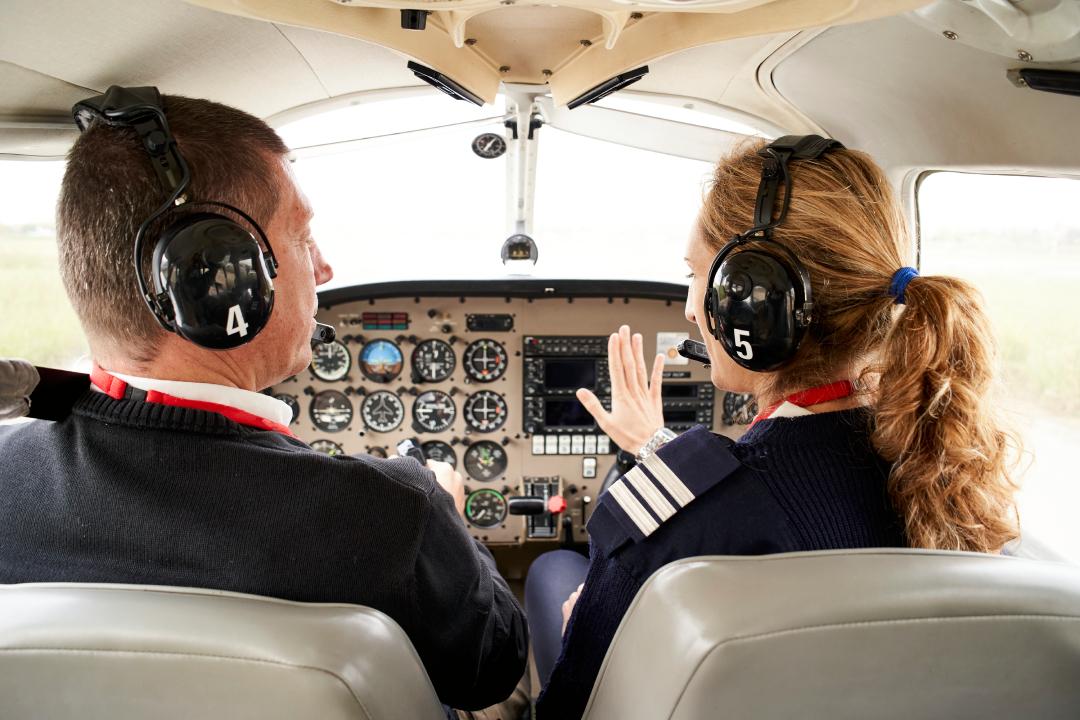
The oral exam is a big deal in the private pilot checkride and not just because it covers all the subjects from the ACS Areas of Operation and Task.
What really matters is that examiners get to see how you think so they'll often go back to the subjects you need work on. If you want to nail the oral exam, don't just try to memorize all the charts and regulations focus on getting a real feel for the subject matter.
And you know what? That means examiners will ask you to explain things in your own words & apply them to real-world situations not just spout numbers back at them.
Major subject groupings include
-
Pilot qualifications, privileges, and limitations
-
Aircraft systems and emergency procedures
-
Weather interpretation and aeronautical decision making
-
Airspace classifications and VFR sectional charts
-
Performance and limitations calculations
-
Regulations relevant to private pilots
A lot of examiners like to use scenario-type questions too. For example, they might ask you: "It's July in California and super hot you're flying from KCRQ to KHND, and you need to go over all your preflight planning & whether or not you can actually fly this thing".
Performance and limitations basically means doing all the math for weight and balance, takeoff/landing distances, and crosswinds all using your Pilot Operating Handbook (POH) as your guide.
But it's not just about getting the numbers right, it's about understanding why you made them. The oral exam guide series, and handbooks like the Pilot's Handbook of Aeronautical Knowledge are basically the go-to resources for studying, and they line up with these core areas.
Pilot Qualifications, Privileges, and Limitations
This bit covers things you need to know about being a pilot in command and splitting costs with other pilots or passengers. For a private pilot, that means getting to grips with currency requirements, the rights and restrictions that come with your private pilot certificate.
Typical question themes include
-
Required documents to carry (pilot certificate, photo ID, medical)
-
Currency requirements for passengers (three takeoffs and landings within 90 days, full-stop for night operations)
-
Flight review requirements (every 24 calendar months)
-
Private pilot privileges regarding compensation or hire
Examiners frequently ask about pro-rata expense sharing on recreational flights and what counts as prohibited compensation.
Be ready to explain when you can act as PIC in different scenarios night flights, marginal weather, or flying into Class B airspace and what limitations apply to your certificate.
Aircraft Systems and Emergency Procedures
Examiners are after pilots who have a solid grasp of their aircraft systems, so they can troubleshoot the sorts of issues that might pop up in real life.
Knowing your way around the engine, fuel, electrical, hydraulic, and pitot-static systems is key and it doesn't hurt to be aware of some of the critical V-speeds you've been told about.
Describe these systems in plain language:
-
Engine operation (four-stroke cycle, dual magnetos, fuel delivery)
-
Electrical system (alternator, battery, essential and non-essential buses)
-
Pitot-static system (airspeed, altimeter, vertical speed)
-
Vacuum system (attitude indicator, heading indicator)
-
Fuel system layout (gravity-fed vs. pump-fed, selector positions)
When you sit the oral exam, you can expect to be grilled on your knowledge of aircraft systems - including what to do in an emergency situation.
Be prepared for some pretty realistic scenario questions like what you would do if your oil pressure went down to zero on takeoff.
You'll need to be able to tell the examiner what the warning lights and instruments will be telling you, explain how to troubleshoot the problem, including how to use the checklists and make any diversion decisions and yes, it's okay to pick up a pencil and draw a simple diagram to show how all the bits fit together.
Airspace, VFR Sectionals, and Visibility/Cloud Clearance Rules
Airspace and sectional chart questions have a nasty habit of turning up on every private pilot oral exam, and just as often they catch those who haven't put in the prep work off guard.
Getting your head around airspace classifications means knowing the rules for Class B, C, D, E and G airspace - as well as what you need to do to avoid cloud and make sure you've got visibility to spare.
The National Airspace System is a beast to wrap your head around, with different classes of airspace all having their own boundaries, equipment requirements, and weather rules.
Next thing you know the examiner will be slapping a VFR sectional in front of you and asking you to figure out what all the symbols and boundaries and special use airspace mean for a particular route.
Knowing your way round a VFR sectional chart and being able to spot its various symbols is basically essential, since more often than not they come up in the oral exam.
Practice recognizing:
-
Class B (blue shaded), C (magenta circles), D (blue dashed), and E (magenta vignette) boundaries
-
MOAs and restricted areas (hatched patterns)
-
Victor airways (blue solid lines)
-
Tower vs. non-tower airports
Now Class A airspace is all about flying by the book with instrument flight rules (IFR). To fly in this airspace you've got to keep a minimum of 3 statute miles of visibility, and 1,000 feet above, below and to the side of any clouds.
Class B is a bit more complicated, since you've got to have 3 statute miles of visibility, and you're got to be clear of clouds and that means getting clearance from air traffic control too.
Class C airspace needs you to keep a minimum of 3 statute miles of visibility, and to clear of clouds by 1,000 feet above, 500 feet below and 2,000 feet to the side you also have to talk to air traffic control before you go in.
It's a good idea to practice with some real-life examples from your planned flight route so say KCRQ to KHND identifying the airspace for each bit.

Weather, ADM, and Cross-Country Planning
These days, checkrides put a lot of emphasis on aeronautical decision making and evaluating weather.
Examiners often hammer home the importance of Aeronautical Decision Making (ADM) during the oral exam, and they want to see how you make safe and sensible decisions with the cards you've been dealt.
A big part of this is looking at how pilots deal with issues like hypoxia, over-breathing, and disorienting yourself in the air.
Weather information should be interpreted using METARs, TAFs, PIREPs, and surface analysis charts, with an understanding of related risks such as thunderstorms and icing. Expect requests to decode reports like:
KMIA 131951Z 18015G25KT 10SM SCT040 BKN250 28/22 A2992
Examiners will ask you to justify whether or not you should be flying, taking into account what the ceiling is, how much visibility you've got, how active the weather is, and how much wind you'll be fighting.
You can use tools like the PAVE framework (Pilot, Aircraft, Environment and External pressures), IMSAFE (Illness, Medication, Stress, Alcohol, Fatigue and Emotion) and the 3P model to help think through your decision and your own personal limits.
For example, lets say you've got a flight coming up and you're told there's marginal VFR ceilings at 2,500 feet above ground level, over some pretty uneven terrain.
What would you do? Would you re-route, or just delay the whole thing? This is all about showing you've got a good eye for flight planning and that you know what to do in tricky situations.
Regulations and FAR/AIM Application

While examiners may not expect specific FAR numbers memorized, they expect correct application to realistic situations.
The oral exam allows the use of reference materials like FAR/AIM and POH for questions regarding regulations and procedures.
Typical regulatory topics include:
-
Fuel requirements (30-minute reserve day VFR, 45-minute night)
-
Required inspections (annual, 100-hour, ELT, transponder, pitot-static)
-
Required equipment for day and night VFR
-
Cost-sharing rules and what constitutes compensation
Demonstrate how to look up a regulation if unsure. This shows the examiner you know how to find the correct answer rather than guessing. Use practical examples: “If my landing light burns out before a planned night flight, is this airplane legal?”
Common Private Pilot Oral Exam Questions and How to Approach Them
While examiners are all different, there are some common question patterns that show up on most private pilot orals. During an oral exam, your examiner may lay out scenarios that test your thinking on safety margins and how to make good decisions in tricky situations.
Just give them a quick answer and then pause to see if they want more info or a deeper dive. Practicing common checkride questions with a teacher can be a real confidence-builder and help you get your answers across more clearly, which is key to doing well during the oral.
Treat the oral exam like a normal conversation, it's okay to say "I don't know, but I can look that up" when it makes sense. Both students and instructors will get a lot out of this approach.
Sectional Chart Symbols and Legend Use
No applicant can memorize every symbol. Instead, become comfortable using the VFR sectional legend quickly and confidently. An examiner might point to a random symbol a tower, obstruction, or airspace boundary and ask “What does this mean and how does it affect your flight?”
Practice techniques:
-
Have an instructor quiz you on random chart locations
-
Identify MEFs (Maximum Elevation Figures) for unfamiliar terrain
-
Explain operational implications of each symbol you identify
Reading charts on the fly shows real-world competence and prepares you for further study when pursuing advanced ratings.
Visibility and Cloud Clearance Scenarios
Examiners are going to combine airspace and weather questions and give you a scenario like: you're at 4,500 feet MSL in Class E airspace what do you need for minimum visibility and cloud clearance?
The standard is pretty clear in controlled airspace below 10,000 feet you need 3 statute miles visibility with a cloud base at least 500 feet below, 1000 feet above, and 2,000 feet away side to side. But things change when you're above 10,000 feet in that case you need 5 statute miles visibility and a whole lot more cloud clearance.
When you're in a situation where VFR flying is technically legal, but you're still not safe because of the terrain or a thunderstorm, you need to tie your minimums to what's legal and then also think about what you're comfortable with what you're going to plan to fly in, not just what is allowed.
Show the examiner you don't always plan to push the limits - that you've got some sense and are going to fly safely.
Strategies to Prepare for the Private Pilot Oral Portion
Preparation approaches vary: commercial oral exam guide series, FAA handbooks, instructor-led quiz sessions, and self-created outlines all have value. This resource prepares applicants effectively when used systematically.
Use the ACS as a checklist, highlighting all Tasks with oral exam elements. Build a personal binder organizing topics by Area of Operation with bullet answers and FAA references. Mock orals with CFIs and other pilots simulate checkride pressure.
A structured Private Pilot Class can also help reinforce these concepts through organized lessons, instructor feedback, and scenario-based training.
Practice speaking clear, structured answers aloud use phrases like “first, second, finally” to keep explanations organized under stress.
Using FAA Resources and Oral Exam Guides Effectively
The Pilot's Handbook of Aeronautical Knowledge, Airplane Flying Handbook and the FAR/AIM are the top sources of info and they're also the foundation of all correct oral exam answers.
They've got everything from airport ops to human factors covered, and you'll definitely want to have them on hand for the exam.
But commercial question sets in Q&A format can help you check your understanding just be sure to cross-check them against the real thing to make sure you're not just memorizing answers, use them to highlight areas where you need more study.
And don't forget to get creative with your book-keeping make it easy to flip to important pages by creating some tabs, for example.
That way you can stay on top of your revision without getting too bogged down in one particular study guide.
Building and Using Your Own ACS-Based Oral Outline
Writing your own outline reinforces learning through active engagement. This comprehensive guide lists a systematic approach:
-
Start with the Private Pilot ACS
-
List each Task with knowledge elements
-
Note relevant FAR or handbook chapters
-
Condense topics into 3-5 bullet notes focusing on definitions, key numbers, and examples
-
Turn your outline into flash prompts for practice sessions
A personalized outline is more flexible than generic materials since it reflects your aircraft, home airspace, and typical missions.
Many pilots also organize their preparation around a Jeppesen syllabus private pilot training framework to ensure their study progression follows a logical sequence from basic knowledge areas through checkride readiness.
When your instructor can read prompts and you deliver ready responses, you are prepared.
Mindset, Communication, and Checkride-Day Tips

Mindset and communication style strongly influence examiner perception. Stay calm, take a breath before answering, and ask for clarification if a question is unclear rather than guessing.
Examiners appreciate honesty. Saying “I’m not sure, but here is how I would find the answer” demonstrates judgment. Treat the oral exam as a professional cockpit briefing with another experienced person in aviation.
Day-of tips:
-
Get good sleep the night before
-
Bring water and a snack
-
Know where restrooms are located
-
Pre-organize all documents to reduce initial stress
Handling Difficult or Unexpected Questions
Examiners love to throw curveballs questions about scuba diving before you fly, weird airspace scenarios or system failures that most pilots will never encounter. They're looking to see how you'd handle something completely out of the blue.
Instead of staring blankly into space, just own up to not knowing the answer. Share whatever bits of knowledge you do have and walk the examiner through how you'd go about researching the issue or dealing with it in real life.
Take a deep breath, pick apart the situation using the ADM framework and explain your thought process in a clear, calm voice.
One time I knew a guy who got stumped by some obscure regulation but he managed to turn things around by showing the examiner exactly where that rule was hiding in the FAR/AIM and he ended up passing.
The point of the checkride isn't to get every single question right it's to demonstrate that you're a safe pilot who's willing to learn and adapt to whatever the real world throws at you.
When you show that you're prepared for the unexpected and can think on your feet, you're showing competence.
Final Thoughts and Next Steps After Passing the Oral Exam
The private pilot oral is manageable with structured preparation, honest self-assessment, and clear communication. You now have a general refresher on what to prepare and how examiners approach the exam.
Passing the oral portion is only half of your private pilot checkride many concepts discussed will carry directly into the flight portion. After earning your certificate, continue using these materials for future flight reviews and advanced ratings.
Stay connected with your instructor and other pilots to discuss real-world scenarios. This comprehensive guide serves as a foundation not just for the check ride, but for a lifetime of safe and confident flying. Now go plan your preparation, review your sectional, and prove you are ready.
