Jeppesen Private Pilot Syllabus: Structure, Lessons, and Training Flow
Jun 10, 2026
Discover how the Jeppesen syllabus private pilot training offers a clear, FAA-approved path from beginner to certified pilot.
This comprehensive, competency-based syllabus integrates ground lessons and flight training, ensuring you master every skill needed for success. Keep reading to explore its structure, lessons, and real-world approach.
Overview of the Jeppesen Private Pilot Syllabus
The latest edition of the Jeppesen Private Pilot Syllabus (such as 10001292-006) is used by flight schools all over the country as the foundation of their private pilot training programs.
The idea behind this syllabus is to cover every single bit of ground school material and flying task that you'll need to pass both the knowledge test and the practical test but it does it by breaking it all down into bite-sized chunks.
So rather than diving straight into anything complicated, you'll learn one thing at a time, building on what you already know and making it easier to pick up the next thing.
The Jeppesen Private Pilot Syllabus introduces competency based training by bringing together both ground school and flight lessons all in line with the FAA's guidelines for private pilots, as set out in the Airman Certification Standards (ACS).
It's designed to get new students through to their first certificate, whether they're training on their own under Part 61 or going through a flight school that's registered under Part 141.
At Jeppesen, they're all about making pilot training a more real-world experience that's why their Guided Flight Discovery Pilot Training System focuses on getting you practical flight experience, while also keeping a strong emphasis on safety and making sure you really understand the basics of aeronautics.
The Jeppesen Private Pilot Textbook is designed to go hand-in-hand with the syllabus it covers all the aeronautical knowledge that you'll need to pass the tests, and is set out in a way that helps you learn exactly what you need to.
Guided Flight Discovery takes all that textbook knowledge and turns it into practical flight training that's where you learn the skills you need to control an airplane, and make good decisions in flight. With all this academic support behind you, you'll be ready to pass both the knowledge test and the practical test in no time.
FAA Alignment: Part 61, Part 141, ACS, and CBTA

The fact that the current Jeppesen Private Pilot Syllabus has the blessing of the Airman Training and Certification Branch (AFS-800) is a big deal it means flight schools can use it with confidence, knowing it checks all the federal boxes.
This syllabus has got the FAA stamp of approval to boot, which means it's compliant with both Part 141 and Part 61 of the Federal Aviation Regulations. Here's how that breaks down:
-
Part 61 training: Flexible lesson pacing without rigid hour mandates beyond ACS minimums (40 hours total flight time)
-
Part 141 training: Structured programs with precise hour allocations and reduced minimums (35 hours total flight time)
-
Lesson tracking sheets document progress for both regulatory frameworks
The syllabus is also closely aligned with the Airman Certification Standards (ACS) and Competency-Based Training and Assessment (CBTA) the latest Private Pilot Airplane ACS (FAA-S-ACS-6C, which came into effect on May 31 this year) brought some changes to the risk management bits, which we've picked up on in this year's 2024 Private Pilot Syllabus.
The good news for flight schools is that the Guided Flight Discovery system aligns with FAA standards and is good to go for Part 141 and Part 61 training programs. We're talking 100% compliance with the rules here.
And talking of new ways of learning, the syllabus now introduces competency-based training, where students can only move on to the next lesson when they've shown they've got the hang of threat and error management.
Each lesson gets linked up to specific ACS codes so for example, students can see how aeromedical factors fit in with task AA.V.A.K1.
Structure of the Jeppesen Private Pilot Syllabus
The syllabus organizes flight and ground school instruction into three primary progressive blocks, known as Stages. Training is organized into logical stages: Stage I (pre-solo, basic maneuvers), Stage II (advanced maneuvers, cross-country, night flying), and Stage III (final prep, maneuvers review).
|
Stage |
Focus Area |
Key Milestones |
|---|---|---|
|
Stage I |
Pre-solo preparation |
Basic maneuvers, first solo |
|
Stage II |
Solo and cross-country |
Navigation, night flying |
|
Stage III |
Checkride preparation |
All ACS areas, mock checkride |
Each lesson contains integrated ground and flight components. A typical ground lesson includes assigned textbook reading, in-class discussion, homework, and references to the FAR/AIM. Ground and Flight Coordination maps out precise lesson objectives, flight and ground time allocations, and specific completion standards for every lesson.
Lessons follow a numbered progression that makes the building-block approach visible:
-
Lesson 1.1: Cockpit familiarization and pilot qualifications
-
Lesson 2.3: Straight-and-level flight with trim techniques
-
Lesson 3.2: Emergency procedures before solo endorsement
Each lesson includes course contents, lesson objectives for both flight and ground components, completion standards (such as 80% quiz scores), and spaces for instructor sign-offs.
Ground Training Lessons and Use of the Private Pilot Textbook
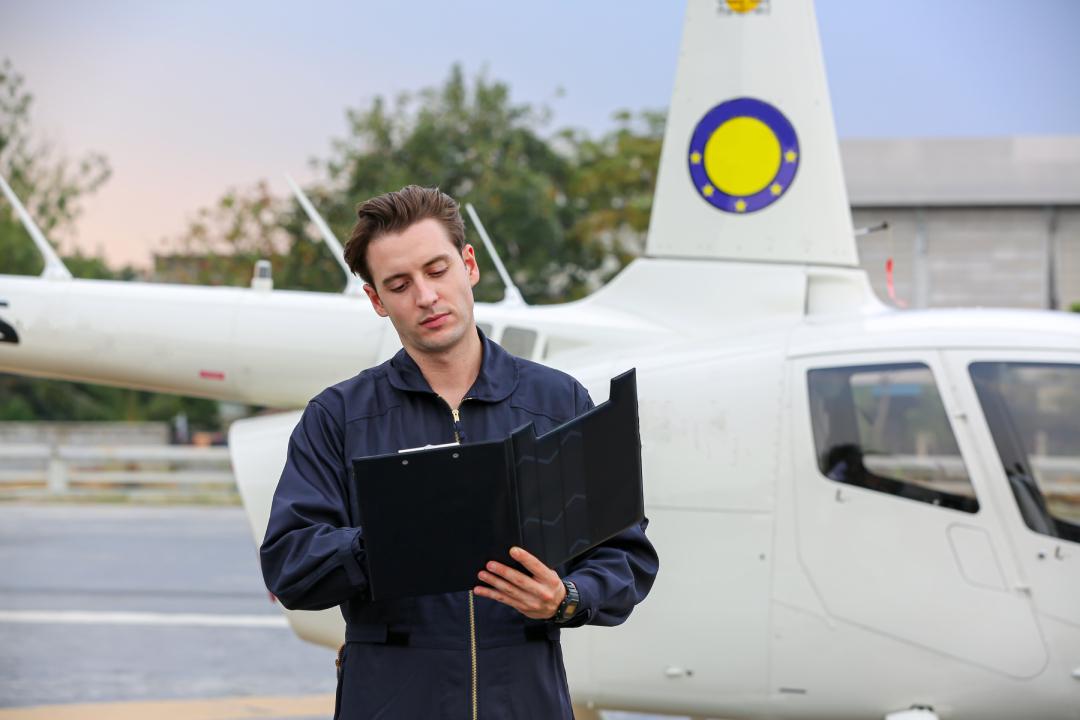
Ground training runs parallel to flight instruction, with each ground lesson supporting specific flight lessons in the same week or lesson block. This coordination ensures concepts transfer immediately to the airplane.
The Jeppesen Private Pilot Textbook provides the primary study material. Students complete chapter pre-reads before lessons, participate in classroom discussions, and take end-of-lesson quizzes that mimic FAA test question formats.
Other academic support materials include the Private Pilot Handbook supplements and online course resources.
Major ground school subject areas include:
-
Aerodynamics (lift, angle of attack, energy management)
-
Aircraft systems (engines, instruments, electrical)
-
Weather theory (METAR/TAF decoding, graphic weather products)
-
Navigation (pilotage, dead reckoning, VOR)
-
Regulations (14 CFR Part 91 requirements)
-
Aeromedical factors (hypoxia, spatial disorientation)
-
Flight planning (weight and balance, performance charts)
The textbook now includes new material such as content such as energy management graphic weather products and threat and error management models.
In addition to flight lessons, each ground lesson includes study questions that align with new textbook content to support knowledge test preparation.
Flight Training: Private Pilot Maneuvers and Lesson Progression
Flight training moves systematically from basic aircraft control to complex maneuvers and cross-country flying. The syllabus provides a step by step description of how each private pilot maneuvers sequence should unfold.
Key maneuvers covered in the flight lessons include:
-
Climbs, descents, and turns (±100ft altitude, ±10° heading)
-
Slow flight (maintaining VS1 ±5kts)
-
Power-off and power-on stalls
-
Steep turns (45° bank, ±100ft)
-
Ground reference maneuvers (S-turns, turns around a point)
-
Emergency procedures (simulated engine failure, forced landings)
Traffic pattern operations and landing variations receive significant attention:
-
Normal and crosswind takeoffs/landings
-
Short-field operations (clearing 50ft obstacles)
-
Soft-field techniques
-
Go-arounds with positive climb at Vx
Stage II (Instruments & Night Flying) expands on basic control by introducing short-field and soft-field takeoffs and landings, night flying, and basic radio navigation.
Stage III (Cross-Country & Checkride Prep) focuses on advanced cross-country navigation, flight planning, and weather assessment.
The flight instruction follows the FAA’s explain-demonstrate-practice-refine cycle. Each maneuver appears first in ground explanation, then instructor demonstration, followed by student practice in a logical sequence building toward solo cross country flight proficiency.
Integrating Ground and Flight: Scenario-Based Learning
At Jeppesen, we don't treat ground and flight training like two separate activities, but rather as interconnected threads that work together beautifully.
We've developed this approach through our Scenario-Based Training (SBT) system, which gets at the why and how of flying in a really practical way, using real-world scenarios that students can really sink their teeth into.
Sample training scenarios include:
-
Planning a 150nm VFR cross-country with real NOTAMs and TAF forecasts
-
Briefing a local flight with developing afternoon thunderstorms
-
Managing a diversion for unexpected weather
Here's how it all works our instructors will give you a briefing on weather products and how to assess the threat on the ground, then take you through the same scenario in the aircraft.
It's a really seamless way of learning. For example, if you've got a ground lesson on weight and balance, you'll be applying that lesson in your flight training that week as you're actually working out the aircraft's load and balance.
This whole approach ties in with the CBTA and ACS risk management concepts perfectly, and students are actually practicing the DECIDE model (Detect, Estimate, Choose, Identify, Do, Evaluate) in real-life scenarios rather than just some abstract exercise.
So, the flight becomes the classroom where you learn to make decisions, and with every flight you get to try out your error management skills in a bunch of different situations. It's all about getting that practical experience under your belt.
Stage Checks, Progress Tracking, and Instructor Tools

Stage checks serve as checkpoints between major training phases essentially giving you a pretty good idea of how your training's going.
Each stage check looks at how well you know your stuff, how well you can fly an aircraft and your overall risk management skills. To do this, they use a set of checklists that are tied to FAA Private Pilot requirements.
A typical stage check includes:
-
1-hour oral examination covering regulations, weather, and performance
-
Flight evaluation of all maneuvers to ACS tolerances
-
Navigation accuracy assessment (±10% time estimates)
-
Radio communication proficiency
-
Emergency procedure demonstration
The progress sheets then track all your hours, what lessons you've completed and what your instructor thinks you need to work on. With Part 141 programs you need to get at least an 80% in each stage before you can move on and the syllabus is set up to handle all that automatically.
This system is really helpful for both students and instructors because it helps identify any weak areas early on.
If for example you're having trouble with steep turns and you're consistently flying off in ±150ft then the syllabus will flag that up as something that needs more practice before you can get your solo privileges.
And that's a big help it means you don't get to the practical test and have a shock.
Preparing for the Private Pilot Knowledge Test
The Jeppesen syllabus doesn't wait till the end of the course to get you ready for your knowledge test- prep is woven in throughout the entire journey, not just some last-minute cram session By the time you've completed Stage II, you should be more than ready to take on that FAA exam after a solid review period.
Main preparation tools include:
-
Jeppesen Private Pilot Textbook end-of-chapter reviews
-
Private Pilot Online Course with interactive quizzes
-
Stage quizzes mimicking FAA question formats
-
Flashcard apps with 1000+ practice questions
- Private pilot prepware programs that provide focused FAA-style question practice and performance tracking
The private pilot online course includes adaptive practice aligned with the FAA question bank of 900+ items. Topics are weighted according to exam emphasis regulations (16%), weather (12%), and flight operations receiving the most attention.
Instructors use quiz scores and lesson reviews to determine readiness for the knowledge test endorsement. Students using Jeppesen materials achieve a 93% first-attempt pass rate compared to the 85% national average, demonstrating how the integrated approach supports aviation knowledge mastery.
Practical Test (Checkride) Preparation
Stage III focuses entirely on FAA practical test preparation and designated pilot examiner expectations. The syllabus maps each maneuver and task directly to ACS 6C tasks that apply to the private pilot certificate.
Checkride prep flights simulate the actual practical test profile:
-
Preflight planning with weight/balance and performance calculations
-
Oral questioning on regulations, weather, and systems
-
Full flight covering all ACS areas of operation
-
Navigation segments with diversions
Mock orals and mock checkrides fit into the syllabus’s final lessons, helping students prepare for the private pilot oral test and the flight portion of the practical exam.
Common practice questions include “Explain hypoxia symptoms and remedies” and “What are the VFR fuel reserve requirements?” The description of course contents for Stage III ensures no ACS task goes uncovered before the checkride date.
FAA data shows syllabus-guided students pass checkrides on first attempt at 88% compared to 78% for those without structured curricula.
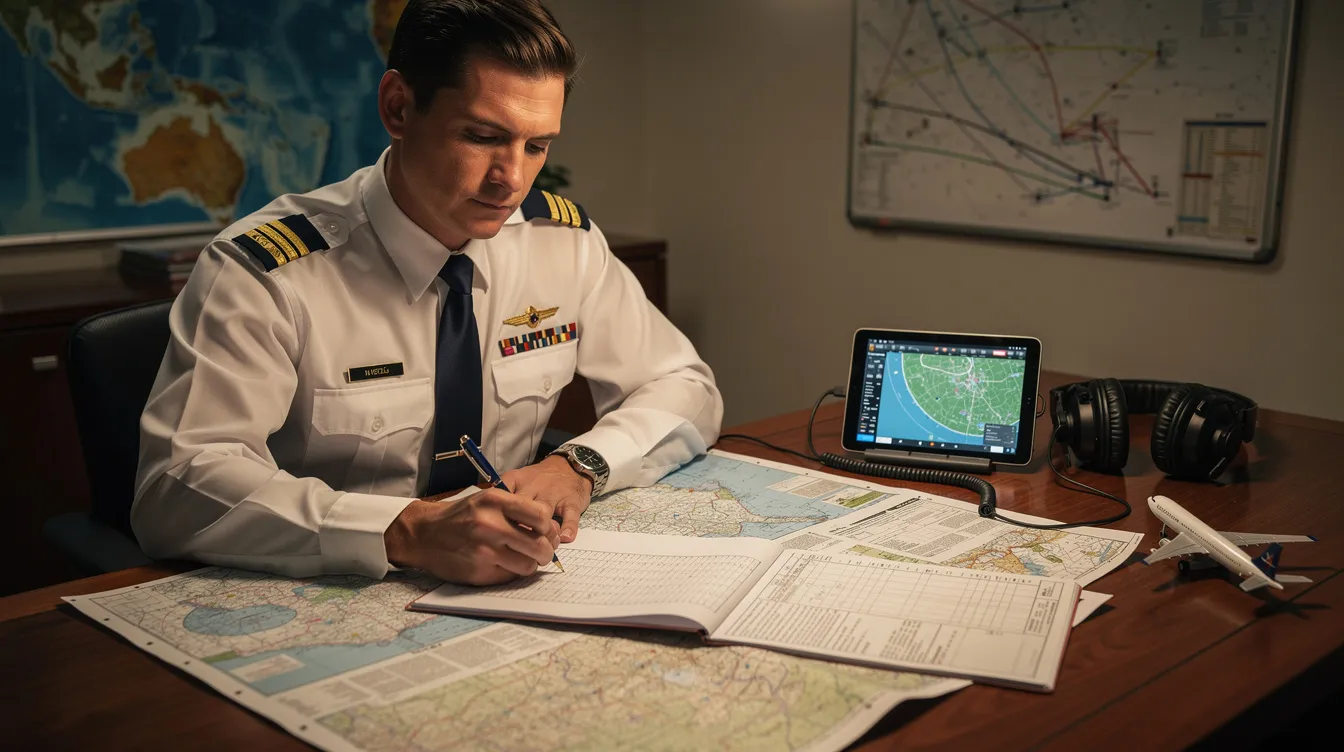
Using Jeppesen Materials as a Complete Private Pilot Training System
The Jeppesen Private Pilot Syllabus, textbook, instructor guides, and online resources function as an integrated system designed by the commercial division of Jeppesen specifically for pilot training.
Key components include:
|
Material |
Purpose |
|---|---|
|
Private Pilot Syllabus |
Lesson structure and progress tracking |
|
Private Pilot Textbook |
Aeronautical knowledge foundation |
|
Flight Maneuvers Handbook |
Maneuver reference and procedures |
|
Online Course |
Interactive study and test prep |
|
Instructor Kit |
Lesson plans and teaching aids |
Flight schools adopting this package as their standard private pilot syllabus gain consistency across instructors and airplane types. Students benefit from predictable lesson flow, clear expectations, and additional features that support both tests and real-world flying.
The system’s building-block progression, combined with scenario-based training and ACS alignment, creates pilots ready for the checkride and the responsibilities that come after. Choose a training program that uses a structured, FAA-accepted syllabus your path from student to certificated pilot will be clearer for it.
