Online Instrument Rating Course 2026
May 05, 2026
This online instrument rating course is designed to get US pilots the knowledge they need to nail the FAA Instrument Rating Knowledge Test and walk away with a confident pass on their practical checkride.
Whether you're a private pilot looking to open up more flying options or need to dust off your IFR skills after a bit of a layoff, this online ground school gives you the aeronautical knowledge to fly with confidence when the weather gets a bit hairy.
Quick Overview: Who This Online Instrument Rating Course Is For
The course targets three main groups: private pilots under Part 61 and Part 141 adding an instrument rating, lapsed IFR pilots needing a refresher before an IPC, and students transitioning from VFR to IFR operations in busy terminal airspace.
If you’ve ever wondered is instrument rating hard, this course gives you a structured path to build IFR knowledge step by step before the FAA test and checkride.
Key outcomes you’ll achieve:
-
Pass the FAA written test on your first attempt
-
Understand the IFR system in real-world terms, not just memorized answers
-
Feel confident flying in IMC and navigating Class B/C airspace
What’s included:
-
On-demand video lessons covering all §61.65(b) knowledge areas
-
FAA endorsement upon completion with qualifying scores
-
Money-back guarantee with exam fee refund up to $175
-
Access on any device with an internet connection
-
Training materials reflecting current FAA question styles and 2025-2026 regulatory changes
The program integrates real ATC audio, current approach charts, and scenario-based instruction that mirrors actual flight lessons and checkride standards.
Course Design: Built for Real IFR Understanding and Test Success
This online instrument rating course uses modern learning science micro-lessons, scenario-based training, and visual-heavy content to help you learn faster and retain more than traditional textbook methods.
Structure overview:
-
10-12 major modules organized by IFR topic
-
150-250 bite-sized lessons (most 2-5 minutes each)
-
20-30 hours of focused video content
-
Complete coverage of Part 61.65 knowledge areas
The design balances exam prep with real IFR proficiency. You’ll master holding pattern entries, approach strategy, risk management, and cockpit decision-making skills that matter when you’re flying actual IMC, not just sitting for a computer test.
Visual learning tools include:
-
Hundreds of illustrations and animated procedures
-
Narrated walkthroughs of IFR clearances, SIDs, STARs, and plates
-
Real-world chart examples from NACO and Jeppesen formats
-
Strategic summaries after each module
The interface features clear lesson sequencing, a progress tracking bar, integrated quizzes after each lesson, and a dashboard linking study guides, practice exams, and FAA source documents.
Students typically complete the course in 30-50 hours versus 100+ hours for self-study a 40-50% improvement in completion speed.
What You’ll Learn: IFR Ground Knowledge Aligned with §61.65(b)

The syllabus maps directly to FAA 14 CFR §61.65(b), ensuring nothing required for your knowledge test or checkride is skipped while building a strong foundation of IFR knowledge.
Main knowledge domains:
-
IFR regulations and procedures (§91 subpart B, alternate requirements)
-
Flight instruments, systems, and failure recognition
-
Air traffic control clearances and communication protocols
-
IFR navigation: VOR, GPS, RNAV, ILS, and LPV approaches
-
Departure and arrival procedures
-
Enroute operations and airway structures
-
Weather analysis (METAR/TAF decoding, icing, convective hazards)
-
IFR decision making and risk management
Real-world application:
-
Current FAA/NACO and Jeppesen-style chart examples
-
Decoded METARs and TAFs from actual weather scenarios
-
Full clearance readbacks mirroring what you’ll hear from ATC
-
Sample ILS approach briefings and holding pattern entries
Each lesson integrates references from the Instrument Flying Handbook, Instrument Procedures Handbook, and AIM with direct links inside the instruction.
Test Preparation, Endorsement, and Guarantee
This is a complete IRA test prep pipeline: study the material, practice under realistic conditions, earn your endorsement, and sit for the FAA exam with confidence.
If you're looking for a structured path, you can check out Flight Nerd Air Force’s online instrument ground school to build your skills step by step before test day.
How the endorsement works:
After completing all required lessons and passing internal final exams with 80% or higher, you receive an instructor endorsement authorizing you to take the FAA Instrument Rating Knowledge Test at any PSI testing center.
This saves the $100-200 cost of scheduling separate endorsement sessions with a flight instructor instrument airplane or instrument ground instructor.
Integrated test prep tools:
-
800+ IRA-style questions with detailed explanations
-
Timed practice exams mirroring PSI testing center format
-
Performance analytics highlighting weak areas for focused review
-
Flashcards for spaced repetition learning
Pass guarantee conditions:
Complete the full course, pass all official practice tests, and take the FAA exam within 30 days.
If you fail on your first try, you receive a tuition refund plus reimbursement of the exam fee (up to $175). Requirements include direct purchase, proof of exam attempt, and full course completion.
Access, Schedule, and Course Policies

Once you purchase, you’ll receive instant access to the entire program and can begin studying immediately.
Access details:
-
12-month standard access from purchase date
-
Optional lifetime upgrade available at checkout
-
All course updates during your access period included at no additional cost
-
12-month extension available at reduced fee if purchased within 30 days of expiration
Self-paced flexibility:
You can progress at your own pace binge a full module over a weekend or complete short 10-15 minute lessons during weekday evenings. Progress saves automatically anytime you close your browser.
Completion requirements:
-
All quizzes and progress checks must be completed within your active access period.
-
Final exam required for endorsement eligibility.
-
Guarantee applies only to students who complete 100% of the program.
Typical completion schedules:
-
Intensive: 2-3 weeks at 20-30 hours per week
-
Part-time: 6-8 weeks at 3-5 hours per week
-
Course cost: around $250-350 depending on access tier
Technology, Devices, and Learning Experience
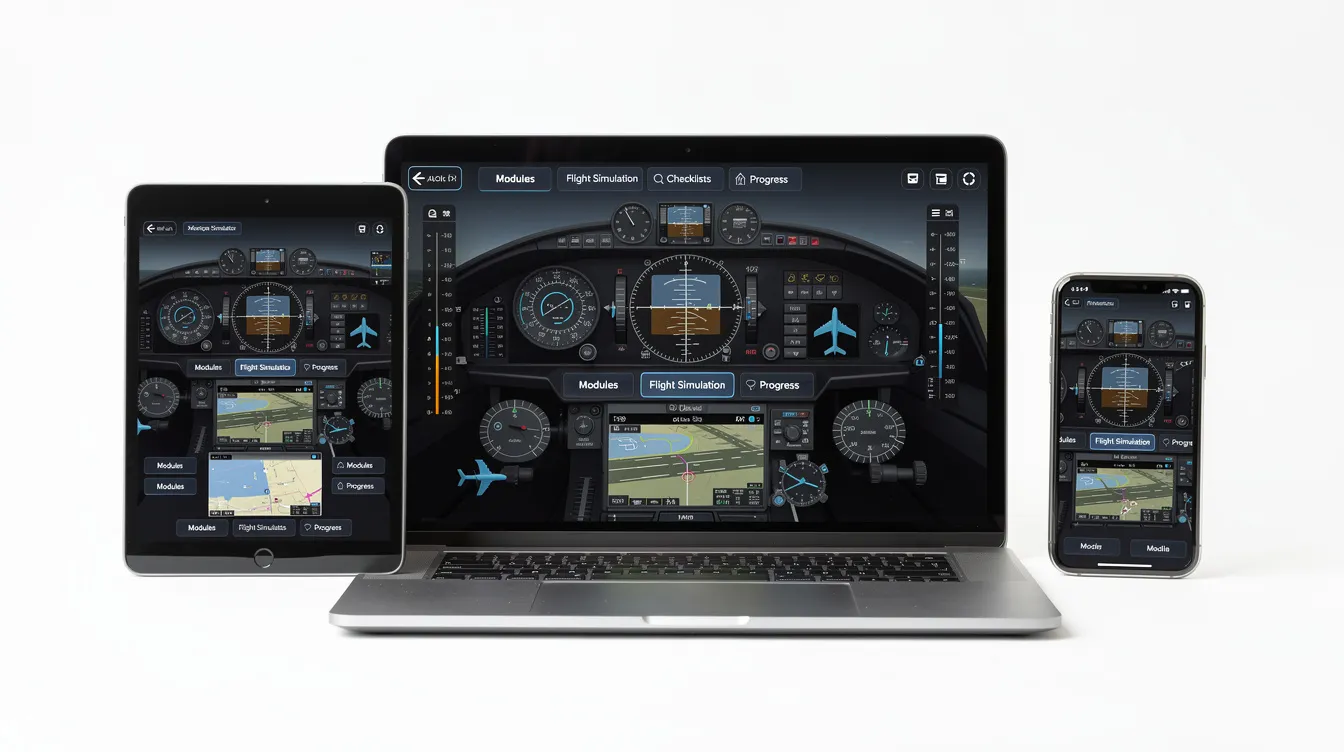
The course is entirely web-based and works on modern browsers across Windows, macOS, iPadOS, Android tablets, and smartphones.
Technical requirements:
-
Stable broadband internet connection
-
Up-to-date browser (Chrome, Edge, Safari, or Firefox)
-
Audio-capable device for video narration
Cross-device experience:
Progress syncs between mobile devices automatically. Review holding patterns on a tablet in the hangar, then continue a weather lesson on your laptop at home.
The mobile-friendly layout displays large, readable charts with simple controls optimized for 10-inch tablets and mid-size phones.
Optional features:
-
Downloadable checklists and briefing templates
-
Offline-readable strategic summaries
-
Completion certificate upon finishing
Instructor Expertise and Teaching Method
The course is developed by active CFIIs with thousands of hours of dual given across Part 91 and Part 135 operations.
Instructor qualifications:
-
5,000+ hours of instrument instruction experience.
-
Recent IFR operational flying in diverse weather conditions.
-
Checkride preparation experience across multiple aircraft types.
Teaching approach:
-
Conversational explanations that break down complex procedures step-by-step.
-
Cockpit footage from actual IFR flights.
-
Live ATC audio demonstrating real clearances and readbacks.
-
Engaging scenarios connecting regulations to practical decision-making.
Scenario-based learning includes:
-
Coastal low ceilings into Class C airspace.
-
Mountain IFR operations over the Rockies.
-
Winter approaches in icing-prone regions.
-
Single-pilot IFR resource management.
Students can submit questions, attend periodic live Q&A webinars, and access a curated FAQ addressing common stumbling blocks like alternate selection and LPV versus LNAV minima.
How This Online Course Fits into Your Overall Instrument Training

This is the ground training component of your instrument rating, helping you understand the requirements for instrument rating before you move deeper into flight training. You must pair it with flight training in an instrument rating airplane under an authorized flight instructor to meet all FAA requirements.
Regulatory context:
-
14 CFR §61.65(a) and (d)-(e) cover experience and proficiency requirements (40 hours instrument time, cross-countries, practical checkride)
-
This course satisfies the ground training under §61.65(b)
Integration with flying:
-
Complete weather and instruments modules before your first hood flights
-
Study approach procedures before your first ILS/LOC work
-
Finish regulations and enroute segments before long IFR cross-countries
Recommended study plans:
-
Start 4-8 weeks before beginning intensive flight training
-
Run ground school parallel with a Part 61 or Part 141 syllabus
-
Use the course to prepare for both the oral and flight portions of your checkride
Total instrument rating costs typically run $10,000-15,000; ground school represents just 2-3% of that investment.
Requirements to Enroll and Get the Most from the Course
Enrollment is open to any pilot eligible for an instrument rating, though certain prerequisites maximize your success.
Baseline requirements:
-
Private Pilot certificate (airplane single-engine land) or concurrent enrollment nearing completion
-
English proficiency for all aviation training
-
Third-class medical or BasicMed eligibility for eventual IFR operations
Recommended preparation:
-
Comfort with VFR navigation and radio communication
-
Basic aircraft control experience under the hood
-
Access to current instrument charts (ForeFlight or Garmin Pilot work well)
-
E6B flight computer or electronic equivalent
Time commitment guidance:
-
3-5 hours per week over 6-8 weeks for standard completion
-
2-3 week accelerated schedule before a targeted FAA test date
-
Plan to review weak areas identified by quiz analytics
Pricing, Payment Options, and Enrollment Steps
The course falls within the typical online IFR ground school price range of $250-350, offering substantial value compared to in-person ground school programs that often exceed $500.
Pricing structure:
-
Standard tuition with 12-month access
-
Optional lifetime access upgrade (+$50-100)
-
Interest-free installment plans available through common payment providers
Potential discounts:
-
Bundle pricing with other courses (Private, Commercial)
-
Group rates for flight schools and flying clubs
-
Periodic promotional pricing
Enrollment process:
-
Create your account
-
Choose your access plan
-
Complete secure checkout
-
Receive immediate login details
-
Begin with the orientation module explaining platform navigation
The purchase price includes all training materials, practice tests, and your FAA endorsement upon completion.
Student Outcomes, Reviews, and Ongoing IFR Confidence
Past students typically pass the FAA knowledge test on their first attempt, with reported pass rates of 92-98% for those who complete the full program.
What students report:
-
IRA scores in the 90s after 30-40 hours of focused study
-
Strong preparation for checkride oral questioning on approaches, alternates, and weather
-
Confidence entering the IFR system alongside their flight instructor
-
Effective refresher before an IPC for lapsed instrument pilots
Measurable results:
-
Average 4.8/5 satisfaction rating on internal surveys
-
25% higher long-term retention compared to textbook-only methods
-
20% higher pass rates than self-study approaches
Many instrument pilots return months or years later to review holds, alternates, and next generation GPS procedures, taking advantage of their ongoing access.

Your next step:
So what are you waiting for? Enroll now, pick a date that seems realistic, and start getting the skills and knowledge you need to feel confident as an instrument pilot.
And when you get there, the IFR system opens up a whole new world of opportunities more reliable travel, more challenging flying and of course, the chance to open the door to professional opportunities too.
