How to Get an Aviation License: Step-by-Step Guide
Jul 03, 2026
If you are searching for how to get aviation license in the U.S., the first thing to know is that the FAA calls it a pilot certificate, not a pilot's license. In everyday conversation, though, pilot's license, private pilot license, and private pilot certificate are often used interchangeably.
This guide explains the FAA requirements, costs, timelines, medical rules, and training steps aspiring pilots should understand before they begin training.
How to Get an Aviation License – Quick Answer
To become a pilot in 2026, you choose a goal, apply for a student pilot certificate, get the right medical certificate, complete flight training, and pass a checkride.
If you are researching how to become pilot in USA, this basic FAA process is the starting point for earning your first pilot certificate and moving toward more advanced ratings. Flight training includes both ground school and in-air training with a certified flight instructor.
In most cases, you will start with a discovery flight or introductory flight, then work toward a private pilot certificate as the foundation for an instrument rating, commercial pilot certificate, multi engine rating, and eventually an airline transport pilot certificate.
You must
-
Choose a goal: sport pilot certificate, recreational pilot certificate, private pilot certificate, or commercial pilot.
-
Complete a training program at a flight school or with an authorized instructor.
-
Pass the FAA knowledge test, also called the written knowledge test or written exam.
-
Pass the FAA practical test, also called the practical test or checkride, with a designated pilot examiner.
Typical timelines
-
Sport pilot: 2–3 months.
-
Private pilot's license: 6–10 months for most pilots flying 2–3 times per week.
-
Commercial pilot level from zero time: 9–18 months in accelerated programs, while aspiring airline pilots typically take 3 to 4 years to complete their training.
Key Questions Before You Start Flight Training
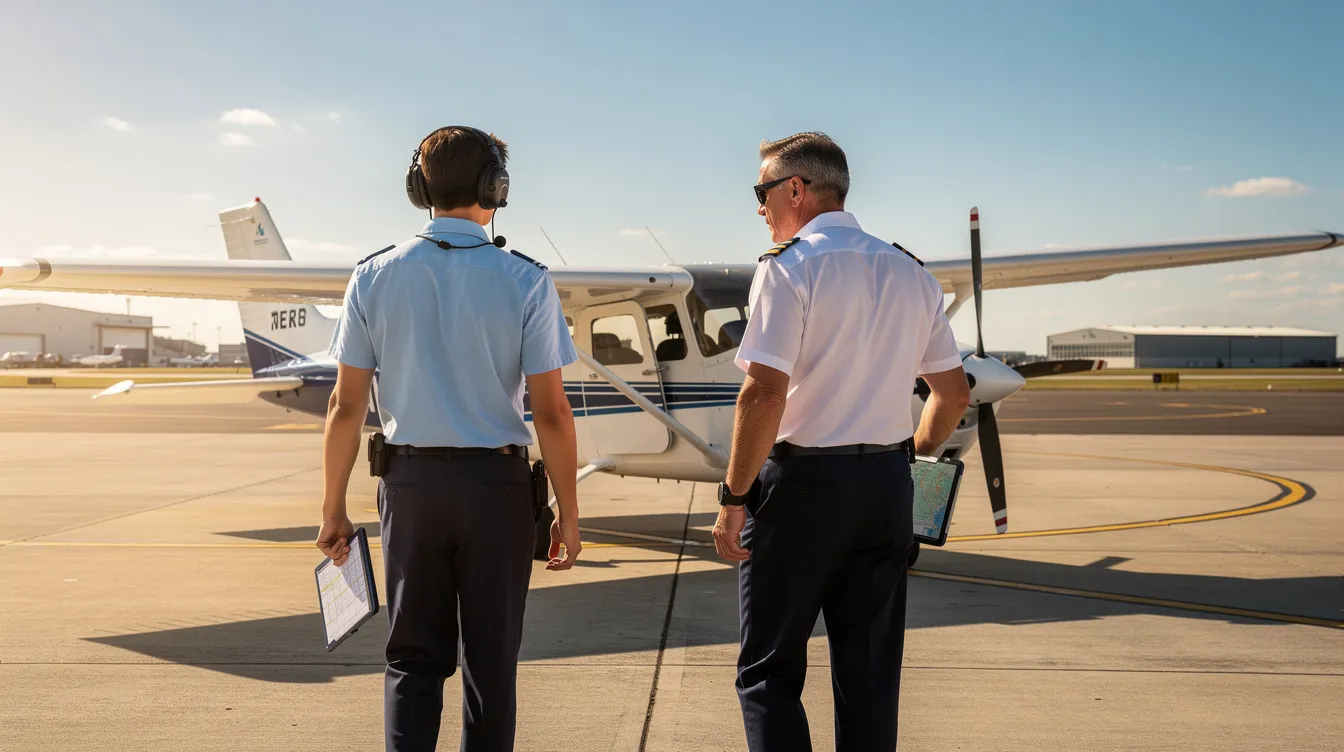
Before you begin flight training, answer a few practical questions about your goal, health, schedule, and budget. These decisions affect training time, total flight hours, and your aviation career path.
Do you need a college degree to become a pilot?
No college degree is required for FAA pilot certification. You can earn a private pilot license, commercial pilot certificate or even an airline transport pilot certificate without a degree. However, a college degree may help for airline pilot hiring, especially at major carriers or aviation programs connected to universities.
What can prevent you from becoming a pilot?
You must be able to read, speak, write, and understand English. You must obtain an FAA medical certificate to become a pilot for most private and professional paths, and certain medical issues can delay approval.
You also need to pass a written knowledge test to obtain a pilot license, and a practical test, or checkride, is required for pilot certification. Regulatory issues, drug or alcohol history, or failure to meet FAA requires standards can also create problems.
Different certificates have different privileges. A sport pilot flies small aircraft with limits. A recreational pilot has more restrictions than a private pilot. A commercial pilot may be paid.
The airline transport pilot certificate is the highest level, and the Airline Transport Pilot License is required for major airline pilots.
Age, time, and budget are the big constraints. The FAA requires pilots to be at least 16 to fly solo and 17 to receive a Private Pilot Certificate, and total pilot training costs can range from several thousand to tens of thousands.
Step‑By‑Step: From Zero Experience to Your First Pilot Certificate
-
Clarify Your Goal. If you want to fly for fun, consider a sport pilot certificate or private pilot certificate. If you want to become a professional pilot, plan for private pilot, instrument rating, commercial pilot training, flight instructor certificates, and airline transport pilot later.
-
Research Flight Schools and Training Options. Part 61 schools offer flexible training while Part 141 schools provide a structured approach. Many flight schools advertise fast timelines, but compare aircraft, safety culture, aircraft availability, instructor availability, weather, prices, and practical exams pass rates.
-
Book a Discovery Flight. A discovery flight usually costs about $100–$300 and lets a student pilot sit in the pilot seat with a flight instructor. You may try basic maneuvers and see whether flying lessons feel right.
-
Schedule Your FAA Medical Exam. An aviation medical examiner issues first-, second-, or third-class medicals. Private pilots usually need third-class privileges, while aspiring commercial pilots often start with a first-class medical to identify airline medical issues early.
-
Apply for a Student Pilot Certificate in IACRA. Use the FAA’s integrated airman certification system, commonly called IACRA.
-
A certified flight instructor, FAA designated pilot examiner, airman certification representative, or flight standards district office can verify the application. The airmen certification branch typically mails the certificate in approximately three weeks. You can read the FAA’s student pilot process on FAA.gov.
-
Start Ground School and Flight Lessons. Ground school covers aviation knowledge like aerodynamics and regulations. Ground school classes also cover weather, navigation, aircraft systems, radio work, and aeronautical knowledge. In flight lessons, you practice takeoffs, landings, stalls, maneuvers, and emergencies.
-
Complete Solo Flight Milestones. You do not fly solo until your instructor gives an instructor endorsement in your logbook.
Your first solo flight is often the most memorable day in training because you fly the aircraft alone for the first time.
-
Pass the FAA Knowledge Test. After ground training, your instructor endorsement lets you schedule the computer-based knowledge test at an approved testing center. Students must pass a written knowledge test and a practical test before certification.
-
Pass the FAA Practical Test (Checkride). The FAA practical test includes an oral exam and a flight portion with a designated pilot examiner. When you pass, you receive a temporary pilot certificate the same day.
Requirements and Costs for Major Types of Pilot Licenses
Requirements vary by certificate, category, and school. Flight training costs vary based on location and program structure, aircraft type, fuel prices, and instructor rates.
Sport pilot
The Sport Pilot Certificate requires a minimum of 20 flight hours. Most students need 25–30 hours. A sport pilot may often use a valid driver’s license instead of an FAA medical, subject to current FAA rules and aircraft limits. This path often costs about $5,000–$7,500 and allows limited flying in qualifying light aircraft.
Private pilot certificate
A minimum of 40 flight hours is required for a private pilot license under Part 61, and Flight training requires a minimum of 40 hours of instruction in that route. The Private Pilot License requires a minimum of 35 flight hours under approved Part 141 programs.
Most students need around 50-60 hours of flight training, and most students need 50-60 hours to prepare for their checkride. Budgeting for 50–70 hours is safer.
Private Pilot License training costs about $14,000 to $18,000, though some schools quote $10,000–$15,000. Private Pilot License training can be completed in as little as 2 months in intensive schedules, but most pilots take 3 to 12 months to earn their Private Pilot Certificate. A private pilot may carry passengers and fly for personal or recreational purposes, but not for compensation.
Commercial pilot
A Commercial Pilot License allows you to be paid for flying. If your goal is paid flying, learning the best way to become a commercial pilot can help you plan the right sequence from private pilot training to instrument rating, commercial certification, and advanced ratings.
Under Part 61, commercial pilot applicants generally need 250 total hours; Part 141 commercial courses may use lower approved minimums. The commercial pilot certificate requires higher precision, cross-country flight experience, night operations, and advanced training.
Commercial progression after private and instrument commonly adds $15,000–$25,000, but professional pilot training can exceed $100,000 in total costs. Average cost for domestic students to become airline pilots is $70,000.
Additional ratings, including instrument rating and multi engine rating, add cost and flight time but are standard for a professional pilot.
A Recreational Pilot License requires at least 30 flight hours, but it is less common because its privileges are limited.
Medical Certificates, Eligibility, and Student Pilot Rules
FAA medical rules matter because you cannot use every certificate for every kind of aviation work. Review current standards with an AME and the FAA’s medical certificate validity guidance.
First-class medical certificate. Required for airline transport pilot privileges. It lasts 12 calendar months for pilots under 40 and 6 calendar months for pilots 40 or older when exercising first-class privileges.
Second-class medical certificate. Required for commercial pilot privileges. It lasts 12 calendar months for commercial privileges.
Third-class medical certificate. Common for private pilot operations. It lasts 60 calendar months for pilots under 40 and 24 calendar months for pilots 40 or older.
Student pilot eligibility. For airplanes, you usually must be at least 16 to hold a student pilot certificate; glider and balloon students may qualify at 14. The FAA requires a pilot to be at least 16 to fly solo in airplanes and 17 to receive a Private Pilot Certificate. You must meet English proficiency rules and medical rules when required.
Student pilot certificate use. You do not need the certificate to begin dual instruction, but you need it before solo operations. The student pilot certificate does not expire under current rules. Solo endorsements now go in the logbook, not on the plastic certificate.
During solo flight, you must carry required documents, including your student pilot certificate and medical certificate or approved alternative; failure can lead to FAA enforcement.
From Private Pilot to Professional: Advanced Ratings and Career Path
The usual career path is Private Pilot → Instrument Rating → Commercial Pilot → Flight Instructor → Airline Transport Pilot. Many pilots teach to build flight time while earning income.
Instrument rating
An instrument rating lets you fly under IFR and in lower visibility. It improves safety, reduces weather cancellations, and is usually expected for commercial work. Under Part 61, it includes instrument flight time, cross-country PIC time, and instructor training.
Commercial pilot certificate
Commercial training raises standards for planning, precision, and judgment. You need more cross-country, night, and advanced aircraft experience. Once certificated, a commercial pilot may be compensated for approved operations.
Flight instructor roles
A CFI, CFII, or MEI can train student pilots, teach instrument flying, or teach multi-engine skills. Working as a flight instructor is one of the most common ways to build the 1,500 hours needed for a full airline transport pilot certificate. Restricted ATP routes may reduce the hour requirement for certain military or approved university aviation programs.
Timeline, Study Tips, and Ways to Afford Flight Training
A realistic private pilot path is 6–10 months if you fly 2–3 times per week. Training time varies based on individual schedules and frequency. Epic Flight Academy students typically complete training in about 1 year, while accelerated programs can take about 9–12 months for broader professional sequences.
Weather, aircraft availability, instructor availability, and long breaks can slow progress. The best way to reduce wasted flight time is to study before each lesson and avoid gaps that force review.
For the FAA knowledge test, use FAA handbooks, test prep tools, and weekly study blocks. Coordinate ground lessons with flight lessons so airspace, weather, navigation, and regulations make sense in the airplane.
To afford training, look at scholarships, airport jobs, club rentals, flexible payment plans, and block rates. Prepare on the ground before every lesson; cockpit time is too expensive to waste.
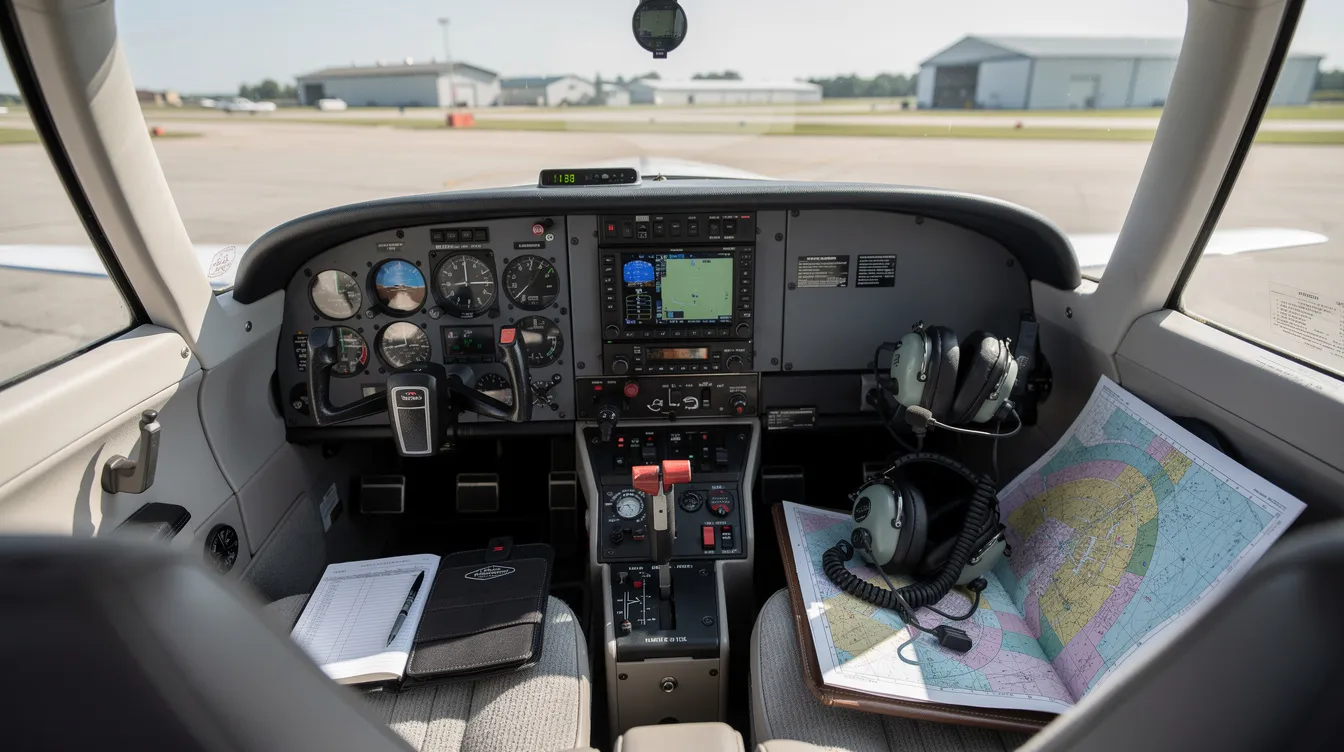
If you are ready to begin, schedule a discovery flight, visit a local flight school, and speak with a flight instructor about a customized plan. The first step is simple: get in the airplane, ask clear questions, and start building the habits that make safe pilots.
