How to Become a Pilot in the USA: Step-by-Step Guide
Jul 09, 2026
The journey from zero flight experience to commanding an aircraft is easier to map out than most people would have you believe.
Whether you just want to fly for fun or are looking to build a serious airline career, this guide is here to take you through every single step, certificate and milestone you need to become a pilot in the USA.
How to Become a Pilot in the USA – Quick Answer
In order to become a pilot in the USA, you're going to need to meet the FAA's eligibility requirements, then complete your ground school and flight training with a properly certified instructor, and pass the FAA knowledge and practical tests for each pilot certificate you decide to go for.
On top of that you're going to have to be able to read, write and speak English fluently, and have proof that you're a U.S. citizen or have the right to live and work in the country.
The typical professional track looks like this:
-
Discovery flight → confirm flying is right for you
-
Student pilot certificate + medical certificate → cleared to fly solo
-
Private pilot certificate → your foundation certificate
-
Instrument rating → all-weather flying skills
-
Commercial pilot license → legal authority to be paid for flying
-
Multi engine rating → qualify for twin-engine aircraft jobs
-
Certified flight instructor roles → build flight hours
-
Airline transport pilot certificate → highest FAA certificate
-
Airline pilot jobs → first officer position, then captain
Realistically, it's going to take 9 to 12 months of full time study to go from zero to a commercial pilots license, and around 2 to 5 years to get up to the hours you need to become a qualified airline pilot.
You don't need a college degree to do all this, but if you want to get on with a major airline, then most of them will expect you to have one.
Step 1: Decide What Kind of Pilot You Want to Become
Your career goals will dictate everything from the certifications you need to how much you're willing to spend. The required flight hours, ratings and cost vary significantly depending on whether you're aiming to fly recreationally or you've got your sights set on a full-time airline pilot career.
Understanding how to get aviation license requirements early will also help you choose the right training path and avoid unnecessary delays.
-
Hobbyist / private pilot - fly single engine aircraft for personal travel and fun
-
Commercial pilot - get paid to fly charter, cargo, corporate, or aerial work
-
Airline pilot - fly for regional or major carriers (American, Delta, United, Southwest) as first officer or aircraft commander
Helicopter, glider and military pilot careers all have their own rules and are outside the scope of this article. We're focusing here on fixed-wing airplane pilots under civilian FAA regulations.
Grab a pen and write down your end goal right now. Something like "become a commercial pilot and fly for a US airline as a first officer" should make every decision from here on in a whole lot clearer.
Step 2: Take a Discovery Flight and Research Flight Schools

A discovery flight is a 30–60 minute introductory flight where you sit in the pilot seat with an instructor and take some controls, typically costing $100–$250. Introductory flights help evaluate schools and instructors before you commit tens of thousands of dollars.
Think of your first flight as a low-risk way to confirm the cockpit workload feels right for you.
Research flight schools based on your training goals. Key factors to compare:
-
Part 61 vs Part 141 - Part 141 schools offer a structured training program that improves efficiency and consistency with lower FAA hour minimums; Part 61 gives flexibility to train at your own pace, and schools can vary in training pace based on your schedule and budget
-
Fleet and aircraft - flight schools should have modern fleets and experienced instructors (common trainers include the Cessna 172 and Piper Archer)
-
Consider location and aircraft availability when choosing a school - states like Arizona, Florida, and Texas offer year-round flying weather
Some schools bundle private pilot, instrument rating, commercial pilot license, multi engine rating, and flight instructor certificates into airline academy programs.
Questions to ask every school: total all-in program cost, average time to completion, instructor turnover rate, pass rates for practical tests, financing options, and whether the school shows a strong aviation safety standard and maintenance culture.
For more details, use the following link.
Step 3: Meet FAA Eligibility, Medical, and Student Pilot Requirements
Before you can fly solo or start flight training toward any certificate, you must satisfy FAA age, language, medical, and student pilot certificate rules.
-
Age 16 - minimum to fly solo an airplane
-
Age 17 - minimum to earn a private pilot license
-
Age 18 - minimum for a commercial pilot license
-
Age 23 - minimum for a full airline transport pilot certificate (restricted ATP available at 21 for approved programs)
You need at least a 3rd class medical certificate to start training. For the FAA medical process, the FAA issues three classes: Third Class (for student pilot and private pilot use), Second Class (for commercial pilot operations), and Third Class certificates are valid for 60 months if you're under 40. Before one is issued, you must meet FAA medical requirements and other medical requirements. Aspiring airline pilots should get a First Class medical early to surface any long-term issues.
Find an aviation medical examiner through the FAA's online directory, schedule your exam, and apply for your student pilot certificate through IACRA. The most important thing is to handle the medical early so any issues appear before you invest heavily in training.
You need a student pilot certificate to fly solo, obtained through an instructor or FAA office, but you can start lessons before it arrives. You must complete flight training with a certified instructor throughout your training.
Step 4: Complete Private Pilot Training – Your First Pilot Certificate
Getting your private pilot certificate is the really important first step if you want to become a pilot in the US. You'll be able to fly single engine aircraft for your own personal use, and once you've accomplished this you can start thinking about making a career out of flying as a commercial pilot.
Training has two parts: ground school (the theoretical part covering aerodynamics, weather, regulations, navigation) and flight lessons (takeoffs, landings, stalls, slow flight, emergency procedures, cross-country flying, and night flying).
Private pilot license training typically requires a minimum of 40 flight hours under Part 61 (35 under Part 141), with at least 20 hours dual instruction and 10 hours solo. However, most students require 60–70 hours of flight time to complete their training.
You must pass a written knowledge test and a practical flight test to earn certification. The testing sequence: pass the FAA knowledge test (multiple-choice FAA written exam), then the FAA practical test (checkride) with a Designated Pilot Examiner, covering an oral questioning session and a flight portion.
Typical timeline: 3–6 months for full-time students. Private pilot license training starts at approximately $9,500, with common US ranges of $9,000–$18,000 depending on location and aircraft rates.
Step 5: Add an Instrument Rating for All‑Weather Skills
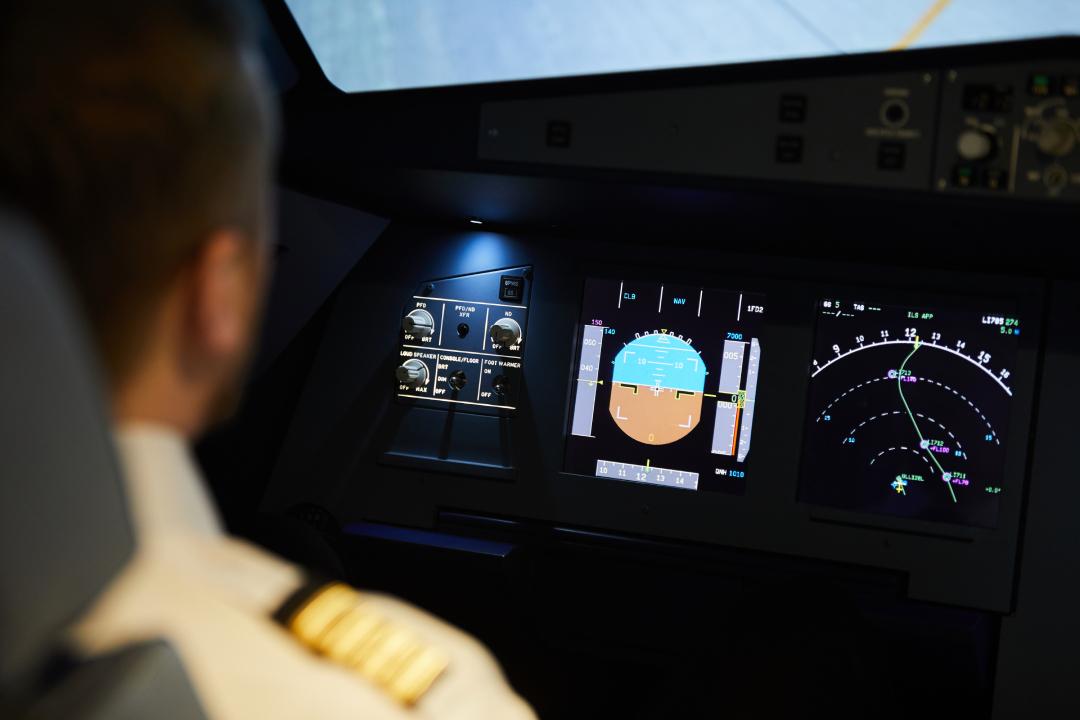
An instrument rating allows a pilot to fly under instrument flight rules, relying on cockpit instruments instead of outside visual references. An instrument rating allows navigation in low visibility conditions, making it essential for any professional pilot career path.
Before you can start the process, you'll need to have at least a private pilot license and meet some minimum flight hours to boot.
To actually get your instrument rating, you need 50 hours of flight time under your belt as the pilot in command and at least 40 hours of sim time where you're flying by instruments alone including some time with a certified flight instructor instructor for instrument.
The ground school and flight training bits of getting an instrument rating are pretty focused on things like holding patterns, doing instrument landings (like the ILS and RNAV types), what to do when you miss an approach and how to navigate from one place to another on instruments using things like VORs, GPS and airways.
To actually get certified, you'll need to pass a separate FAA knowledge test and then also a practical exam that's not part of your private license. And, to be honest, pretty much every airline expects new pilots to have this under their belt.
Step 6: Earn Your Commercial Pilot License (CPL)
A commercial pilot license is the legal turning point from hobby to professional pilot in the USA. A CPL allows pilots to be compensated for flying charter, cargo, corporate, aerial work, and more. If your goal is how to become private jet pilot, earning a Commercial Pilot License is one of the most important milestones on that career path.
High-level FAA requirements: minimum age 18, English proficiency, and you need a private pilot license before obtaining a CPL, plus an instrument rating for most practical purposes.
To earn a commercial pilot license, 250 flight hours are required under Part 61, including specified cross-country time, night flying time, and training in complex or technically advanced aircraft. A commercial pilot license requires about 250 flight hours total. CPL training typically takes 4 to 6 months to complete.
Commercial pilot training emphasizes more precise maneuvers steep turns, chandelles, lazy eights along with higher performance standards and fuel-efficient flying. You must pass FAA knowledge and practical tests for a CPL, and many integrated programs combine instrument and commercial training to save time and money.
Step 7: Add a Multi Engine Rating and Other Advanced Ratings
Pilots that are serious about building a career in the airline or corporate world need to get their multi engine rating this is a tough one to avoid in the industry. Having a multi engine rating allows you to fly planes with more than one engine, which is basically the norm these days.
Training covers asymmetric thrust, engine-out procedures, Vmc demonstrations, and performance planning for twin-engine airplanes like the Piper Seminole or Beechcraft Duchess. Multi engine training requires fewer flight hours than earlier certificates but costs more per hour, so students often schedule intensive blocks.
Additional ratings depend on career goals: seaplane rating, tailwheel endorsement, high-performance and complex endorsements, or type ratings for specific turbine aircraft later. While not every rating is mandatory, a multi engine rating significantly improves employability for commercial pilot and airline pilot positions.
Step 8: Become a Flight Instructor and Build Flight Hours
Once you've got your commercial pilots license, a whole bunch of pilots start building up those all important flight hours as a flight instructor.
Those airlines and corporate operators typically want to see at least a thousand to 1500 + hours under your belt, and the standard route to get there is by becoming an instructor.
Depending on which type of instructor you want to be, you've got three main certificates to choose from:
-
Certified flight instructor (CFI) - teach private pilot students
-
Certified Flight Instructor – Instrument (CFII) - teach instrument rating students
-
Multi-Engine Instructor (MEI) - teach multi-engine students
Benefits of instructing: getting paid to fly, rapidly accumulating pilot-in-command flying time, strengthening knowledge through teaching, and logging valuable instrument and cross-country flight experience.
CFI training focuses on lesson planning, teaching techniques, and deeper understanding of regulations and aerodynamics, ending with a demanding practical test.
Alternative time-building options include banner towing, pipeline patrol, and skydiver operations, but most pilots start as instructors because it offers the most accessible, structured path to high flight hours.

Step 9: Qualify for the Airline Transport Pilot (ATP) Certificate
The ATP certificate is the top dog when it comes to FAA pilot certificates, and for most airline-bound pilots it's the standard process for reaching airline eligibility after earlier certificates and hour-building; you'll need it to fly for any US airline under part 121 as a captain or first officer.
To qualify for a standard ATP certification you'll need to:
-
Minimum age 23 (or 21 for restricted ATP)
-
At least 1,500 total flight hours (the airline transport pilot certification requires 1,500 flight hours)
-
Commercial pilot license with instrument rating
-
Current First Class medical certificate
Restricted ATP reduces hour requirements: as low as 750 hours for military pilots or 1,000 hours for graduates of approved four-year aviation degree programs.
Before you even think about sitting that ATP knowledge test, you'll need to go through the ATP-CTP (Certification Training Program) which is a must-do ground and simulator course at big training centers that throws in some high-altitude ops, crew resource management and the works on how to fly turbine aircraft.
After passing the ATP knowledge test and the corresponding practical test, pilots are eligible for airline new-hire classes and type rating training on specific jet aircraft.
Step 10: Getting Hired – From Regional First Officer to Major Airline Captain
Once pilots hold an ATP certificate (or restricted ATP) and sufficient flight hours, the next step is applying to regional airlines, cargo operators, or charter companies for a first officer position.
Typical early-career roles include regional airline first officer, cargo operator co-pilot, or corporate jet co-pilot. Pay and schedules improve with seniority and operation type.
Regional flight experience builds turbine and multi-crew time, preparing pilots for major airline roles. Career progression follows: first officer → senior first officer → captain, with timeframes depending on hiring cycles, fleet growth, and pilot retirements.
Long-term, US airline pilots typically work 12–16 days per month with travel privileges and six-figure captain salaries at major carriers. Aviation careers offer dynamic work environments with strong earning potential across the world.
How Long Does It Take to Become a Pilot in the USA?
Timelines vary dramatically based on whether you want only a private pilot certificate or a full airline career.
-
Private pilot certificate - 3–6 months with frequent lessons (part-time students may take 6–12 months)
-
Zero to commercial / multi-engine - 9–12 months full-time
-
Zero to airline-ready flight hours - 2–5 years total, with most of that time spent building hours as a flight instructor
Factors affecting duration: weather, instructor availability, aircraft maintenance downtime, personal schedule, and how often you fly each week, since your training pace depends heavily on lesson frequency and consistency. Setting a weekly goal of 3–4 flight lessons helps maintain proficiency and avoid the extra cost of relearning skills between long gaps.
Students who fly consistently complete training faster with prior experience retained better between sessions.
How Much Does It Cost to Become a Pilot in the USA?
Total cost depends on your end goal, local hourly aircraft rates, fuel prices, and training efficiency. Pilot training costs range from $10,000 to over $100,000 depending on the career path.
-
Private pilot certificate - typically $9,000–$18,000 (private pilot license training starts at approximately $9,500)
-
Instrument rating - roughly $7,000–$12,000
-
Commercial pilot license + multi engine rating - brings total professional track into roughly $60,000–$120,000+
Common cost components: aircraft rental per flight hour, instructor hourly fees, ground school or online course fees, written exam fees (~$175), checkride examiner fees ($500–$1,200), headset, books, and medical exams ($100–$200).
Financing options include personal savings, private loans, flight school financing partners, GI Bill for eligible veterans, and scholarships through aviation organizations like black aerospace professionals groups and others. Always compare all-in program costs versus just hourly rates when choosing a school.
