FAA Certified Pilots: Certificates and Requirements
Sep 04, 2026
If you've ever looked up at a passing aircraft and wondered what it takes to fly one, the answer starts with three letters: FAA.
The Federal Aviation Administration controls who can legally fly in the United States and its certification system covers everything from a teenager's first solo to a veteran captain commanding a widebody jet. This guide breaks down every FAA pilot certificate, rating, and requirement you need to understand, whether you're planning your first flight lesson or mapping out a career in the airlines.
What Does "FAA Certified Pilot" Mean?
Being an FAA certified pilot lets you legally fly an aircraft in U.S. airspace that is if you meet the requirements. The Federal Aviation Administration gives out pilot certificates that you need to fly different types of aircraft.
These certificates aren't just suggestions or a good job well done they're the actual legal bit that lets you fly a plane in the States. The FAA makes sure you know your stuff, can actually fly the plane, and know the safety rules too. They check all that off by giving you a pretty tough run-through of training, tests, and being evaluated.
To earn certification, you must meet standardized training requirements, pass a knowledge test, and demonstrate practical flying skills, all codified in 14 CFR Part 61 (for individual training) and Part 141 (for FAA-approved flight schools).
You must be able to read, write, and understand English for communication purposes and pilots must adhere to Federal Aviation Regulations and flight plan protocols at all times. FAA certificates are respected universally and facilitate international operations, which is one reason other countries recognize and often reciprocate U.S. pilot credentials.
The Airmen Certification Branch is the FAA office in Oklahoma that keeps track of all pilot certifications. When you pass a flight check, they get to know about it and when your employer wants to double check your qualifications, this is where they go. At the end of 2024, the FAA had around 848,770 active pilots on record in the States.
Main Types of FAA Pilot Certificates
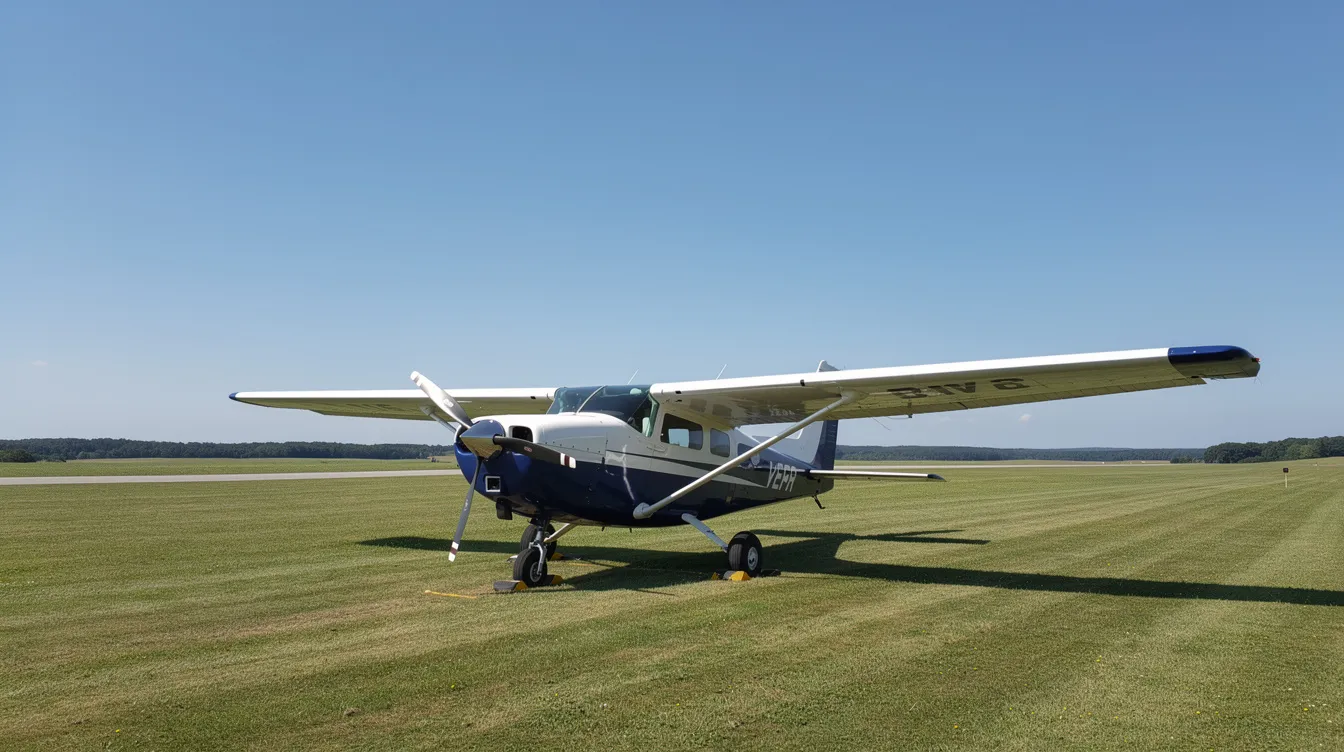
FAA pilot certificates range from supervised student flying to professional airline operations. The FAA issues an airman certificate that lets a pilot legally operate an aircraft when FAA requirements are met. The main requirements and privileges are summarized below.
|
Certificate |
Basic requirements |
Minimum flight time |
Main privileges and limitations |
|---|---|---|---|
|
Student Pilot |
Meet the age and English requirements; obtain the required instructor endorsements before solo |
No fixed minimum |
Allows solo training; no passengers or compensation |
|
Sport Pilot |
Age 17; English proficiency; qualifying U.S. driver’s license or FAA medical certificate; pass the required tests |
20 hours for airplanes |
The sport pilot certificate allows recreational flying with one passenger, with limited privileges and aircraft and operating limits |
|
Recreational Pilot |
Age 17; English proficiency; applicable medical qualification; pass the required tests |
The recreational pilot certificate allows daytime personal flying with one passenger; normally limited to 50 NM unless endorsed |
|
|
Private Pilot |
Age 17; English proficiency; applicable medical qualification; complete training and pass the required tests |
40 hours under Part 61 or 35 under Part 141 |
Allows personal flying, carrying passengers, and sharing permitted expenses; no flying for compensation or hire with a private pilot license |
|
Commercial Pilot |
Age 18; hold a private pilot certificate; pass the required tests; hold a second-class medical when exercising commercial privileges |
250 hours under Part 61 |
Allows compensation for permitted flying services; additional operating authority may be required |
|
Airline Transport Pilot (ATP) |
Age 23; hold a commercial certificate with an instrument rating; complete ATP-CTP before the multiengine ATP knowledge test; pass the required tests |
Highest FAA pilot certificate; required for airline pilots and PIC duties under Part 121 with an ATP certificate |
The Private Pilot entry includes an applicable medical qualification; for details on corrected distance vision, near vision, and color testing, see our guide to the eyesight requirements for private pilots license applicants.
The FAA also issues a remote pilot certificate under Part 107 for pilots operating small unmanned aircraft systems, following a separate certification path from the crewed-aircraft certificates listed above.
R-ATP note
If you're 21 or older, or a pilot who's served in the military or graduated from a special aviation program, you may be able to get an R-ATP with fewer flying hours needed. These special ATP certificates only let you fly as a co-pilot until you’re able to complete the full ATP requirements.
Flight instructor certificates which are CFI, CFII, and MEI – are separate credentials that let you teach and are often used to build up experience that gets you towards an ATP certificate, the highest level typically required for airline pilots. Your typical career path is probably: Student → Private → Instrument → Commercial → CFI → ATP
Instrument Rating: Flying in the Clouds
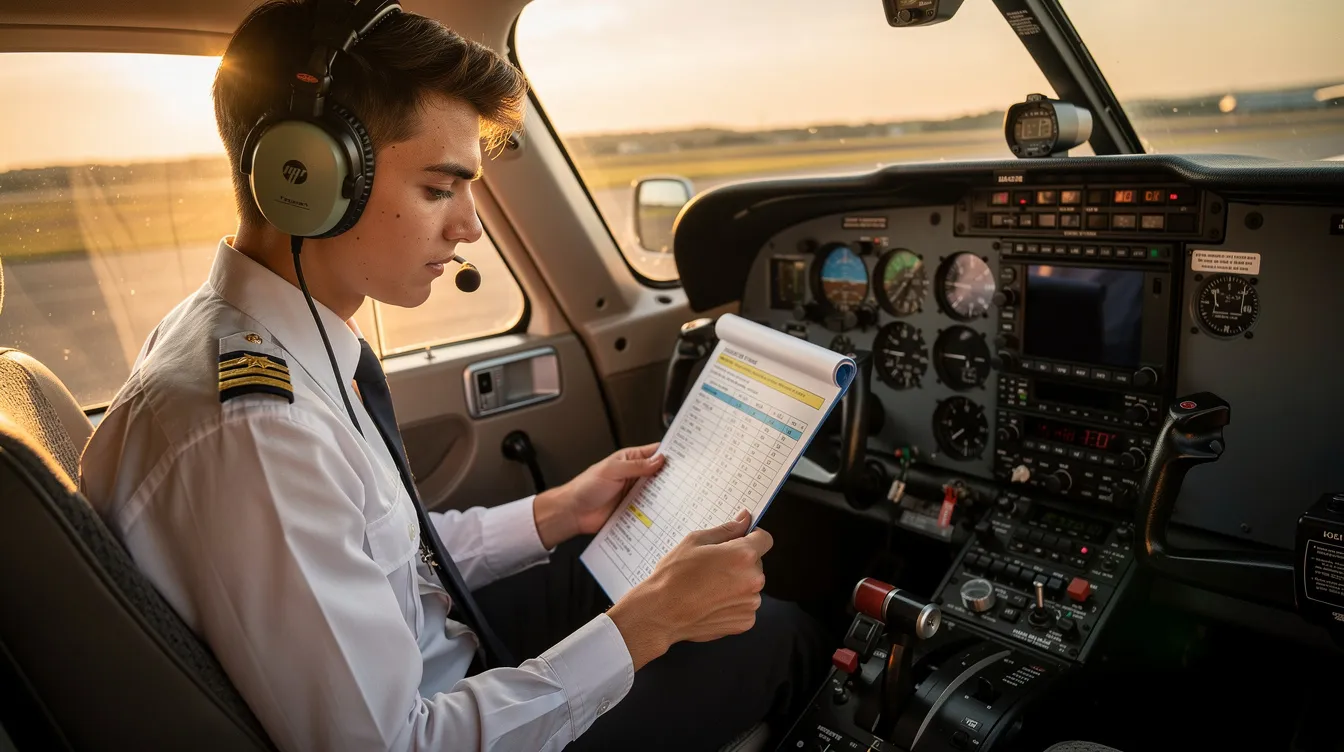
An instrument rating is a game-changer for pilots, opening up the skies even when visibility is zero and the clouds are dense. With the proper rating, aircraft equipment, and currency, pilots can operate under instrument flight rules (IFR), relying on cockpit instruments and ATC clearances rather than outside visual references. Not only does it let you fly when the VFR only crowd has to hang up their wings, but it also lets you do so safely and legally a big plus in the eyes of the FAA.
An instrument rating is one of the most common additional ratings, but it comes with some specific caveats because it's tied to aircraft category and class rather than type ratings, which apply to certain larger or more complex aircraft. So if you've got a single engine plane you're good to go for instrument flying in that, but in a helicopter its a different story altogether.
The FAA issues separate ratings for each type and rightly so, given the skill-set differences involved. With an instrument rating pilots can ditch the visual references and fly by the numbers instead trusting their instruments, navigation aids, approach procedures and their air traffic controllers to get them safely to their destination.
When you're training for an instrument rating, they throw a whole lot more at you than your average VFR training you'll get extra dual instruction in instrument navigation, holding patterns, instrument approaches and cross country IFR flying.
Then you have to pass a special FAA knowledge test on instrument procedures, weather analysis and all the regulations. And just when you think you're done, there's a practical test that puts your instrument flying skills to the test and puts a big emphasis on making good aeronautical decisions.
One thing worth noting is that gliders and balloons are different they don't really need the same kind of instrument rating that airplanes and helicopters do. Their whole way of flying and the air traffic exposure they get means that the instrument procedures just don't work for them.
But if you're flying a plane or a rotorcraft, you'll quickly see just how much an instrument rating improves your safety and if you're planning on becoming a commercial airline pilot, its pretty much essential.
Commercial Pilot Certificate: Getting Paid to Fly
A commercial pilot certificate is like a golden ticket to turning flying into a real career. Whether you're flying banners, doing aerial photography, shuttling corporate executives or running a charter service this is your ticket to making a living out of flying.
Eligibility
To fly for a living you need to be at least 18 years old and have a second class medical certificate which has a lot tougher health standards than the third class one you need to get a private pilots license. You also need to be able to speak English and have the right ratings for the type of aircraft you want to fly.
To qualify for a commercial pilots license you need to have at least 250 hours of flight time under your belt including a bunch of cross country flying, night flying and actual time in command. You also need to put in 10 hours of training in a complex aircraft think retractable undercarriage, flaps and a propeller you can control.
Testing
To get your commercial pilots license you have to pass a written test and a practical flight test both of which are a bit tougher than the private pilots test. The written exam covers some pretty advanced stuff like aerodynamics and commercial flying rules.
What you can do
As a commercial pilot you can work in all sorts of jobs like banner towing, aerial surveys, crop dusting, charter flights and corporate aviation depending on the type of license you get. If you also have a flight instructors license you can teach flying and use that to build up your hours and work your way toward higher levels.
While you don't need an instrument rating to get a commercial pilots license its pretty much essential for most commercial flying work especially at big airports and in the airline industry where extra training and ratings help you get to where you want to go.
Commercial vs ATP
Getting a commercial pilots license wont qualify you to be a captain on a big airliner even with the ATP (Airline Transport Pilots license) you wont be able to fly the big jets at least not yet. Most commercial pilots go on to become first officers, charter pilots or instructors while they work their way towards getting their ATP.
Many commercial pilots think of their ATP as the ultimate goal and its where the real money is at but getting there takes a lot of experience and training.
Flight Instructor Certificates and Teaching Roles
A lot of commercial pilots get their flight instructor certificates because it's a great way to build up those all-important flight hours, and at the same time earn some extra cash while you work towards getting the airline transport pilot qualification. And as an added bonus, it's also one of the most reliable paths to getting the experience that you need to get your foot in the door with an airline.
The FAA offers three main instructor qualifications: the certified flight instructor (CFI) which is for teaching the basics of flying, and advanced flying the certificated flight instructor instrument (CFII) which is for teaching people how to fly by instruments and the multi engine instructor (MEI) which is for training people to fly planes with more than one engine. Each qualification has its own specific set of requirements tied to a specific category and class of aircraft.
To get your CFI, you will usually need to have a commercial pilot certificate with the right ratings. And on top of that for CFII, you'll need to have an instrument rating too. An instructor who has these qualifications can not only provide flight training but also give students permission to fly solo, sign off on their theory and flying tests, and even conduct a flight review.
Unlike pilot certificates which don't have an expiry date, flight instructor certificates do have to be renewed every 2 and a bit years. You can renew it by passing a flying test, taking one of those FAA approved refresher courses (like a FIRC), or showing proof that you're still actively giving flying lessons.
This way you can be sure that your teaching skills stay up to date with the latest regulations, best teaching practices, and new aviation technology coming out.
How the FAA Certification Process Works
Getting certified to fly with the FAA is a pretty straightforward process, and whether you're just starting out as a student pilot or adding a new type of plane to your license, it follows the same steps.
Step 1 - Get Trained
First things first you've got to get some training from a qualified instructor at a flight school or from a certified flying instructor (CFI) on their own. This will include a bit of ground school covering key subjects like regulations, weather, navigation, and aerodynamics as well as some time actually flying or in an approved simulator.
Step 2 - Pass the Tests
Once your instructor feels you're ready to take on the next challenge, you'll be signing up for a written test with the FAA these can be sat at an official testing center. Passing the written exam then lets you book your practical test (or "check ride" as its often called). This is a big day you'll have to pass an oral exam first and then an actual flight evaluation with a designated pilot examiner.
Step 3 - Get Your Certificate
And finally, after you've passed the check ride your examiner will send off your results to the FAA on your behalf. This triggers the issuance of a temporary flying certificate which lets you actually start flying while your permanent plastic certificate is being printed and sent to you. Allow a week or two and your permanent certificate will turn up from the Airmen Certification Branch.
Once you have it in your hands, your certificate number and all your ratings will be recorded on the FAA's master database so that anyone who needs to verify your license like a potential employer, your insurance company or regulator can do so without any hassle.
Medical Certification and Pilot Currency
FAA medical certification levels depend on the type of operations a pilot conducts under 14 CFR §61.23.
These medical standards are part of the broader pilot physical requirements, which cover vision, hearing, cardiovascular health, neurologic health, mental health, and physical mobility.
|
Medical class |
Required for |
Duration for those privileges |
|---|---|---|
|
First Class |
Airline transport pilot PIC privileges |
1 year under age 40; 6 months at age 40 or older |
|
Second Class |
Commercial pilot privileges |
12 months |
|
Third Class |
Student, recreational, and private pilot privileges |
60 months under age 40; 24 months at age 40 or older |
A third class medical certificate expires after five years for pilots under 40. A medical certificate is not required for glider pilots.
Pilots must also remain current through required takeoffs, landings, and a flight review every 24 calendar months; instrument pilots have additional recent-experience requirements.
Pathways for Aspiring Pilots: From First Flight to ATP
A typical pilot career path starts way before you ever get to sit in the cockpit of a commercial airliner before you even know if flying is something you'll love to do. Here's what a pretty realistic progression of steps looks like and it's all within the rules as set out by the FAA, so don't worry about being able to follow.
-
Discovery flights Get out there and take an introductory lesson to see if being a pilot is something that might actually suit you.
-
Get your student pilot certificate & medical You apply through IACRA, and then you need to take a trip to see an Aviation Medical Examiner
-
Private pilot license Some training to complete, then pass those written and hands-on tests.
-
Instrument Rating Learn to fly in the bad weather and in low visibility - very useful to know
-
Commercial Pilot License Meet that 250 hour minimum, and then get through those commercial knowledge and practical tests
-
Flight instructor certificates Get the relevant CFI/CFII/MEI certificates - it's a bit more specialized
-
Airline Transport Pilot 1,500 hours of flying in hand, or you've qualified for the reduced-hour R-ATP deal, and you've ticked off all the right boxes for your ATP testing.