Pilot Physical Requirements: FAA Medical Standards
Sep 03, 2026
Flying demands more than stick and rudder skill. Before you ever solo an airplane, you need to prove you're physically and mentally fit for the cockpit.
This guide breaks down every aspect of pilot physical requirements from the FAA medical exam process and health standards to special issuance options and daily fitness habits that keep you flying safely.
Overview: Pilot Physical Requirements and FAA Medical Certification
Pilot physical requirements are all about keeping people both on the plane and on the ground out of harm's way. If a pilot suffers a sudden loss of faculties, or impairs their own judgment or senses while in the air, it's a recipe for disaster. With the demand for commercial pilots soaring and the pilot workforce expanding, the Faa is keeping a close eye on who's flying and ensuring that every pilot is as ready as can be to handle whatever the skies throw at them.
When we talk about pilot physical requirements, we're really talking about two things: the formal process of getting Faa medical certification and that's classes of medical certificates, the medical exam itself, and how to deal with medical conditions if you've got any and the day to day business of staying in shape both physically and mentally before every single flight, even when your medical certificate is up to date.
The Faa splits medical certificates into three classes. First class is for airline transport pilots, second class covers most commercial pilots, and third class applies to private pilots, students, and anyone flying just for fun. Most people sail through without any issues most applicants get their certificate on the same day as the exam. However, some conditions are a bit more complicated and need extra documentation, more testing, or special Faa approval.
-
Who needs a medical: Anyone exercising pilot certificates beyond BasicMed limits students, private pilots, commercial pilots, and airline transport pilot certificate holders.
-
How often: Depends on class medical and age (covered in detail below).
-
Who performs the exam: An aviation medical examiner AME designated by the FAA, or in some BasicMed cases, a state licensed physician.
Medical fitness is only one part of the broader pilot training requirements, which also include age and eligibility standards, ground school, flight experience, instructor endorsements, and FAA tests.
FAA Medical Certificate Classes and Pilot License Types
Figuring out which class medical certificate you need is the first step in getting your flight training, career, and medical certification all lined up. There are actually three classes of FAA medical certificates, and each one is closely tied to specific pilot licenses and types of flying.
To become an FAA certified pilot, applicants must earn the appropriate pilot certificate and meet the medical qualification required for the privileges they intend to exercise.
First Class Medical
-
First class medical certificates are needed by airline transport pilot certificate holders who are flying for airlines and other high-duty operations like charters and cargo hauling basically any flying done for money.
-
This includes scheduled airlines, high-duty charter, and certain cargo operations.
-
First class medicals are the most stringent you need 20/20 vision in each eye (with or without glasses), an ECG at specific ages, and a full-on medical exam checking your heart, brain, and mental health out. First class medicals are a must for airline pilots.
Second Class Medical
-
These medicals are used by pilots who fly for money, but aren't flying an airline. That would include charter, aerial photography, and crop dusting and now commercial balloon operations too.
-
The vision requirements are just like First Class but there's no routine ECG, and the doctor is going to want a detailed look at your medical history, especially when it comes to your heart and brain.
-
You need a second class medical if you are a commercial pilot and not flying with an ATP (Airline Transport Pilot) rating.
Third Class Medical
-
This is the medical certificate most private pilots, student pilots, and flight instructors need for non-commercial flying.
-
It's a bit more relaxed you just need to be able to see 20/40 with glasses, and your hearing will be checked by a conversational voice test or some basic audiometric testing.
-
Your third class medical covers you for flying just for fun, not for money.
If one of your higher class medicals expires, some of those privileges will "roll down" to the next class for example, a pilot who's under 40 and has a first class medical will still be good to go with a second class medical for a while longer - and then eventually a third class one too all on the same piece of paper.

How Long FAA Medical Certificates Are Valid
The validity period of your FAA medical certificates depends on both the class of medical and your age at the time of the medical examination. Validity begins at the end of the calendar month in which the exam is taken - not the day you start flying.
-
First class medical: valid for 12 calendar months if you're under 40 at the time of the exam. If you're 40 or older, it's valid for only 6 calendar months. First-class medical certificates must be renewed every six months for pilots 40 and over exercising ATP privileges.
-
Second class medical: valid for 12 calendar months regardless of age, covering commercial pilot operations.
-
Third class medical: valid for 60 calendar months (5 years) if you're under 40, or 24 calendar months (2 years) if you're 40 or older. Third-class medical certificates are valid for 24 months for pilots under 40 - actually 60 months; the 24-month rule applies to those 40 and over.
-
After the First Class validity window closes, the same certificate still serves as Second Class for up to 12 months total, then as Third Class for up to 24 or 60 months depending on age.
-
A medical exam taken on March 10 means your validity period runs from the end of March, not March 10 itself.
The FAA Medical Exam: What Pilots Can Expect
The FAA medical exam is a focused physical exam conducted by a designated aviation medical examiner. The FAA medical exam typically lasts about 30 minutes, and student pilots should schedule one early in training ideally before their first solo so any potential barriers surface well before milestone flights.
Here's what the exam flow looks like:
-
Check in with your MedXPress confirmation number and valid government-issued ID. Pilots must complete FAA Form 8500-8 (the MedXPress application) online before the appointment.
-
The AME reviews your full medical history, including medications, past diagnoses, and surgeries. Pilots must disclose all medical conditions to the AME omissions can lead to certificate revocation.
-
Vital signs are recorded: blood pressure, pulse, height, and weight. Blood pressure should ideally remain stable under 155/95 mmHg, which is the current guideline maximum value used as a screening threshold.
-
Vision tests cover distance acuity (20/20 or better in each eye for First and Second Class; 20/40 for Third Class), near vision at 16 inches, and intermediate vision at 32 inches for applicants age 50 and older. Color vision is tested to confirm pilots can distinguish aviation signal colors reliably during testing.
-
Hearing assessment uses a conversational voice test (understanding speech from 6 feet with your back turned) or an audiometric speech discrimination test with defined pure-tone thresholds.
-
General physical examination covers heart, lungs, abdomen, neurologic check, musculoskeletal review, ENT, reflexes, and balance.
-
Urinalysis screens for indicators like glucose or protein. General health assessments include urine tests for underlying conditions like diabetes.
-
First-class applicants over 35 require an EKG at their initial exam. After age 40, an ECG is required annually for First Class holders to help determine cardiac system status.
The aviation medical examiner will either issue the medical certificate on the spot, defer the decision to the FAA office for further review, or in rare cases deny it immediately if a clearly disqualifying condition is present.
How to Apply for an FAA Medical Certificate and Find an Aviation Medical Examiner
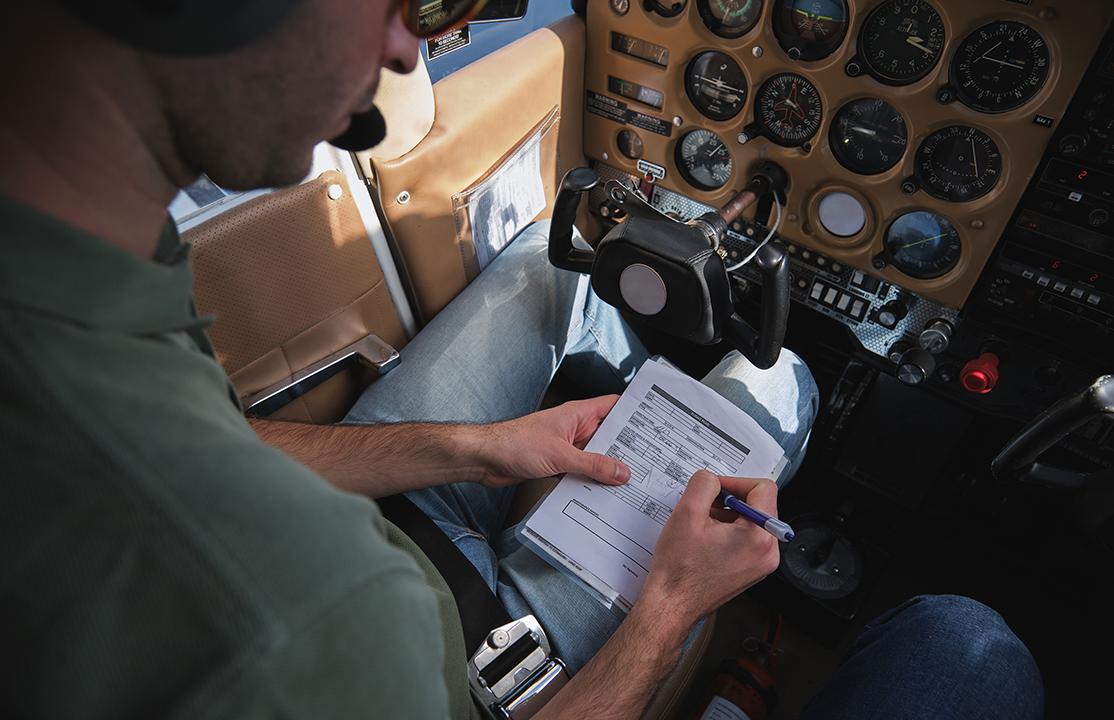
The process kicks off online and wraps up with a meeting in person with an Aviation Medical Examiner (AME) - but only after you've taken the time to get all your ducks in a row. Here's how to tackle it one step at a time
-
First off, you're going to need to sign up for a MedXPress account and fill out the FAA Form 8500-8 online. This is where you'll be upfront and honest about your entire medical history.
-
Be as thorough and accurate as you can when filling out the form past diagnoses, medications, surgeries, and any times you've sought treatment for mental health issues. Don't go easy on yourself and try to gloss over anything if you leave stuff out, it can delay the whole process.
-
Make sure you save or print off your MedXPress confirmation number you'll be needing that at your appointment.
-
Now here's a key point : your MedXpress submission is only good for 60 days, so you need to get your appointment in before that window closes.
-
Before you do that though, you'll want to use the FAA's tool to track down an AME in your area. And while you're at it, consider choosing somebody who's got a bit of experience with these kinds of certifications especially if you've got any conditions that are going to be a bit of a challenge to deal with your flight school or local pilot community are usually pretty good at recommending someone who knows what they're doing.
-
Now and this might be a bit of a shock the cost of getting a medical certificate can vary pretty widely it will depend on what kind of medical you're applying for (Third Class, Second Class etc.), where you live and how complicated your case is.
FAA don't regulate the fees, but you can expect to pay somewhere in the region of $150–$300+ for a First Class exam ( higher if they need to do an ECG or some additional testing). -
And one last thing if you've got any existing medical conditions, it's a good idea to get current notes from your doctor that are no more than 90 days old. If you don't have those notes, the AME might well put your application on hold.
Pilot Physical Requirements Evaluated During the FAA Medical Exam
The FAA medical exam evaluates the body systems that affect a pilot’s ability to perform flight duties safely. Standards are established under 14 CFR Part 67 and vary by medical class.
|
Health area |
What the FAA evaluates |
|---|---|
|
Vision |
For first and second class medical certificates you need to have perfect 20/20 vision in each eye, but if you're going for a third class, 20/40 will do the trick. Same deal though for all classes you need to be able to see 20/40 at a distance of 16 inches. You can wear glasses or contacts no problem, but you do need to be able to tell different colors apart in order to fly safely. |
|
Hearing and equilibrium |
In order to pass your hearing test you will need to be able to hear a normal conversation from 6 feet away with your back turned or you will have to meet a special audiometric standard. And if you have any kind of balance issues or get vertigo easily the FAA may need to dig a bit deeper. |
|
Cardiovascular health |
The AME reviews heart function, pulse, blood pressure, coronary disease, and rhythm problems. The FAA does not specify a regulatory blood-pressure limit but uses 155/95 mmHg as its current guideline maximum. |
|
Neurologic health |
Seizures, stroke, unexplained loss of consciousness, and other neurologic conditions may require additional records or FAA review. |
|
Mental health and substance use |
The FAA takes a good hard look at any conditions like ADHD, anxiety, depression, psychosis, bipolar disorder, severe personality disorders, or if you've got a problem with substance abuse or dependence. |
|
Endocrine and metabolic health |
Diabetes, thyroid disorders, and other metabolic conditions are evaluated based on treatment, stability, medications, and their potential effect on safe performance. |
|
Musculoskeletal function |
You will need to have enough strength, coordination, mobility and range of motion to safely operate all of the plane controls. |
First and second-class medicals have stricter vision standards than third, and as you get older you will need to go in for a routine ECG check. (But don't worry some conditions may mean you can still get a special permit to fly so do talk it over with your FAA rep)

Common Medical Conditions, Disqualifications, and Special Issuance Options
A lot of people who want to become pilots are worried that a past diagnosis automatically kills their flying career. But the truth is the FAA has a system for handling medical conditions that can be managed safely and it's not meant to shut people out entirely.
There are some medical conditions that will inevitably lead to a closer look:
-
Heart Conditions: Anything that's involved heart attacks, stent implants, bypass surgery, new valves, pacemakers or heart rhythm problems. These will need a ton of records from your cardiologist and you may have to keep getting stress tests to check in. Amazingly, heart conditions account for more special issuance requests than any other category.
-
Diabetes: If you're relying on insulin to manage your diabetes you won't qualify for a standard medical certificate but you do have a way to get one, it's a long drawn out process though. If you can manage your diabetes with pills or just your diet then you'll be in a much better position.
-
Seizures and Strokes: Any history of having a stroke or a seizure will require a lot of documentation to show you're stable and not a risk to others. The longer the time that's passed since your last seizure the better.
-
Mental Health Conditions: Things like depression, anxiety and ADHD are usually okay if you can show a treatment plan that's working and you're on FAA approved meds. But if you've got a history of substance abuse that can be a whole different story and may even lead to a temporary ban or substance dependence requires convincing evidence of sustained sobriety.
The special issuance process works like this:
-
Submission of detailed medical records and specialist reports to the FAA through your AME or directly to the FAA office.
-
Possible requirement for periodic follow-up exams, lab work, or imaging - all reviewed by the federal air surgeon's team.
-
Time-limited certificates that must be renewed more frequently than standard ones, ensuring ongoing safety monitoring.
The key to managing a complicated medical history and flying is really just owning the need to be proactive and getting the paperwork in order. The numbers are pretty encouraging the FAA handed out around 34,728 of these special issuance medical certificates to people with complicated medical histories last year and a measly 1.8% of those requests got rejected the first time.
Frequently Asked Questions About Pilot Physical Requirements
Can pilots wear glasses or contact lenses?
Yes they can. So long as your eyesight corrected is up to scratch for your medical class, you're good to go. A lot of people have to wear corrective lenses and it's not a bar to having a career in flying a commercial airliner or anything.
Does ADHD automatically disqualify a pilot?
No it doesn't. The FAA looks at your ADHD in all its present day glory - are you currently showing symptoms, what treatment have you had, what meds are you on and do you have any supporting medical records. Some people get through on the FAA's evaluation route, while others may need some extra testing or a second look.
Can pilots have anxiety or take anxiety medication?
Anxiety isn't an automatic no-go for getting certified. The FAA takes a good hard look at the anxiety diagnosis, how stable you are, what treatment you've had and what meds you're taking. Some meds are okay to take and others need to be looked at more closely. If you're thinking about changing your medication, talk to an Aviation Medical Examiner and your treating doc first.
Can a pilot qualify after surgery?
Generally, surgery isn't a deal-breaker once you've recovered and you've got enough strength and mobility to fly safely. The Medical Examiner may want to see some op reports, follow-up records or get a thumbs up from a doctor before approving you.
Is there a height, weight, or BMI limit for pilots?
The FAA doesn't set a blanket rule on how tall or heavy you can be for a pilot's medical cert though you still need to be able to reach the controls and fly the plane. Related issues like limited mobility or sleep apnea might need a closer look though.
