Instrument Oral Exam Guide 2026
May 07, 2026
This guide is here to help pilots get ready for the FAA Instrument Rating oral exam and those instrument proficiency checks that crop up.
Whether you're a student staring down your first instrument checkride or you're an instructor helping your students get ready just like you were, not so long ago getting a handle on the oral part of the exam is a big part of the process making this guide valuable for students and instructors alike.
It's not something you can just wing it on you need to know your stuff and get ready with a solid plan in place.
Overview of the Instrument Oral Exam
The instrument oral exam guide is designed to prepare you specifically for the oral portion of the practical exam under the current Airman Certification Standards, making it a comprehensive guide for mastering the oral segment.
This section focuses exclusively on the oral not the flight segment.
-
The typical oral lasts 1–2 hours, though questioning may continue into preflight briefing and during the flight itself.
-
The exam guide uses a question-and-answer format that mirrors how Designated Pilot Examiners conduct actual instrument orals.
- Strong preparation can also help you avoid repeat training or retest expenses, which is one reason pilots should understand the full instrument rating cost before checkride day.
-
The eleventh edition by Michael Hayes (ASA) represents new and expanded content aligned with current regulations.
-
This format provides ready responses and references FAA materials throughout.
-
Additional study material covers instrument instructor candidates and IPCs.
How the Instrument Oral Works Under the ACS

The oral exam is based on the FAA Instrument Rating ACS currently in effect, cross-referencing FARs, AIM, and FAA handbooks. Understanding this structure helps you anticipate what your examiner will cover.
-
The ACS breaks down the exam into areas you'll need to know your stuff on Preflight Preparation, then move on to Preflight Procedures, ATC Clearances and all that, Navigation Systems, how to handle Instrument Approach Procedures, and dealing with an Emergency.
-
DPEs (that's your examiner), or FAA examiners, want to test your ability to use some common sense and make good decisions in the air they don't just want rote answers from you, they want you to be able to think on your feet.
-
The latest edition of the ACS puts a big emphasis on the four main phases of instrument flying: preflight work, departure, getting from point A to point B, and then coming in for a landing.
-
We see a lot of students struggling with the exam because they're weak on weather services, IFR regulations, and approach procedures.
-
Your examiner will approach the exam the same way they'd examine a real instrument flight making their way through the whole process from planning right through execution.
Core Knowledge Areas DPEs Emphasize
This section identifies the knowledge blocks that almost always appear in instrument orals. Study material should cover each area thoroughly.
-
IFR Currency (61.57): You need to have at least six approaches under your belt within the past six months, and know your way around holding procedures, intercepting and tracking courses, the safety pilot vs. flight training device or flight simulator situation.
-
Systems and Equipment: Pitot-static instruments, vacuum/gyro failures, static system blockages, altimeter operation, and glass panel reversionary modes.
-
IFR Flight Plan Requirements: Filing methods, amendments, cancellation procedures in controlled and uncontrolled airspace.
-
ATC Clearances: Clearance formats, route changes, “hold for release,” void times, clearance limits, and readback expectations.
-
Required Inspections: VOR checks (91.171), transponder requirements (91.413), pitot-static/altimeter checks (91.411).
Regulations and IFR Currency
DPEs will always be checking to see that you have a solid grasp of what it takes to be eligible to fly IFR your recent flying experience and what the law says you can and can't do.
This section is packed with the most current rules that you need to be familiar with.
-
Rating Privileges: Understand 61.3 and 61.65 for operating as PIC under IFR in IMC
-
Currency Under 61.57(c) and (d): Logging approaches, tracking courses, holds, plus the 6-month grace period requiring an Instrument Proficiency Check.
-
IPC Requirements: Tasks listed in the back of the instrument ACS; the instrument instructor must sign off if satisfied.
-
Medical Options: Standard FAA medical vs. BasicMed and how each interacts with IFR operations.
-
Required Documents: ARROW documentation, VOR checks, pitot-static/altimeter inspections, transponder checks, and ELT requirements.
-
Flight Review: Understand how flight review requirements interact with instrument currency.
IFR Flight Planning and Clearances
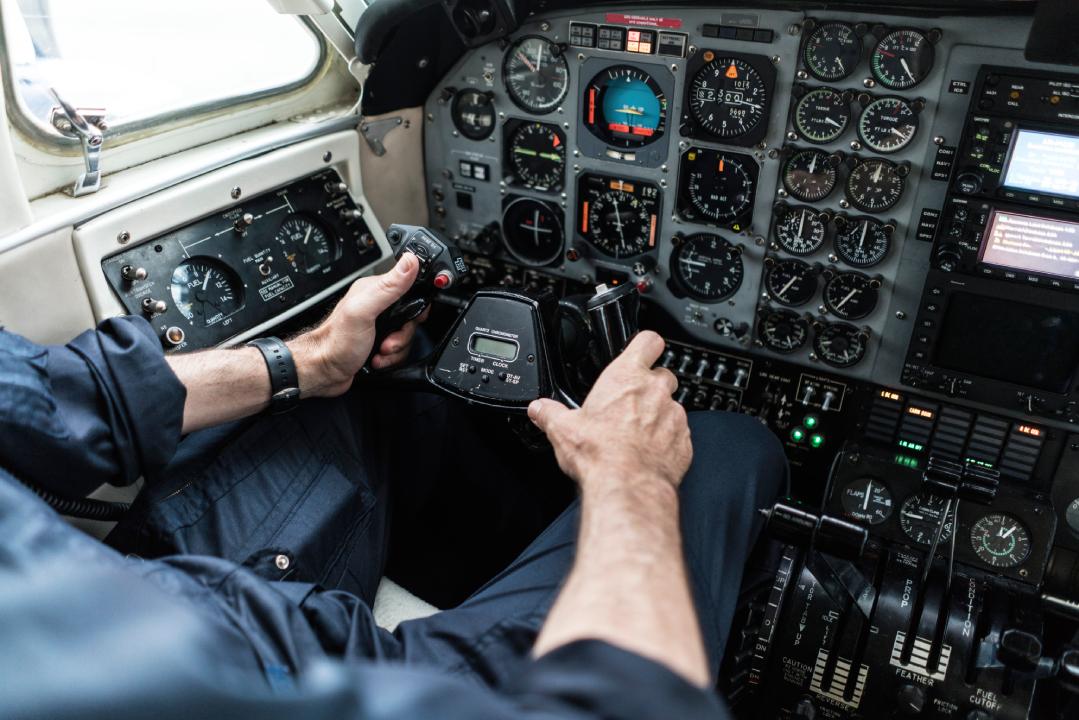
Examiners will typically walk you through a full IFR cross-country situation from start to finish and can expect some tough questioning along the way.
-
Filing Methods: Online tools, phone briefings, and ICAO flight plans as used in the U.S.
-
Route Selection: Preferred routes, T-routes, SIDs and STARs where applicable, and “No SID/STAR” preferences.
-
CRAFT Model: Copy and read back full IFR clearances including “Expect further clearance” times and void times at non-towered airports.
-
Re-routes: Handle amended routes, “fly present heading, vectors for sequence,” and clearances to intermediate fixes.
-
Transition Routes: Understand differences between arrival routes and transitions (example: PMD.LYNXX8 filing format).
Weather and Risk Management for IFR
Weather interpretation and personal minimums are key to making safe decisions about whether to fly in instrument conditions and also a major topic in the FAA oral exam. Let's break down the main areas you'll want to get familiar with.
-
Preflight Sources: Official briefings, FAA references, TAFs, METARs, and Graphical Forecast Analysis products.
-
In-Flight Updates: FIS-B, TIS-B, ADS-B, ATIS/ASOS/AWOS, Flight Service, and ATC plus limitations and latency of datalink weather.
-
Alternate Requirements: Apply the “1-2-3 rule,” standard vs. non-standard alternate minimums, fuel planning for realistic IFR conditions.
-
Risk Management: PAVE and 5P checklists, building instrument personal minimums, realistic go/no-go decisions.
-
Safe Operation: Personal minimums should reflect current regulations and actual proficiency not just legal requirements.
Navigation Systems and Instrument Approaches
Modern orals you're gonna need a solid grasp on both the old-school ground-based Nav systems & those GPS-based RNAV procedures. I've seen instructors drill this into students time & time again.
-
Legacy Systems: VOR, ILS, and localizer approaches including sensitivity, full-scale deflection, and step-down fix concepts.
-
GPS/RNAV Approaches: WAAS vs. non-WAAS equipment, LPV, LNAV/VNAV, LP, and LNAV minima
-
Integrity Monitoring: RAIM concepts and pre-flight GPS availability planning.
-
Approach Categories: Determining which category applies, including when flying at higher speeds than certificated.
-
Missed Approach Procedures: When to go missed, initial climb requirements, heading, and communications with ATC.
-
Guidance Materials: Review approach plates thoroughly the oral exam guide series provides excellent preparation through arranged chapter organization.
Partial Panel, Systems, and Emergencies

DPEs don't just want to see your answers on paper, they want to see you verbalise them confidently and like you really know what you're talking about when it comes to instrument failures & abnormal situations, so they put you through some pretty realistic scenarios using scenario-based training methods.
-
Common Failures: Lost airspeed indication, blocked pitot or static ports, vacuum pump failure, advanced training device display loss.
-
Partial Panel Techniques: Using turn coordinator, rate of turn indications, GPS track, and power settings to maintain control.
-
Lost Communications (91.185): AVEF route and MEA altitude hierarchies with emphasis on real-world decision making.
-
Emergency Declarations: Using “Mayday” or “Pan-Pan,” requesting vectors, accepting priority handling under IFR.
-
Access to Backups: Understanding reversionary modes in glass panels and backup instrument interpretation.
Using This Guide to Ace the Oral Exam
The pilot oral exam guide and exam guide should be used in conjunction with a mock oral, or even better, a combination of both mock orals and plenty of IFR practice in a real-world setting if possible.
Almost all students who have passed their airplane checkride will tell you that they used a combination of different study methods to get there, along with further study to reinforce key concepts and improve confidence.
-
Structured Study: Answer questions aloud, time your responses, and practice with instructors, peers, or a Certified Flight Instructor Instrument (CFII) using test prep materials.
-
Organize References: Tab and highlight FAR/AIM, approach plates, and avionics manuals for quick access during the oral.
-
Personal Scenario Notes: Log weather decisions, clearance changes, and in-flight issues from training flights at your flight school to discuss confidently.
-
Professional Conversation: View the oral as discussion about safe IFR operations not a memory test of obscure trivia.
-
Indispensable Tools: Combine this book valuable resource with Checkride App flashcards and mock orals for excellent preparation.
-
Checkride Practices: Remember that instructors rate knowledge application over rote memorization demonstrate how you think through problems.
The exam is designed to verify you can safely conduct instrument flight operations. Approach your checkride with confidence, knowing this knowledge makes you a safer pilot.
