Go Around Procedure C172: Step-by-Step Pilot Guide 2026
Dec 25, 2025
Overview of the Cessna 172 Go-Around Maneuver
A go-around in a Cessna 172 is simply an aborted landing followed by a climb back to pattern altitude. When something doesn’t look right on final approach or the runway isn’t clear the pilot applies full power, pitches for a climb, retracts flaps in stages, and re-enters the traffic pattern for another attempt.
This rejected landing procedure is one of the most important maneuvers student pilots and experienced aviators alike must master.
The go-around is a normal, planned safety maneuver. It’s not an emergency, and it’s certainly not a sign of failure. In fact, consistently choosing to go around when conditions aren’t right is a key reason behind the strong Cessna 172 Safety Record, as it reflects disciplined decision-making and sound aeronautical judgment. Every normal landing should mentally be treated as an interrupted go-around until the wheels touch down and roll out is complete.
This article focuses specifically on Cessna 172N and 172S models commonly used in flight training from roughly 1977 to the present. These aircraft share similar handling characteristics, though later 172S models feature fuel injection and a 30-degree maximum flap setting compared to 40 degrees on some older variants.
The procedure described here is based on typical POH guidance, but pilots must always follow their specific aircraft’s Pilot’s Operating Handbook and their flight instructor’s direction.
Here’s what this article will cover
-
Decision points for initiating a go-around in the C172
-
Standard step-by-step go around procedure for climbing away safely
-
Flap and power management specific to Cessna 172 characteristics
-
Radio calls and traffic pattern re-entry procedures
-
Common mistakes that lead to problems during go arounds
-
Training tips and best practices for C172 students
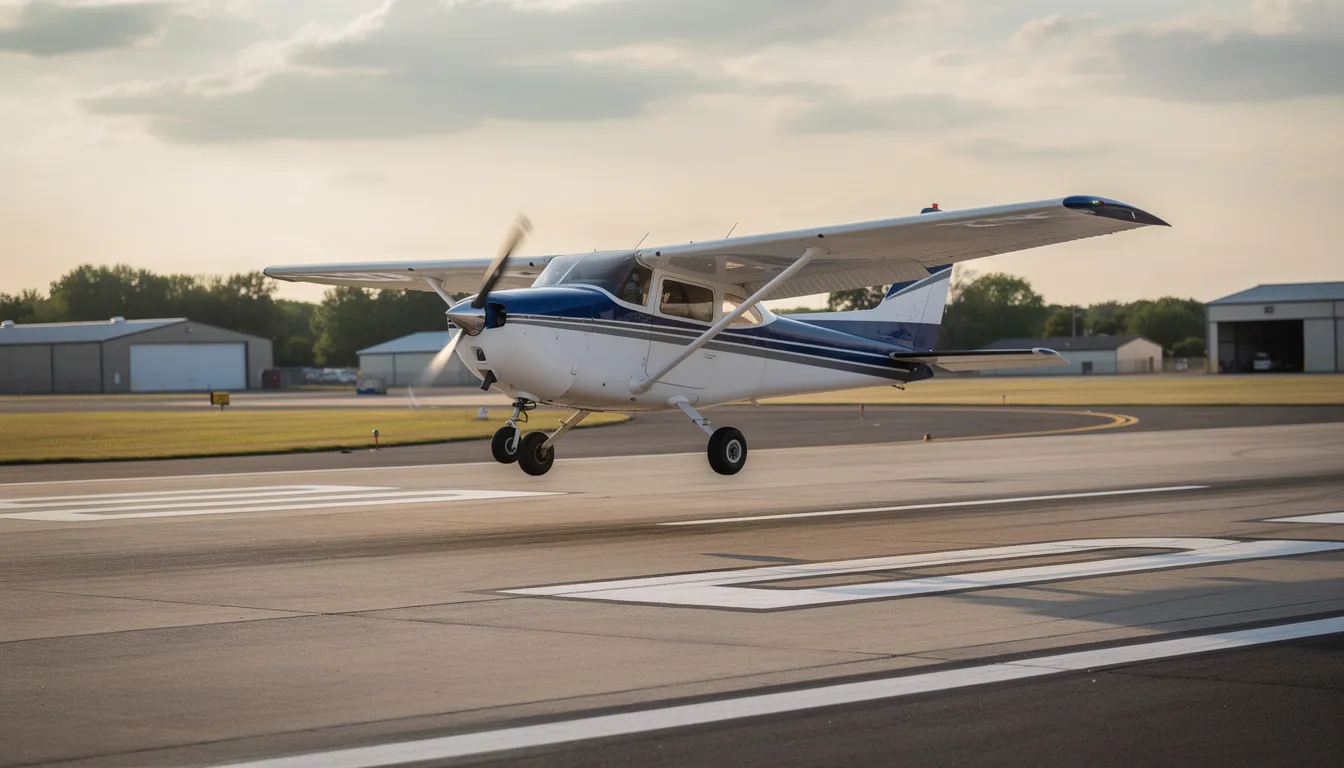
When to Initiate a Go-Around in a Cessna 172
The hardest part of any go-around isn’t the flying it’s making the decision early, before the approach becomes unsafe. Many pilots wait too long, hoping things will work out. The moment you realize something is wrong, act decisively and begin the around procedure without hesitation.
-
Unstable approaches: If you’re too fast (for example, above 75 KIAS on short final in a 172S), too slow, significantly off the runway centerline, or making large pitch or bank corrections inside the last 500 feet AGL, the approach is unstabilized. Go around.
-
Runway not clear: Any aircraft, vehicle, animal, or debris visible on the runway or a taxiway incursion as you approach means you cannot complete a safe landing. This includes situations where a preceding airplane hasn’t cleared the runway or ATC hasn’t issued a landing clearance.
-
Wind and weather: Sudden crosswind gusts that blow you off centerline, unexpected sink or ballooning in the flare, wind shear indications, or loss of adequate visual references (especially at night) all warrant an immediate go-around. Don’t try to force a bad approach.
-
Traffic and ATC: Conflicting traffic, spacing issues with aircraft ahead, or an explicit ATC instruction to “go around” or “fly runway heading, climb and maintain…” requires immediate compliance. At towered fields, the controller may issue a missed approach instruction at any point.
-
Aircraft issues: Configuration doubts such as flaps not set as intended, uncertainty about the landing gear position (fixed-gear C172s aside, develop the habit of verifying configuration), incomplete checklists, or any distraction that makes you uncertain about completing the landing safely.
-
Bounced or porpoised landing: If you touch down and bounce significantly, or the aircraft begins porpoising, immediately go around rather than trying to salvage the landing. Continuing can result in a stall, prop strike, or loss of directional control.
In training C172s, flight instructors often initiate go-arounds on purpose to build habit patterns. Student pilots should treat this as completely normal every practice go-around makes the real thing that much more automatic when it counts.
Standard Go-Around Procedure in a C172 (Step-by-Step)
The sequence in a C172 is straightforward: power up, pitch up, clean up, follow runway heading, then communicate and rejoin the pattern. Memorize this flow so you can execute it without hesitation.
-
Power Up: Smoothly but rapidly apply full throttle while maintaining control of the airplane. In carbureted models (172N and earlier), push carburetor heat to cold before or as you add power. Use firm right rudder to maintain directional control against the increased P-factor and left-turning tendencies.
-
Pitch Up: Adjust to a positive climb attitude, bringing the cowling up to approximately the horizon or slightly above. Initially, focus on arresting any descent and establishing the aircraft climbing. Once obstacles are cleared, accelerate toward VY (around 74 KIAS in many 172S models).
-
Initial Flap Handling: Immediately retract flaps from 30 degrees to 20 degrees (or from full flaps to the go-around setting recommended in your POH). This reduces drag while maintaining enough lift to climb. Do not dump all flaps at once.
-
Climb Configuration: After confirming a positive rate of climb on the vertical speed indicator and clearing any obstacles, continue to retract flaps in stages 20 degrees to 10 degrees, then 10 degrees to 0 degrees. Keep airspeed above approximately 60 KIAS throughout to maintain adequate lift as flap-induced lift decreases.
-
Trim: The C172 trimmed for landing will feel very nose-heavy when you add full power. Apply forward pressure on the yoke as needed, then re-trim nose-down once the aircraft is stabilized in the climb to relieve control pressure.
-
Flight Path: Continue runway heading until reaching at least 300–400 feet AGL (or per local procedures and ATC instructions) before turning crosswind back into the left-hand or right-hand traffic pattern. Maintain directional control throughout and keep your eyes outside scanning for traffic.
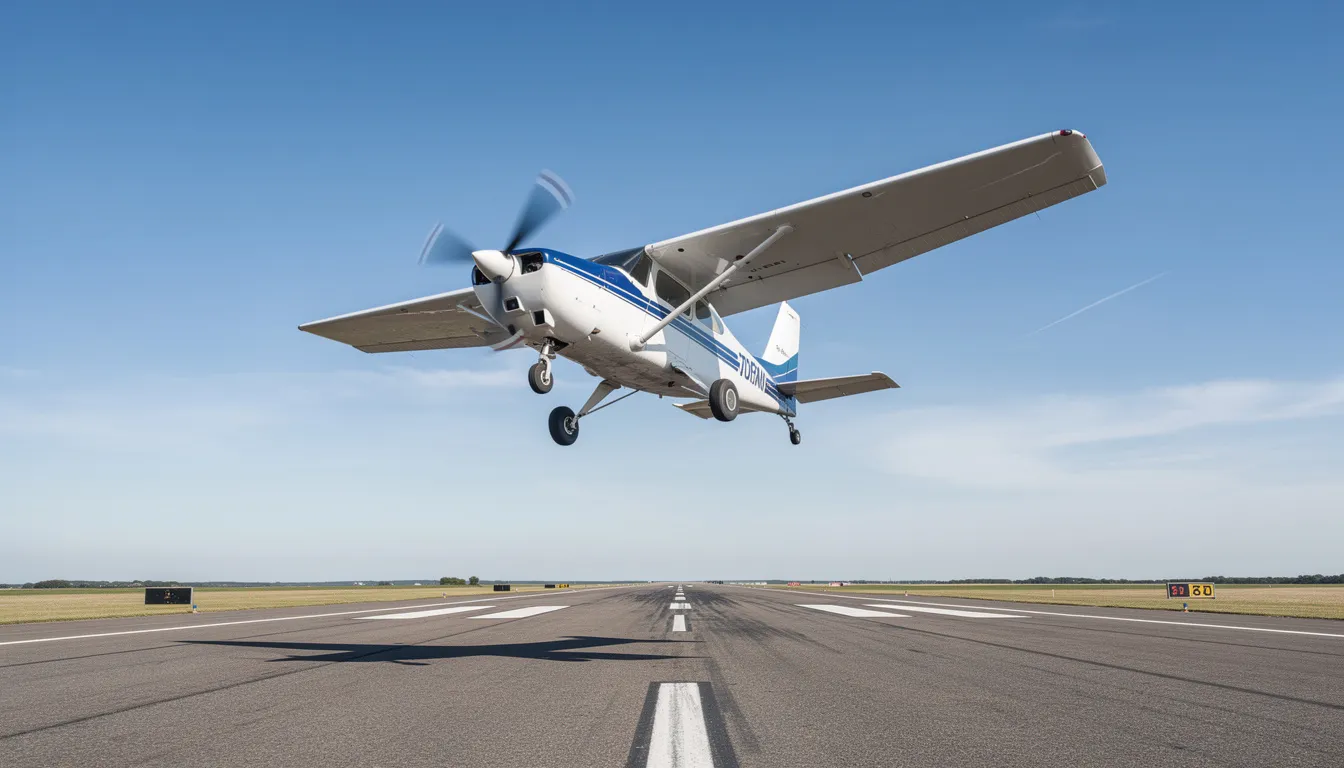
Go-Around Technique: From Short Final to Initial Climb
This section zooms in on the critical few seconds right after you decide to go around in a C172. These moments determine whether you transition safely from descent to climb or find yourself in a dangerous low-altitude situation.
-
Decision Point: The trigger typically comes somewhere between 200–300 feet AGL or even during the flare. You might see traffic on the runway, lose the centerline, or simply realize the approach is wrong. The moment you identify an issue, commit fully there’s no halfway go-around.
-
Pitch Attitude Control: Keep wings level and avoid abrupt nose-up inputs. Aggressively pulling the nose up can cause rapid airspeed decay and put you dangerously close to a stall. Watch that airspeed does not drop below safe values (approximately 55–60 KIAS initially) while establishing the climb.
-
Directional Control: Apply firm right rudder as you add power. At low speed and high angle of attack with full throttle, P-factor and spiraling slipstream create strong left-turning tendencies. Without adequate rudder, you’ll drift toward the runway edge or develop an uncoordinated bank at the worst possible altitude.
-
Avoid Low-Level Turns: Maintain runway heading and continue straight ahead until you have enough altitude generally pattern altitude minus 300 feet or so before starting any turns. Turning too early at low altitude dramatically increases stall and spin risk.
-
Obstacle Clearance: If obstacles exist near the departure end of the runway, prioritize VX (best angle of climb, approximately 62 KIAS in many C172s) or a slightly higher pitch attitude until obstacles are cleared. Then transition to VY for best rate of climb and accelerate to safe altitude.
-
Visual Scanning: Keep your eyes primarily outside, referencing the runway environment and horizon for attitude cues. Quickly cross-check airspeed and the attitude indicator, but don’t fixate inside the cockpit during this critical phase.
Flap and Power Management Specific to the C172
Flap handling in the C172 is where many pilots especially student pilots make errors during go-arounds. Understanding how the airplane responds to flap changes and power application is essential for executing the maneuver safely, particularly during high-workload moments when proper systems awareness including the Master Switch Cessna 172 helps prevent configuration and electrical management mistakes.
-
Typical Approach Flap Settings: On a normal landing approach in the C172, pilots commonly use 20–30 degrees of flaps. Full flaps (30 degrees in later models, up to 40 degrees in some older variants) create more drag and lift, allowing a slower approach speed and steeper descent. This is great for landing but problematic when you need to climb.
-
Staged Retraction: Staged Retraction: Retracting from 30 degrees straight to 0 degrees using the flap switch can cause sudden loss of lift and sink potentially enough to contact the runway or obstacles.
Always raise flaps in stages while maintaining adequate airspeed. The stall speed increases approximately 7 knots as you retract flaps in the C172, so ensure you’re accelerating as you clean up.
-
Power Setting: Go-arounds in the C172 are always performed at full power. Partial power go-arounds are not appropriate in training and leave insufficient margin for a safe climb, especially at high-density altitude airports. Push the throttle all the way forward without hesitation.
-
Carbureted vs. Fuel-Injected Models: Older 172M and 172N models use carbureted engines requiring carburetor heat OFF before or during power application. The fuel-injected engines in late-model 172S aircraft don’t use carburetor heat. Know your specific aircraft.
-
Engine Monitoring: Take a quick glance at engine instruments to confirm RPM is at the expected takeoff power setting (approximately 2,400 RPM or higher depending on the installation) and that no abnormal indications appear. This should be a brief scan fly the airplane first.
-
Trim Adjustments: A C172 trimmed for landing approach will feel extremely nose-up when you suddenly add full power. You’ll need immediate forward pressure on the yoke to prevent excessive pitch-up. Once established in the climb, trim nose-down to relieve this pressure and allow you to fly hands-off if needed.
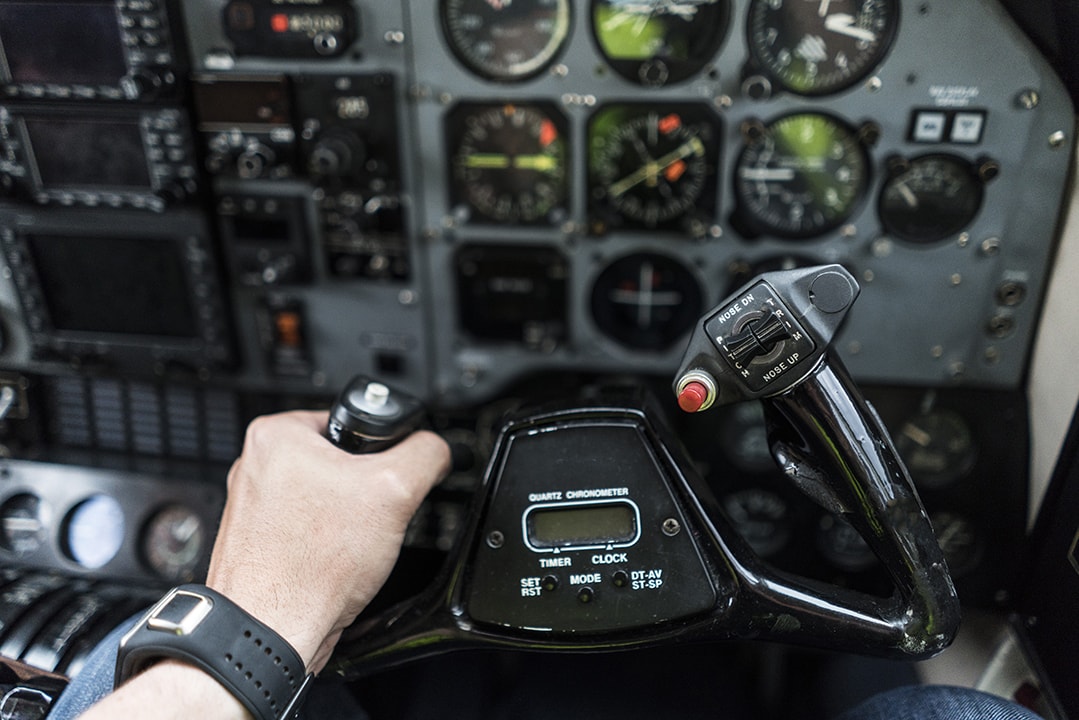
Radio Calls and Traffic Pattern Re-Entry
The principle of aviate, navigate, communicate applies perfectly here: fly the airplane first, get established in the climb, and then make your radio calls. Don’t let communication tasks distract you during the critical initial seconds of the go-around.
-
Initial Call: Once you’re climbing with a positive rate and the aircraft is under control, make a concise radio call. At a towered airport: “Pleasantville Tower, Cessna 172AB going around, runway 27.” On CTAF at an uncontrolled field: “Pleasantville traffic, Cessna 172AB going around runway 27, Pleasantville.”
-
Following ATC Instructions: At towered airports, the controller may assign a new pattern leg, specific heading, altitude, or even a different runway. Read back the instructions and comply once you’re stabilized. If you’re task saturated, tell the controller “stand by” and focus on flying.
-
Uncontrolled Field Procedures: At non-towered airports, the standard procedure is to climb to traffic pattern altitude (typically 1,000 feet AGL at most U.S. general aviation airports), then make standard crosswind, downwind, base, and final calls. Announce your intentions clearly so other traffic knows where you are.
-
Spacing and Traffic Awareness: Visually clear for other aircraft before turning. Adjust your downwind leg length as needed to restore safe spacing behind other traffic. Never cut in front of aircraft already established in the pattern extend downwind or make a 360-degree turn if necessary.
-
IFR or Instrument Practice: If you’re flying an instrument approach in a C172 during practice or actual IMC, distinguish between a visual go-around (typically your decision) and a published missed approach procedure (specific climb instructions, headings, and altitudes). Coordinate with ATC and follow the charted procedure if executing the published missed approach.
Common Go-Around Mistakes in the Cessna 172
Many incidents occur not because a go-around was attempted, but because it was delayed or poorly executed. Recognizing these common errors can help you avoid them.
-
Hesitation: Waiting too long to go around on a clearly unstable approach, often due to a “get-it-on-the-ground” mindset. By the time you finally add power, you may not have enough altitude or energy to climb safely. When in doubt, go around early.
-
Insufficient Power: Failing to apply full throttle immediately, or leaving carburetor heat on in carbureted models. Either mistake results in poor climb performance when you need it most. The C172 may not climb or may even descend with full flaps and partial power.
-
Abrupt Flap Retraction: Dumping all flaps at once rather than retracting in stages. This causes sudden loss of lift, sink toward the ground, and possible contact with the runway or obstacles. Retract to 20 degrees first, then continue retracting only after confirming you’re climbing.
-
Over-Rotation: Pulling the nose up too aggressively, causing rapid airspeed decay. At high-density altitude airports in summer, this is especially dangerous the aircraft simply won’t climb with the nose too high. Maintain a reasonable pitch attitude and let the airplane accelerate.
-
Poor Rudder Use: Not countering left-turning tendencies with right rudder. This leads to drift toward the runway edge, uncoordinated flight, or excessive bank angle at low altitude all of which increase stall and loss of control risk.
-
Task Saturation: Focusing on radio calls, checklists, or flap position too early instead of maintaining pitch, power, and heading. Fly the airplane first. Everything else can wait until you’re established in a safe climb.
-
Pattern Re-Entry Errors: Turning crosswind too low, cutting inside other traffic, or failing to maintain pattern altitude after completing the go-around. These errors create collision risks and set up another unstabilized approach.
Training Tips and Best Practices for C172 Students
Go-arounds must be practiced regularly in the C172 until the procedure becomes completely automatic. You shouldn’t have to think about the steps when it counts muscle memory and well-rehearsed flows should take over.
-
Schedule Regular Practice: Include at least two or three go-arounds on each lesson involving traffic pattern work. Practice from short final, from the flare, and from various points in the approach. The more variety, the better prepared you’ll be.
-
Pre-Brief Trigger Points: Before each flight, brief specific criteria where you’ll automatically go around. Examples: if airspeed exceeds 70 KIAS crossing the threshold, if you’re not aligned with runway centerline by 200 feet AGL, or if descent rate exceeds 700 fpm on short final.
-
Vary the Scenarios: Practice go-arounds from full flap configurations, partial flap settings, with simulated crosswinds, at night, and from slightly high or low approaches. Each situation teaches you something different about how the airplane responds.
-
Use a Written Flow: Create a simple cockpit card or memorize a mental flow specific to the C172: Power –Pitch – Flaps – Trim – Track – Talk. Having a structured process prevents you from forgetting critical steps under pressure.
-
Debrief Every Go-Around: After each flight, review any go-arounds with your flight instructor. Discuss timing, flap handling, airspeed control, directional control, and radio work. Identify what went well and what could be improved.
In C172 operations, a prompt go-around is always preferable to forcing a marginal landing. Accept that some approaches won’t work out, and develop the skill to transition smoothly into a climb before things go wrong.
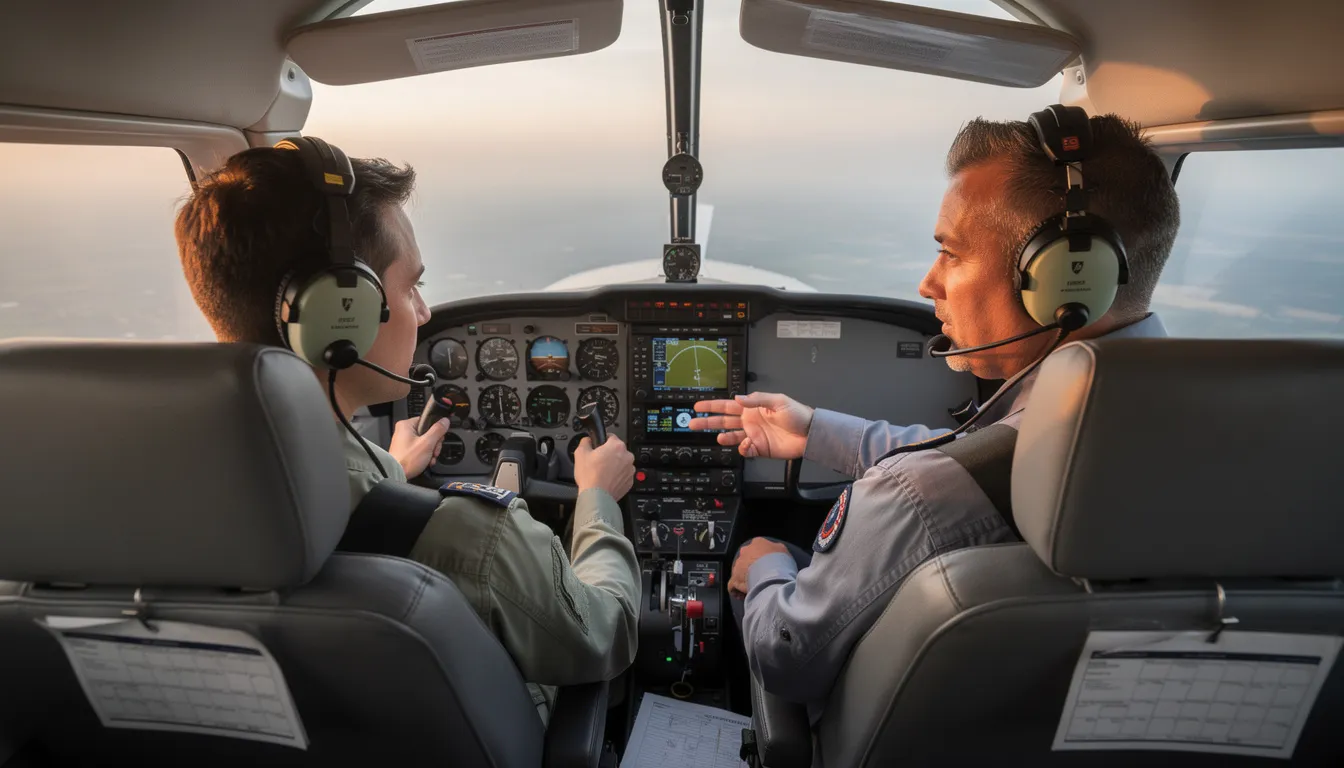
The go around procedure in a C172 is straightforward once you’ve practiced it enough. Power up, pitch up, clean up in stages, fly the runway heading, and communicate when you’re able. The procedure protects you from the consequences of unstable approaches, runway incursions, wind shear encounters, and dozens of other situations that can turn a normal landing into something far more dangerous.
Make go-arounds a regular part of your training with your flight instructor. Brief your trigger points before every approach. And when that moment comes when something doesn’t look or feel right don’t hesitate.
Apply full power, establish a positive rate of climb, and fly away to set up for a safe landing on your next attempt.
