Cessna 172 Carburetor: Heat Operation & Maintenance
Jan 05, 2026
Quick Overview: Cessna 172 Carburetor & Carb Heat System
Most legacy Cessna 172 models including the popular 172N and 172P variants equipped with Lycoming O-320-H2AD or O-320-D2J engines rely on a float type carburetor and a manual carburetor heat system.
The Marvel-Schebler/Precision MA-4SPA carburetor meters fuel and air to create the combustible mixture that powers the engine, typically producing 160 BHP at 2700 RPM in these classic trainers.
One of the most common knowledge gaps even student pilots have and one that can mess with safety, performance, and engine lifespan is how to use carb heat properly.
And honestly, there's no way to avoid learning how your Cessna 172's induction system works, as it plays a critical role within the broader Cessna 172 systems every pilot must understand.
-
Carb ice forms readily between 20°F and 70°F OAT when humidity is present, making it a year-round threat in many flying environments.
-
The first symptom in a fixed-pitch prop 172 is often a gradual RPM drop, sometimes so subtle that altitude loss occurs before the pilot notices the power decrease.
-
Hot air drawn from an exhaust muffler shroud provides the heat source, and applying carburetor heat introduces unfiltered, less dense air to the engine.
-
Regular inspection of the carb heat system, air box, and carburetor itself is essential during annual and 100-hour maintenance intervals.
This article focuses on practical carburetor operation for pilots flying carbureted engines, common issues like carb ice and component wear, and basic maintenance and repair options including repair kits specific to Cessna 172 aircraft.
Basic Carburetor Function in the Cessna 172
The Marvel-Schebler/Precision MA-4SPA carburetor that's been so widely used on Cessnas 172 variants over the years is an updraft, float type carburetor mounted way down low on the underside of the Lycoming engine, just above the oil pan, a design common among aircraft carburetors used in light piston aircraft.
This carburetor has been pretty much the standard on 172 models like the 172N and 172P, for decades now, it provides a reliable flow of fuel as long as it's properly taken care of and flown right.
How Air and Fuel Mix
When you goose the throttle in a 172, all that extra air flows into the engine cowling and passes through a filter before reaching the carburetor. On the inside of the carb, that air picks up speed as it zooms through a narrow bit called the venturi section.
That velocity it creates a pressure drop, forming a low pressure area that really draws fuel from the discharge nozzle into the airstream. The fuel breaks up into tiny droplets and mixes with the incoming air creating the perfect fuel mix that then flows over to the cylinders.
The basic idea's pretty simple: as the air speeds up through the venturi, the pressure drops. And that low pressure is like a magnet it pulls fuel from the float bowl through these jets that are carefully calibrated to meter the right amount of fuel.
How much fuel actually gets through depends on how hard the engine's working controlled mostly by the throttle and how the mixture's set up.
Main Internal Components
The MA-4SPA carburetor contains several critical components:
|
Component |
Function |
|---|---|
|
Float Bowl |
Reservoir that maintains constant fuel level |
|
Float and Needle/Seat |
Regulates fuel entry to maintain proper bowl level |
|
Main Metering Jet |
Controls fuel flow at cruise and full power settings |
|
Venturi |
Creates pressure drop to draw fuel into airstream |
|
Throttle Valve (Butterfly) |
Controls airflow and power output |
|
Idle and Transition Circuits |
Provide fuel at low throttle settings |
|
Accelerator Pump |
Enriches mixture during rapid throttle advances |
Carburetor Heat System in the Cessna 172
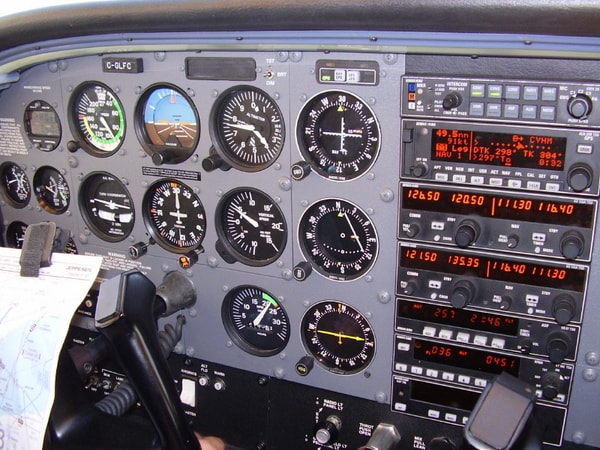
The carburetor heat system routes hot, unfiltered air from a muffler shroud to the carburetor intake, providing the means to prevent or remove ice formation in the induction system. Without this system, carbureted engines would be vulnerable to ice-induced power loss in a wide range of flight conditions.
Airflow Paths: Cold vs. Hot
During normal operation, your Cessna 172’s carburetor receives filtered ambient air from the cowling intake. This air passes through an air filter before entering the carburetor throat clean, cool, and dense for maximum power.
When you apply carburetor heat, a door in the carburetor air box closes off the cold-air path and opens an alternate route. This alternate path draws air that has been heated by passing over the exhaust muffler shroud typically reaching temperatures 90–150°F above ambient. The hot air then flows through the carb heat box and into the carburetor.
The Mechanical System
The C172’s carb heat control is connected by a mechanical cable to a flapper valve or door in the carburetor air box. Pulling the control fully ON closes the filtered cold-air path completely and opens the hot-air path fully. There’s no intermediate position carb heat is either full ON or full OFF.
This simplicity is intentional. Partial application can actually create conditions favorable to ice formation by warming the air just enough to hold more moisture without being hot enough to prevent freezing.
Expected Power Loss
Because hot air is less dense than cold air, applying full carb heat reduces the mass of air entering the engine. In a Cessna 172, you’ll typically see an immediate RPM drop of 50–150 RPM during runup when no ice is present. This drop is normal and expected it confirms the system is working.
If the RPM drop is significantly larger, or if the engine runs rough and then smooths out with a higher RPM than before heat application, ice was likely present and has begun to melt.
Carburetor Ice: Conditions, Symptoms & Recovery in a Cessna 172
Picture this: You’re flying a 1978 Cessna 172N at 2,500 ft MSL on a late spring morning. The OAT reads 50°F (10°C), visibility is good, and there’s a light haze suggesting higher humidity.
You’ve been cruising at partial throttle around 2400 RPM for twenty minutes. Gradually, almost imperceptibly, you notice the RPM has dropped to 2200. You haven’t touched the throttle.
Why Carb Ice Forms
The pressure drop in the venturi and the evaporative cooling from fuel vaporization can lower the temperature inside the carburetor by 20–40°F below ambient. Even on a warm day, this temperature drop can push conditions below freezing inside the carb throat.
Ice forms when moisture in the air freezes on the carburetor’s internal surfaces particularly around the throttle valve and venturi. This ice restricts airflow, reducing power output progressively. The danger zone for carburetor ice spans roughly 20°F to 70°F OAT with visible moisture or high humidity present.
Counterintuitively, you’re often at greater risk on a mild, humid day than on a cold, dry winter morning. The combination of temperature and moisture creates the perfect conditions for ice to form and accumulate.
Symptoms in the Cockpit
In a fixed-pitch propeller Cessna 172, the primary symptom is a gradual RPM decrease without any change in throttle position. Because the prop is fixed, any reduction in power shows up immediately as lower RPM. You might also notice:
-
Roughness or intermittent surging
-
Difficulty maintaining altitude despite constant throttle
-
Mixture adjustments having less effect than expected
-
Eventually, significant power loss if ice continues to accumulate
The insidious nature of carb ice is that it develops slowly. Many pilots have lost several hundred feet of altitude before recognizing the problem.
Recovery Procedure
When you suspect carb ice in your Cessna 172, apply full carb heat immediately. Don’t hesitate or apply it partially.
Here’s what to expect:
-
Initial RPM drop and roughness: The hot air is less dense, and melting ice is being ingested by the engine. This is normal.
-
Continued rough running: Keep the heat ON. The engine may run rough for 30 seconds to several minutes depending on ice accumulation.
-
RPM recovery: As ice melts, RPM will gradually increase often rising above the pre-icing value before stabilizing.
-
Smooth operation returns: Once ice has cleared, the engine will run smoothly again. Adjust mixture as needed for the warmer intake air.
Critical mistake to avoid: Some pilots push carb heat back in when the engine runs rough, thinking something is wrong. This is exactly backward. The rough running means ice is melting leaving heat OFF allows ice to continue building, potentially to the point of engine failure.
Key Points: Carburetor Ice in the Cessna 172
|
Factor |
Typical Values |
|---|---|
|
Temperature range for icing |
20°F to 70°F OAT |
|
Humidity conditions |
Visible moisture, high humidity, or precipitation |
|
First symptom (fixed-pitch) |
Gradual RPM decrease, 50-200+ RPM |
|
RPM behavior with heat, no ice |
Immediate drop of 50-150 RPM |
|
RPM behavior with heat, ice present |
Initial drop, rough running, then RPM rises as ice melts |
Operating Procedures: Using Carburetor Heat in the Cessna 172

Procedures should always follow your specific Cessna 172 POH whether you’re flying a 1977 172N or a 1986 172P. The guidance below summarizes common practices, but your POH is the final authority for your plane.
Runup Check
During your pre-takeoff runup at 1700 RPM, the carb heat check confirms the system works:
-
Pull carb heat control to full ON
-
Observe RPM drop (typically 50–150 RPM)
-
Listen for smooth engine operation
-
Push carb heat to full COLD
-
Verify RPM returns to original value
If you don't see the RPM drop, then something's not right with the system that means it might be stuck, the cable could be disconnected, or the shroud is damaged. You can't just fly and hope for the best until you sort this out with a certified A&P.
If the engine does run rough at first but then smooths out as the RPM increases, then you probably had ice forming even when you were still on the ground. This can happen when it's humid outside.
Cruise Monitoring
When you're cruising and it's cold and humid, don't forget to turn on the carb heat every now and then - it helps prevent ice and will let you know if it's a problem.
A lot of flight instructors recommend applying full heat for 15-30 seconds about every 10-15 minutes when you're within that temperature range (20 to 70 degrees F) and it's all misty out.
Pay attention to the RPM during those checks. If the RPM goes up after you turn on the heat, then you got ice forming and it's melting.
Descent and Approach
As you reduce power for descent, ice becomes more likely. Lower throttle settings mean the throttle valve is more closed, creating a more favorable environment for ice accumulation. Most C172 POHs recommend:
-
Apply carb heat before reducing power below the green arc (typically around 2100 RPM)
-
Maintain carb heat ON throughout prolonged low-power descent
-
Adjust mixture as needed for the less-dense heated air
-
Keep carb heat applied during approach until committed to landing
During these higher-workload phases of flight, pilots are also managing other critical systems such as navigation, communications, and the Cessna 172 transponder to maintain situational awareness and compliance with ATC instructions.
Go-Around Procedure
If you need to go around, the sequence generally follows:
-
Apply full power
-
Move carb heat to COLD as power stabilizes
-
Establish climb attitude and airspeed
The reason for returning to cold air: you need maximum power for the go-around, and filtered air protects the engine from debris ingestion during low-altitude, high-power operation.
Note: Some other aircraft types like certain Piper Cherokees have intake systems that are less prone to icing due to warmer intake air locations. Don’t assume procedures from other aircraft apply to your Cessna. Always follow Cessna-specific guidance.
Carb Heat Procedures Summary
|
Phase |
Action |
|---|---|
|
Runup |
Full heat ON, verify RPM drop, return to COLD |
|
Cruise (icing conditions) |
Periodic full heat checks every 10-15 minutes |
|
Descent |
Heat ON before reducing below green arc RPM |
|
Approach |
Maintain heat ON until landing commitment |
|
Go-around |
Full power, then heat to COLD |
Common Carburetor Problems on Cessna 172s
The Cessna 172 fleet includes thousands of aircraft built from the 1970s through 1990s, and many of these airframes have carburetors with decades of service. Age, fuel quality issues, corrosion, and infrequent flying all contribute to carburetor problems that can affect safety and performance.
Mixture Control Issues
One of the most common complaints on aging C172s is a stiff or seized mixture control. The mixture shaft can become difficult to move or fail to achieve proper idle cut-off, leaving the engine running even with the mixture fully lean.
Causes include:
-
Varnish deposits from old fuel or improper fuel storage
-
Internal corrosion from moisture contamination
-
Dried or deteriorated O-rings and seals
-
Lack of regular movement (aircraft sitting unused)
These problems typically require carburetor disassembly and overhaul to fully resolve. A mechanic might attempt to free a stuck shaft with approved lubricants, but internal contamination usually means the carb needs to come off the engine for proper repair.
Wear and Component Failure
Several carburetor components wear over time and flight hours:
-
Throttle shaft bushings: Worn bushings allow air to leak past the shaft, causing erratic idle, difficulty setting proper idle RPM, and inconsistent engine operation. You might notice the idle changes with carb heat application more than expected.
-
Needle and seat: This assembly controls fuel entry into the float bowl. A worn needle or damaged seat can cause flooding (fuel overflowing from the carb) or fuel starvation (insufficient fuel reaching the bowl). Both conditions create serious operational problems.
-
Accelerator pump: A deteriorated pump diaphragm or stuck check valve causes hesitation or stumbling when you advance the throttle rapidly. The engine may momentarily lose power during takeoff roll or go-around.
Corrosion Sources
Carburetors contain steel springs, clips, and other components susceptible to rust. Corrosion commonly results from:
-
Water accumulation in fuel bowls from condensation or contaminated fuel
-
Aircraft stored outdoors in humid climates
-
Infrequent flying allowing moisture to accumulate
-
Fuel left sitting in the system for extended periods
Regular preflight fuel draining helps, but internal corrosion often requires professional inspection to detect.
When to Suspect Carburetor Issues in Your C172
-
Persistent rough idle that doesn’t respond to mixture adjustment
-
Inability to achieve POH-recommended idle RPM settings
-
Visible fuel staining around the carburetor or air box
-
Unexplained fuel smell in the cowling or cockpit
-
Hard hot starts despite proper technique
-
Unusual EGT or CHT readings during normal operation
-
Engine hesitation when throttle is advanced
Frequently Asked Questions about Cessna 172 Carburetors
What RPM drop is acceptable when I pull carb heat during runup in a 172?
A typical RPM drop with carb heat applied during runup is 50–150 RPM, though the exact value varies by aircraft. Your POH and engine manufacturer documentation provide the authoritative range for your specific configuration.
If you see no drop, the system may not be functioning. If the drop is excessive (say, 200+ RPM) and the engine runs rough, investigate before flight the carb heat door may be stuck partially open during normal operation.
How do I know if my Cessna 172 is especially prone to carb ice?
All carbureted Cessna 172s including the 172N, 172P, and earlier models with Lycoming O-320 engines are subject to carburetor icing in appropriate conditions. The icing susceptibility is inherent to the carburetor design, not a defect.
Later models like the 172S use fuel-injected Lycoming IO-360 engines, which eliminate carburetor icing entirely (though they have their own considerations). If you fly a carbureted 172, assume it can form ice whenever temperature and humidity align, and operate accordingly.
Where can I get approved parts or a repair kit for my C172 carburetor and carb heat system?
Work with reputable aircraft parts suppliers who stock components approved for your specific carburetor model and aircraft configuration. Your A&P mechanic likely has established relationships with suppliers and can source the correct parts.
Avoid unapproved or automotive-grade components they may not meet aviation specifications for materials, tolerances, or safety. For contact details on parts availability, your mechanic or aircraft type club can provide current supplier information and website resources.
Should I apply carburetor heat during every descent?
The POH is your bible on this one, but most of the time, you'll want to start cranking the carb heat before you go below 2100 RPM and keep it going during any prolonged low-power flying.
Even if the conditions don't look right for icing, it's a good idea to get in the habit of using the carb heat just in case the one time you forget is the time you really need it. Have a chat with your flight instructor if you're not sure what to do.
