PPL Requirements: Complete Guide
Apr 01, 2026
This 2026 guide covers everything you need to know about FAA private pilot license requirements for airplane single-engine land in the United States.
Whether you’re just starting to explore aviation or ready to commit to flight training, understanding these requirements upfront will help you plan your path efficiently as you work toward your airplane single engine rating
What do you need to get a PPL?
-
Be at least 17 years old to receive your private pilot certificate
-
Hold a valid medical certificate (third-class or BasicMed)
-
Complete ground training and pass the FAA knowledge test
-
Log at least 40 hours of flight time under Part 61 (20 dual, 10 solo minimum)
-
Pass the practical test (checkride) with a Designated Pilot Examiner
For many new students, this is also the stage where they start comparing PPL vs CPL to understand whether they want to fly for personal use or eventually move toward commercial training.
The thing is, the FAA sets 40 hours as a minimum, but realistically you should be looking at more like 60 to 75 hours before you even think about trying to pass your checkride.
And actually, only about 5% of people manage to get through on the bare minimum. This article has got the US FAA requirements laid out for you all the way up to 2026, and that's mainly for the single engine rating.
General Eligibility Requirements
Before you can earn your private pilot certificate, you need to meet basic eligibility criteria set by the FAA. These requirements ensure applicants have the maturity, communication ability, and foundational credentials to train safely.
Age requirements:
-
At least 16 years old to solo an airplane
-
At least 17 years old to be issued a Private Pilot Certificate (airplane)
-
Note: Glider and balloon ratings have different age thresholds but aren’t the focus here
You Need to be Able to Speak English
You've got to be able to read, speak, write and understand English. That's not surprise radio communications with air traffic control and making sense of charts and weather reports all rely on clear English.
Before you go take your practical test, you've already got to have a student pilot certificate, sport pilot certificate, or recreational pilot certificate from the US and have an authorized instructor sign you off to say you've done all the necessary ground school and flight training.
They'll need to make sure you've got all the basics covered before you get to take that test.
If you're a US citizen, no additional clearance is needed but foreign nationals will need to get permission from the TSA before they can do certain things as part of their training that's just a formality though and doesn't change any of the core requirements.
Medical Certificate Requirements
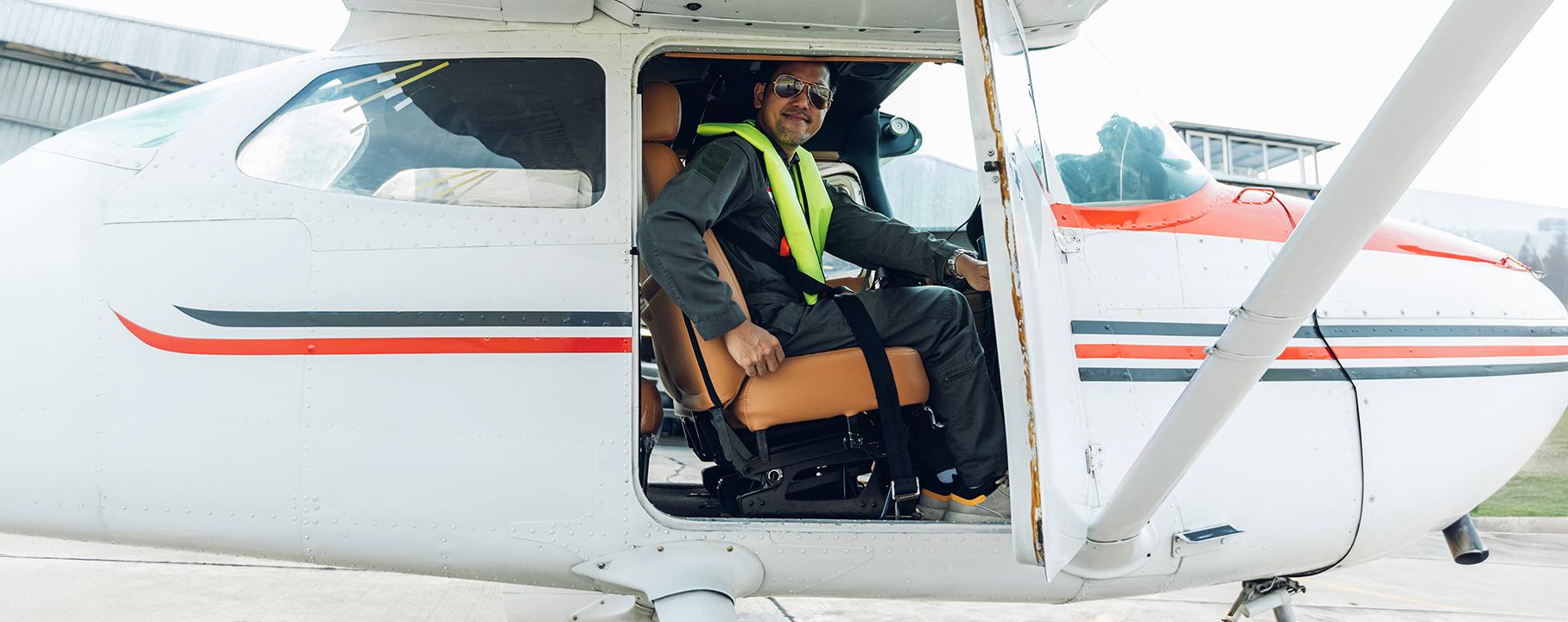
A medical certificate confirms you’re physically and mentally fit to act as pilot in command. Without valid medical certification, you cannot exercise private pilot privileges or take your practical test.
Third-class medical certificate basics:
-
Required for most PPL applicants
-
Issued by an FAA Aviation Medical Examiner (AME)
-
Exam covers vision (20/40 corrected acceptable), hearing, cardiovascular health, neurological status, and substance use history
-
Validity: 60 calendar months if under age 40; 24 calendar months if age 40 or older
BasicMed as an alternative:
If you held an FAA medical certificate after July 14, 2006, BasicMed may work for you. Requirements include:
-
Valid U.S. driver’s license
-
Physical exam by a state-licensed physician every 24 months using FAA checklists
-
Online medical education course every 24 months
-
Aircraft limitations: maximum 6 occupants, 6,000 lbs max takeoff weight, 250 knots indicated airspeed
-
Cannot fly for compensation or hire
Some medical conditions mean you'll need to get a special permit to fly or might even disqualify you, so its worth getting checked out before splashing out on flight training.
The numbers are pretty clear: about 10-15% of people applying to fly have to put their plans on hold because they've got a condition they haven't disclosed yet.
So, before you go dropping all that cash on flight training - get in to see an Aviation Medical Examiner first and get a sense of whether you're good to go.
Aeronautical Knowledge Requirements
Ground school gets you the theory you need to pass the FAA knowledge test and actually know what you're doing in the cockpit. It also plays an important role in understanding how much is a PPL license, since training materials, instructor support, and exam prep all affect your total cost.
You can do it in a proper class, get one-on-one instruction from a pilot, or work through it all by yourself at home. Whichever way you go you will need to get an endorsement from a qualified instructor after you've finished it's just the way things are set up.
Core knowledge topics include:
-
Applicable federal aviation regulations (14 CFR Parts 61 and 91)
-
NTSB accident reporting requirements
-
Aerodynamics principles (lift, drag, stall dynamics)
-
Aircraft systems (engines, propellers, electrical)
-
Weight and balance computations
-
Takeoff and climb performance, including density altitude effects
-
Weather theory and products (METARs, TAFs, fronts)
-
FAA charts and publications
-
Radio communications and phraseology
-
Airspace classes (A through G) and radar services
-
Navigation and flight planning (pilotage, dead reckoning, VOR/GPS)
-
Human factors and aeronautical decision making (IMSAFE checklist)
The knowledge test:
-
Computer-based, 60 multiple-choice questions
-
Administered at FAA-authorized testing centers (PSI)
-
2.5-hour time limit
-
70% passing score required
-
Typical cost: $150–175
You’ll need an endorsement from your instructor or ground school certificate to sit for the exam. Your Airman Knowledge Test Report (AKTR) must be presented at your practical test and remains valid for 24 months.
Flight Proficiency Requirements
Beyond logging hours, you must demonstrate mastery of specific maneuvers and procedures outlined in the FAA Airman Certification Standards (ACS). Your flight instructor will train you in these areas, but proficiency not just exposure is what matters at the checkride.
Required areas of operation:
-
Preflight preparation and inspection procedures
-
Proper use of checklists
-
Engine start, taxi, and before-takeoff procedures
-
Normal and crosswind takeoffs and landings
-
Short-field and soft-field techniques
-
Go-arounds and rejected landings
-
Slow flight and approaches to stalls
-
Power-on and power-off stalls (recognition and recovery)
-
Basic instrument maneuvers: straight and level flight, constant airspeed climbs, descents, and standard-rate turns by reference to instruments
-
Recovery from unusual flight attitudes
-
Ground reference maneuvers: turns around a point, rectangular course, S-turns
-
Navigation using pilotage, dead reckoning, and basic radio/GPS
Night operations requirements:
-
Night takeoffs and full stop landings
-
Night cross country flight planning and execution
-
Understanding lighting and night vision considerations
Emergency operations:
-
Simulated engine failures
-
System malfunction procedures
-
Lost-communications scenarios
-
Diversion to alternate airports
Simply meeting minimum hours doesn’t mean you’re checkride-ready. Your training continues until you consistently meet ACS tolerances (±100 feet altitude, ±10 degrees heading). Around 25% of checkrides result in failures, often due to weak risk management rather than stick-and-rudder skills.
Aeronautical Experience (Flight Time) Requirements
The FAA sets specific minimums for flight time before you can take your private pilot practical test. Under Part 61, the minimum is 40 hours total, though most applicants log significantly more.
Minimum 40 hours total flight time includes:
20 hours of flight training received from an instructor:
-
3 hours of cross country flight training
-
3 hours of night flight training, including:
-
One cross country flight of over 100 nautical miles total distance
-
10 takeoffs and 10 full stop landings at an airport
-
-
3 hours of training flight by reference to instruments (hood work)
-
3 hours of flight training with your instructor focused on getting you ready for the practical test, completed within the 2 calendar months before your checkride
10 hours of solo flight time (minimum):
-
5 hours of solo cross country time
-
One solo cross country flight of at least 150 nautical miles total distance with:
-
Full-stop landings at three points and one segment of at least 50 nautical miles straight line distance between takeoff and landing locations
-
-
3 solo takeoffs and 3 landings to a full stop at an airport with an operating control tower
What the numbers really mean:
National averages show pilots completing training in 60–75 hours. Weather delays account for roughly 30% of scheduling disruptions.
Additional time typically goes toward pattern work, extra cross country flight practice, and maneuver refinement. Budget accordingly costs typically run $12,000–$18,000 at $250–300 per hour wet.
Part 61 vs Part 141 PPL Training Paths
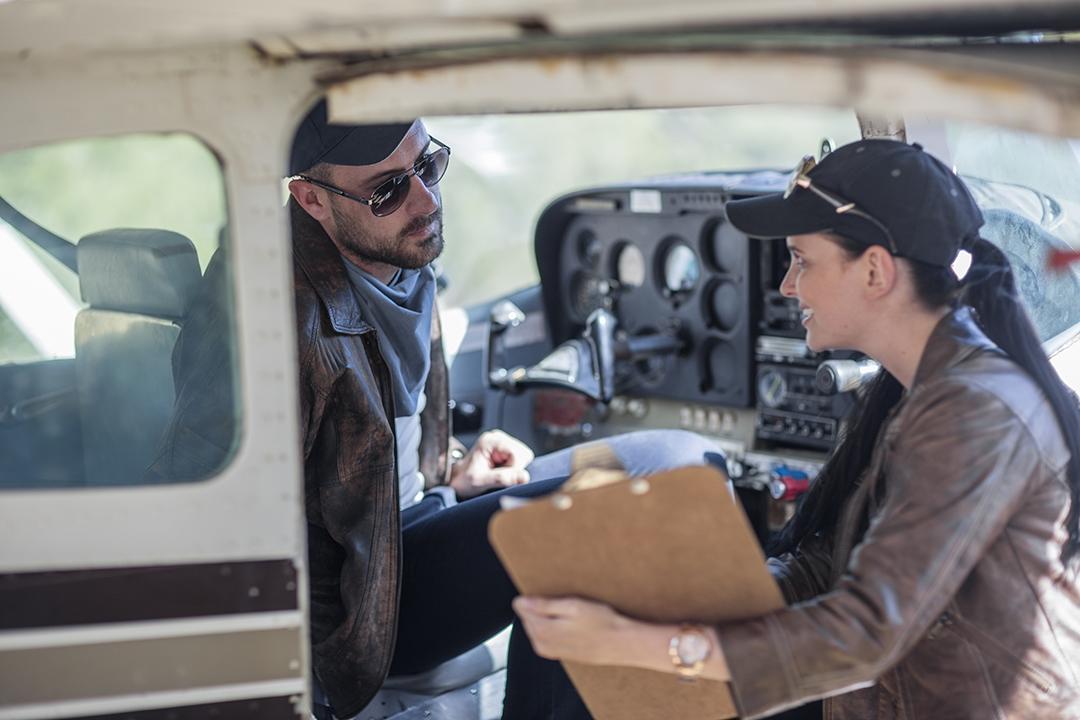
Both Part 61 and Part 141 training programs lead to identical private pilot privileges. The difference lies in structure, flexibility, and sometimes minimum hours.
Part 61 training:
-
Flexible, instructor-driven syllabus
-
FAA minimum: 40 hours total flight time
-
Training pace adapts to your schedule
-
Ideal for part-time students or those with irregular availability
-
Common at independent flight schools and with freelance CFIs
Part 141 training:
-
FAA-approved, formally structured courses
-
Specific syllabi with mandatory stage checks
-
Minimum hours may reduce to 35 for airplane single-engine land if all requirements are met
-
Often used by full-time students and career-oriented programs
-
May qualify for VA funding
Which should you choose?
Consider your circumstances:
-
Budget constraints favor Part 61’s pay-as-you-go flexibility
-
Irregular work schedules align better with Part 61
-
Career-track pilots benefit from Part 141’s structured approach
-
Both paths typically result in 60–75 hours logged before the checkride
The certificate you earn is identical regardless of training path. Choose based on your schedule, learning style, and career goals.
Knowledge Test: Prerequisites and Process
Before sitting for the FAA knowledge test, you’ll need specific documentation and credentials in place.
Prerequisites:
-
Obtain an FAA Tracking Number (FTN) through the IACRA system (required since early 2020s)
-
Valid government-issued photo ID showing signature, date of birth, and address (driver’s license, passport, military ID, or permanent resident card)
-
Minors may need parent/guardian verification
Authorization documents (bring one):
-
Logbook endorsement from an authorized instructor
-
Graduation certificate from an approved private pilot course or FAA-approved ground school
-
Certificate from a training center certificated under Part 142
Test logistics:
-
Schedule with an FAA-authorized testing center (PSI is most common)
-
Fee: approximately $150–175
-
Duration: up to 2.5 hours
-
60 questions, 70% passing score
-
Results provided immediately via Airman Knowledge Test Report
Retest rules:
-
30-day waiting period after failure, unless your instructor provides additional training and endorsement
-
Must bring previous AKTR to retake
-
First-time pass rates run about 85% among well-prepared students using quality study materials
Practical Test (Checkride) Requirements

The practical test is your final step to earning the private pilot certificate. It combines an oral exam with a flight test, administered by a Designated Pilot Examiner (DPE).
Prerequisites before scheduling:
-
Completion of all required ground and flight training
-
Passing knowledge test score (AKTR valid within 24 months)
-
At least a student pilot certificate
-
Valid medical certificate or BasicMed compliance
-
Practical test endorsement from your flight instructor
Documents to bring:
-
Government-issued photo ID
-
Student (or higher) pilot certificate
-
Medical certificate or BasicMed documentation
-
Airman Knowledge Test Report
-
Logbook with all required endorsements
-
Training records if applicable
Aircraft requirements:
-
Airworthy aircraft of appropriate category and class
-
Current annual inspection (and 100-hour if used for hire)
-
Complete maintenance logs
-
Airworthiness certificate, registration, weight and balance data
-
POH/AFM on board
-
VFR-required equipment operational
The checkride itself
-
Oral portion (1–2 hours): This is where they grill you on all the basics Federal Aviation Regulations, go over the latest weather forecast for your long-haul flight, crunch some numbers on performance calculations, get to know your aircraft systems, and convince them you've done your homework on pre-flight checks.
-
Flight portion (1–1.5 hours): Next up, you get to show them what you're made of a series of takeoffs, landings, navigating your way through the skies, handling emergencies, stalling out, and flying by the seat of your pants (or at least by the instruments on your panel).
Once you've passed, you'll get a temporary airman's license that's good for 120 days and your shiny new permanent certificate will show up in the mail a few weeks later.
Some stats to keep in mind failure rates are hovering around 25%, and most of the time it's the oral exam that does you in because you just didn't put in the time to study up on the Regs, latest weather patterns, or how to crunch those all important numbers.
Final Notes and Where to Find Official Requirements
Getting to this point means you'll first need to prove your medical fitness for flying, get a solid grasp of aeronautical know how under your belt, rack up some serious flight experience including some solo time and a few cross country flights and then, finally, pass both the written and practical tests.
This article's just a summary of what you need to know to get started. Want the real lowdown? That's in the latest FAA regulations and guidance where all the hard and fast rules are spelled out.
Consult these official sources:
-
14 CFR Part 61 (pilot certification rules)
-
14 CFR Part 91 (general operating and flight rules)
-
Private Pilot – Airplane Airman Certification Standards (ACS)
-
Pilot’s Handbook of Aeronautical Knowledge (PHAK)
-
Airplane Flying Handbook (AFH)
-
FAA.gov for current handbooks and advisory circulars
Requirements and guidance may change after 2026. Verify details with your flight instructor or local Flight Standards District Office (FSDO) before making training decisions.
Your next step: schedule a discovery flight and start the conversation with a CFI who can evaluate your goals and help you build a realistic training plan.
