Pilot Examination Resources for FAA Test Prep
Jun 01, 2026
Preparing for those all-important pilot exams, it's a delicate balancing act of finding the right mix of official rules, interactive ground schools and that perfect bit of targeted test prep software.
Whether you’re a first-time student pilot or adding an instrument rating to your certificate, the right pilot examination resources can mean the difference between passing on your first attempt and costly retakes.
Quick Start: How to Prepare for the FAA Knowledge Test Fast
The FAA Knowledge Test for the Private Pilot certificate is 65 multiple choice questions long, with 60 of those actually counting towards your score, and you need a minimum 70% to pass.
The written exam puts your aeronautical knowledge to the test, taking in weather, aircraft systems and all the rest and it's a must do before you even set foot in the aircraft for your checkride.
If you're preparing for the written exam private pilot students must pass before the checkride, the right study tools can make the process much easier.
Most students reckon it'll take at least 20-40 hours of focused study to pass the Private Pilot knowledge test, although the time it takes can vary wildly depending on how you approach the prep work.
The good news is that with the right pilot exam tools, you can have this done in as little as 7-10 days if you're willing to put in the effort.
7-10 Day Cram Plan:
-
Days 1-3: Read priority chapters from the Pilot’s Handbook of Aeronautical Knowledge (aerodynamics, weather, navigation)
-
Days 4-6: Complete 2-3 full-length timed practice tests daily
-
Days 7-10: Review all missed questions using FAA reference materials
This article covers the Private Pilot, Instrument Rating, and Commercial Pilot certificates. Test lengths differ: Private Pilot runs approximately 60 questions in 2.5 hours, while Commercial Pilot stretches to 100 questions over 3 hours.
Using curated pilot examination resources early can save money on flight training by reducing extra dual instruction hours when knowledge gaps surface in the airplane.
Understanding FAA Knowledge Tests (Private, Instrument, Commercial)
The FAA Knowledge Test is a computer based written test that's given to aspiring pilots before they even take to the skies. It's a written test designed to check your aeronautical smarts before you move on to the practical test.
The Federal Aviation Administration lays down the basic rules and that's what's used to create every exam question so using the official FAA guides can be seen as your go to study material.
The Different Formats Of FAA Knowledge Tests
-
Private Pilot Airplane (PAR): ~60 questions, 2.5 hours
-
Instrument Rating Airplane (IRA): ~60 questions, 2.5 hours
-
Commercial Pilot Airplane (CAX): 100 questions, 3 hours
The Airman Certification Standards (ACS) is the FAA document that outlines the knowledge and skills required for each pilot certificate, serving as a crucial study guide for PPL candidates. Every test question ties back to specific ACS knowledge areas.
The FAA written test differs from the oral portion of your checkride. Your written exam covers broad aeronautical knowledge, while the oral exam with a Designated Pilot Examiner tests your ability to explain concepts and apply them to real scenarios. Strong pilot examination resources prepare you for both.
When it comes to getting your training you've got a bit of choice either do your ground school anywhere and get your endorsement from any CFI you choose to work with (that's Part 61 training for you).
Alternatively you could go for a Part 141 flight school which is overseen by the FAA they have a set syllabus they follow and your ground school is built right into your training program.
Core FAA Study Resources for Aeronautical Knowledge

All FAA handbooks, including the Pilot’s Handbook of Aeronautical Knowledge and the Airplane Flying Handbook, are available as free PDF downloads from FAA.gov, serving as primary references for knowledge test questions. Start your pilot study here before spending money on supplementary materials.
Essential FAA Handbooks:
-
Pilot’s Handbook of Aeronautical Knowledge (PHAK): This thing covers all the basics from aerodynamics and weather to navigation and regulations, even aeromedical factors.
It's pretty much the first place you should be looking when it comes to getting a handle on the fundamentals.
-
Airplane Flying Handbook (AFH): Focuses on maneuvers and procedures
-
Instrument Flying Handbook (IFH): You'll want this one if you're looking to get an instrument rating
-
Aviation Weather Handbook: Deep dive into meteorology
-
FAR/AIM: The compilation of Federal Aviation Regulations and the Aeronautical Information Manual
The FAR/AIM contains all the Federal Aviation Regulations (and Parts 61 & 91 are a big deal for student pilots) and the Aeronautical Information Manual it's a pretty comprehensive resource that gets updated regularly. You can grab the latest edition from FAA.gov.
When you're studying for your private pilot's license, focus on the PHAK chapters on aerodynamics, aircraft systems, performance calculations, weather, navigation, and aeromedical factors.
The FAA is pretty big on using handbooks as your primary reference for knowledge test questions, so it's worth getting a good handle on these resources before you even start thinking about your practical training.
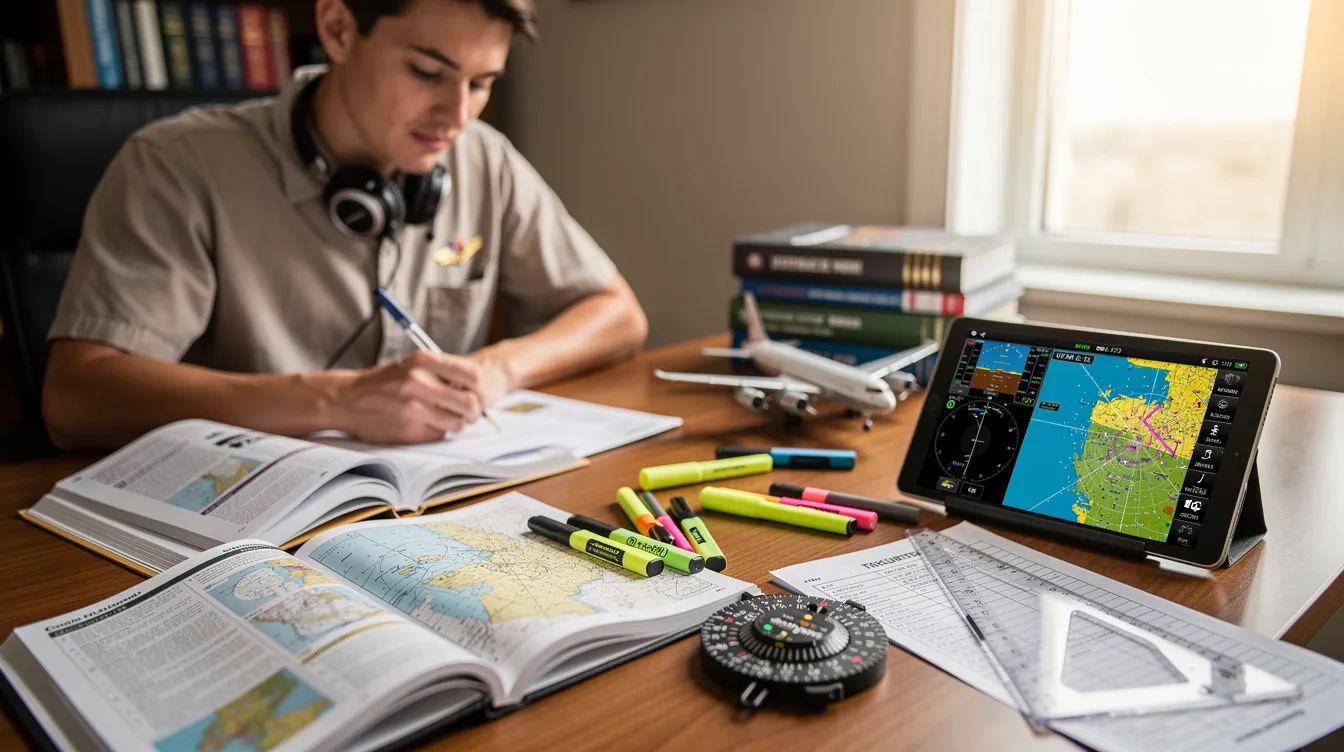
Consider printing key chapters for highlighting. Use colored tabs to mark frequently referenced sections for faster review.
Ground School Courses and Home Study Options
Ground school is structured aeronautical knowledge instruction that complements your flight training hours. You can complete it through in-person classes, online video courses, or self-paced home study using FAA materials.
Structured Ground School vs. Home Study:
|
Approach |
Pros |
Cons |
|---|---|---|
|
Online video courses |
Flexible schedule, progress tracking |
Requires self-discipline |
|
In-person classes |
Instructor access, accountability |
Fixed schedule, higher cost |
|
Home study course |
Lowest cost, own pace |
No built-in structure |
There are heaps of free online resources out there like the AOPA for example that can help you get ready for the Private Pilot knowledge test.
Even the FAA themselves have free handbooks that are really useful. and you can even get free student registration with the AOPA, giving you access to loads of other resources to help you study.
When you're looking for a ground school course, make sure it covers all the bases with video lessons on the whole ACS system, practice quizzes to help you keep on track, and even full-length practice exams that mirror what you'll actually be taking on the FAA knowledge tests.
Also, just double-check that it's up to date (2025 and 2026 material and all that) and that it's in line with current ACS standards.
Practice Tests, Question Banks, and Exam Simulators

Realistic practice tests are essential for passing your FAA knowledge test. They build familiarity with question style, timing pressure, and the computer-based testing format you’ll encounter at the PSI testing center.
FAA Knowledge Test Prep Question Banks provide free access to sample questions. These test questions come directly from the FAA’s historical question pools, giving you authentic preparation.
Students comparing study tools like the Gleim private pilot test prep pdf should look for resources that include realistic practice questions, clear explanations, and full-length exam simulations.
Effective Practice Exam Features:
-
60-100 question formats matching actual exam length
-
Performance analytics showing weak areas by topic
-
Question review mode with detailed explanations
-
Mobile-friendly access for studying anywhere
The thing is, if you don't really deeply understand how aviation works, your exam scores are going to suffer. So don't just memorize stuff, use it to understand the concepts that'll be on the exam.
Combining concept-focused practice exams with some question bank drilling will cover both understanding and recall that's the key.
Weather charts and METAR decoding, performance calculations, navigation logs, and regulations are all high-value practice areas focus on those ones first.
When you're getting started, do all your studying in untimed mode. Then, about 2-3 weeks before your test date, switch to timed exams and try to score at least 80% that's when you'll really know if you're ready for test day.
Scheduling and Taking Your FAA Knowledge Test
The FAA Knowledge Test must be taken at an official PSI testing center, and applicants can schedule their test online through the PSI website at faa.psiexams.com.
Scheduling Process
-
Create an account on PSI’s testing portal
-
Select your test code (PAR for Private Pilot Airplane, IRA for Instrument Rating)
-
Choose testing location and date
-
Pay the testing fee ($175-210)
To actually take the test, you'll need to turn up with a photo ID from the government and an endorsement from an instructor or you've done a home study course. If you've changed your name since your ID was made, you'll need to bring some proof of that change
Allowed Test Aids
-
Current FAA testing supplement
-
E6B flight computer (manual or electronic)
-
Plotter and basic calculator
-
Prohibited: phones, smartwatches, study materials
Arrive 30 minutes early for security procedures. You’ll receive scratch paper and immediate scoring after submitting your exam. Passing scores remain valid for 24 calendar months.
Common Test-Day Mistakes to Avoid
-
Forgetting your endorsement documentation
-
Not practicing with E6B under time pressure
-
Rushing through questions without using provided charts
Building an Effective Private Pilot Study Plan
Study schedules, structured study plans, regular flight instructor check-ins, and mock exams are critical for success in pilot examination preparation.
An 8-12 week study plan integrated with flight lessons minimizes total training costs.
A recommended study plan for the Private Pilot License (PPL) includes three phases: Foundations (first 4 weeks), Core Knowledge (weeks 5-10), and Checkride Prep (final 4 weeks).
Phase 1: Foundations (Weeks 1-4)
-
Read assigned PHAK chapters covering aerodynamics, systems, weather basics
-
Complete introductory ground school modules
-
Begin flashcard review of key terms
Phase 2: Core Knowledge (Weeks 5-8)
-
Advance through navigation, regulations, performance topics
-
Take weekly full-length practice exams
-
Review every missed question against FAA handbook references
Phase 3: Checkride Prep (Final Weeks)
-
Intensive practice test drilling
-
Oral exam preparation with your instructor
-
Final review of weak areas
Align ground topics with flight training study stalls and slow flight the week before practicing them in the airplane. Daily 30-60 minute sessions outperform weekend cramming for long-term retention.
Flashcards, Apps, and Digital Tools for Pilot Study
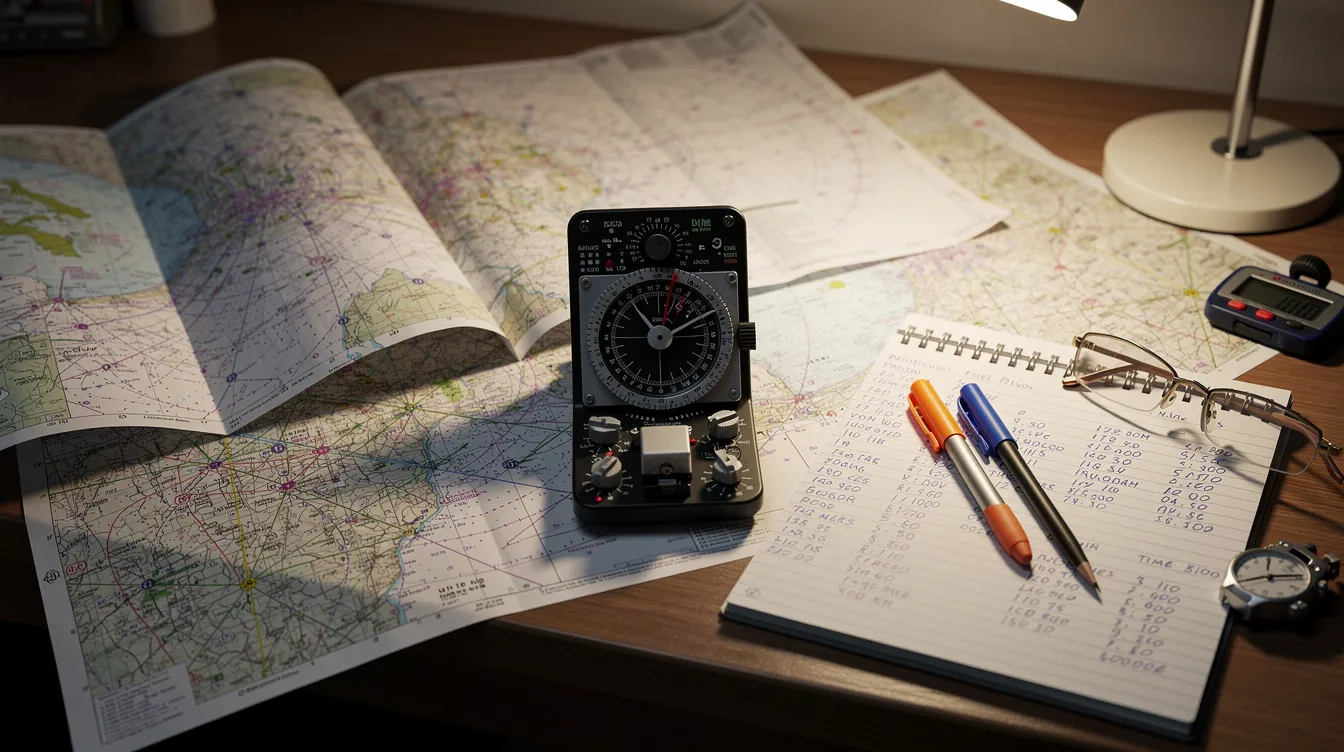
Micro-study tools help busy student pilots fit aeronautical knowledge into commutes and breaks. Top study materials for pilot license exams include official FAA handbooks and provide essential tools like digital charting tools.
Essential Digital Tools:
-
Flashcard apps: Spaced repetition for regulations, V-speeds, light gun signals
-
EFB apps: Real-time weather, charts, and flight planning
-
VOR trainers: Navigation simulators reinforcing radio navigation concepts
-
E6B simulators: Practice calculations without physical hardware
Build your own flashcards from any questions you get wrong in practice tests e.g. if you struggle with remote pilot airspace or instrument procedures, create a card that links the concept to its PHAK reference that way you can keep going back to it and really drill it home.
Most of these training apps have both a free version and a paid one. So start off with the free version and see whether their interface really is your cup of tea before you commit to a paid subscription.
Specialized Resources for the Instrument Rating Knowledge Test
The instrument rating demands deeper understanding of weather, instrument procedures and approach plates than private pilot preparation. Student pilots pursuing IFR certification need targeted pilot examination resources.
Key Instrument-Specific References:
-
Instrument Flying Handbook (IFH)
-
Instrument Procedures Handbook
-
IFR sections of the AIM
Students usually struggle with things like making entry to a hold, and departure procedures, as well as getting your head around approach plates and don't even get me started on IFR alternate minimums.
But whereas with the private pilot's exam you can generally slap out a procedure from memory, instrument questions are such that you need to be able to recall this stuff at the drop of a hat under high pressure.
Try practising with EFB emulators or online versions of approach plate trainers. The more like real-world you can make your practice sessions, the better you'll do.
A dedicated 6 to 8 week study block that focuses exclusively on instrument aeronautical knowledge is going to serve you a lot better than trying to juggle that with commercial or multi-engine topics.
