How Many Hours Before Solo Flight? Student Pilot Guide
Aug 24, 2026
Ask any student pilot their most burning question, and it almost always comes back to this: how many hours before solo flight? The answer depends on far more than a number in your logbook. This guide breaks down realistic timelines, FAA requirements, the skills you actually need, and what solo day looks and feels like from start to finish.
Quick Answer: How Many Flight Hours Before Your First Solo?
For the most part, student pilots are ready for their first solo after around 10 to 30 flight hours - though 15-20 hours is a fairly standard target for students who can get in the air 2 or 3 times a week. Some students are ready to go after maybe 10 hours, while others will need 30-40 or more just because of the way things line up like bad weather, crazy airport connectivity or just having to wait too long for the next lesson.
A first solo means there's only one person on board, with no instructor hanging on for dear life, and student pilots can't carry passengers on that flight. For student pilots that means taking the plane out for a few laps in the local traffic pattern with a few takeoffs and landings while your instructor watches from the ground. The FAA doesn't care about how long the flight is or how many takeoffs & landings you do, but many schools still use three takeoffs and full-stop landings as the standard first-solo pattern exercise.
More importantly, the FAA sets no minimum number of flight hours before solo. Under 14 CFR § 61.87, it's all about whether you can demonstrate you're safe & sound enough to be on your own. So before they'll sign off on a solo flight, your instructor needs to know you've done the knowledge test, you're proficient in the basics and have got the right stamp in your logbook to show you've got the skills.
How often you fly can really speed up or slow down the whole process. If you can get in the air regularly you'll pick up your skills fast & get flying sooner. On the other hand, if you've got big gaps between lessons, you may need a few hours of catch-up not to chase speed, but to rebuild the consistency needed to fly safely, sometimes with a few lessons of refresher work before you're ready again.
FAA Requirements Before You Can Fly Solo
The central regulation is 14 CFR § 61.87, which spells out what a student pilot needs before taking the airplane up alone. That first solo is also a major step toward a pilot's license and, later, a private pilot certificate. There is no minimum number of hours written into federal law. Instead, the FAA requirements focus entirely on demonstrated competence.
Here are the core prerequisites:
-
A student pilot must obtain a student pilot certificate - this is your legal authorization to receive flight training and eventually solo.
-
Hold at least a third-class FAA medical certificate (or equivalent privileges via BasicMed if applicable). A valid medical certificate is required for solo flight.
-
Receive ground and flight training in the make and model of aircraft to be flown.
-
Pass a pre solo written knowledge test covering relevant regulations, airspace rules, and the characteristics of your specific aircraft type.
-
A solo endorsement from an instructor is required for solo flights. This instructor endorsement must be current within 90 calendar days and endorsements must be for the specific aircraft type used, and it does not allow a student pilot to carry passengers.
Under Part 141 programs, the training syllabus is more structured. Students must complete defined stage checks before a chief instructor or check instructor approves the solo endorsement. Even so, Part 141 still imposes no federal minimum solo hour count. The check ride comes later, after training toward the certificate is complete.
Separate, additional instructor endorsements are required later for solo cross country flights, night solo, or solo in other aircraft makes and models.
Skill Checklist: What You Must Be Able to Do Before First Solo
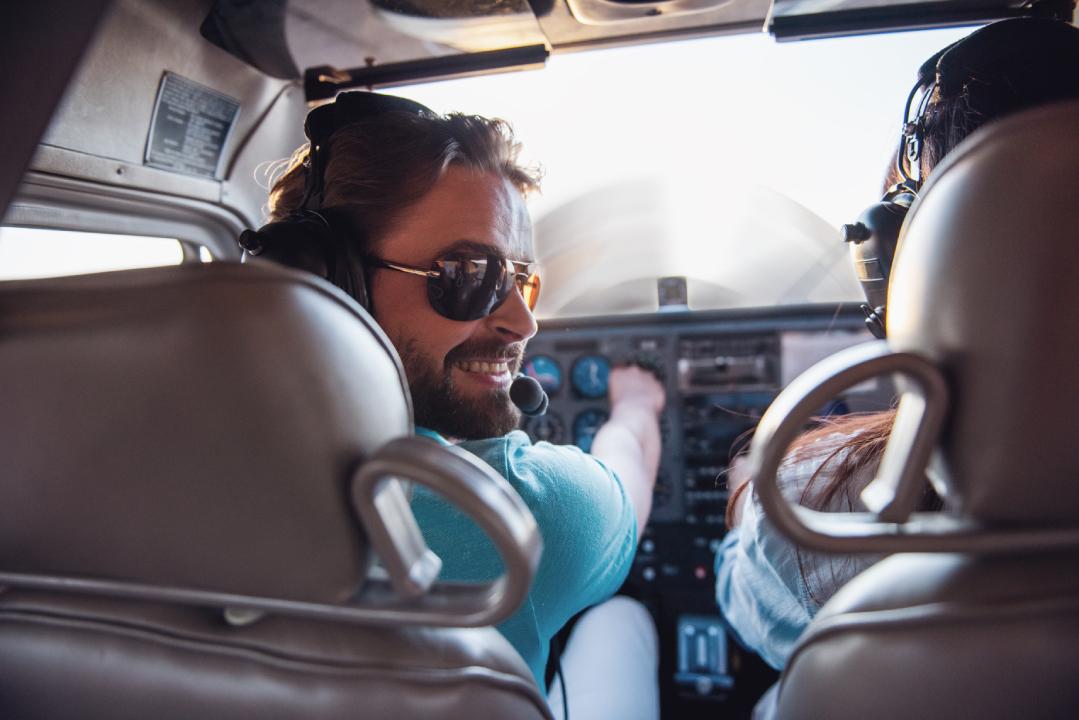
Before you'll be cleared to take on your first solo flight, your flight instructor will want to see that you've got a reliable track record of performing consistently well in key areas. Think of these as your solo-readiness check points and if you're not hitting them, you're not ready to go it alone yet. Consistent performance in these areas is the foundation of a successful solo flight:
Mastering the Plane
-
Can you hold a steady course, altitude and airspeed by yourself - no more constant instructor prodding, please?
-
Basic flight maneuvers are the core control skills your instructor expects you to handle consistently.
-
How's your coordination in turns? Can you get the ball to stay happily in the middle? Steep turns, in particular, are a maneuver some students need extra practice to master before soloing.
-
Takeoffs and landings - normal, soft-field and short-field in the given aircraft and runway conditions - they need to be rock solid.
Hands-on experience in the aircraft matters more than simply hearing the concepts explained on the ground.
Pattern Practice
-
are you comfortable flying a stable circuit, keeping correct space and consistent heights?
-
Can you hit final-approach speed within about 5 knots either way of target?
-
You should be able to line up with the centerline, sort out crosswind issues and reliably land with the right attitude - many students need dedicated landing practice before their instructor will let them solo, and this is the bit that will take most of their time.
As a rough guide for how many landings students complete before solo, a common range is around 40 to 100 rather than any fixed rule.
What to Do in an Emergency
-
can you spot when you're about to stall - and recover from it, both on power and off?
-
How would you handle an engine failure in the air? Get down to best glide speed, pick a landing spot and set yourself up for a power-off approach?
-
Can you start to troubleshoot simple problems that might pop up in flight?
Talking to Towers
-
Are your radio communications solid, and do you know how procedures differ at towered versus non-towered airports?
-
Can you read back clearances and instructions without messing them up, including when talking with air traffic control from a towered field?
-
Keep an ear on the radio for other traffic - you should be able to work out where they are just from the calls coming in.
At towered airports, solo students should be comfortable stating their status if needed and asking for help when unsure.
And how about a checklist for before every flight? make sure you're using one by yourself before you expect your instructor to sign you off for solo.
How Many Hours Before Solo? Factors That Change the Number
Most students solo between 10 and 30 hours, but the actual number for any individual is likely to be all over the place, with the exact number depending on a whole bunch of variables beyond just raw flight hours. Getting a handle on these factors can help you set more realistic expectations.
Training frequency
-
Students who fly 3-4 times a week after they started lessons tend to do okay, because they retain more from one session to the next, keep making progress, and usually solo within 10-18 hours. Each lesson just picks up from where you left off the time before.
-
On the other hand, students who can only get to the airfield once every 2-3 weeks might end up needing 25-40+ hours before solo. That's because there's a lot of ground to cover with every new lesson and you spend the first part of every session trying to get your skills back up to speed after forgetting them.
The effect of training frequency continues well beyond first solo. Pilots building professional experience often ask: how long does it take to get 1000 flight hours? The answer depends largely on how many hours they can consistently log each month.
Training environment
-
Flying out of a busy airport with all the trappings of a big city (towered airfield, Class B or C airspace) takes longer to get used to. Not just because of the traffic, but because towered airports demand stronger radio work with air traffic control and more planning. And if you're flying out of a major hub, you might encounter a few unexpected delays that just eat into your flying time.
-
On the other hand, flying out of a smaller airport with a long runway and not a lot of traffic is usually a piece of cake. At a student's home airport, where the surroundings are familiar, first solo flights are usually easier to conduct in good weather. You can check in online, sort out any last-minute details and get on with your flying.
Aircraft type and complexity
-
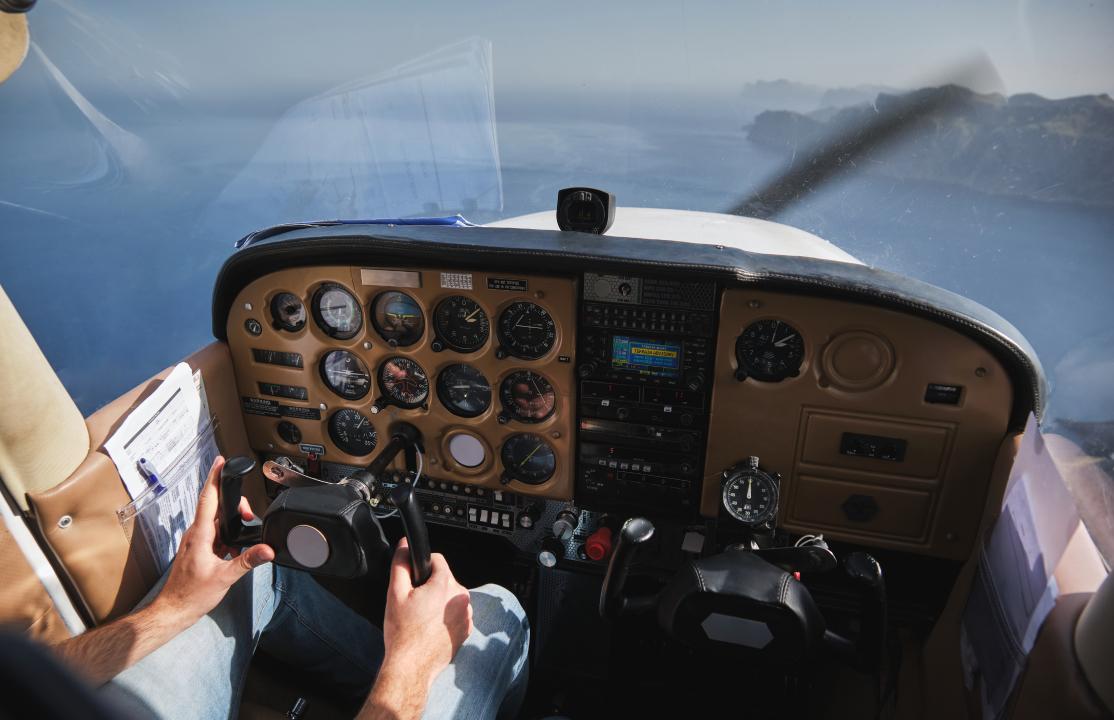
Simple two- or four-seat trainers (e.g., Cessna 152/172, Piper PA-28) are designed for easier learning and typically lead to earlier solos.
-
High-performance aircraft, tailwheel airplanes, or helicopters may demand additional hours. Robinson helicopter training programs, for instance, often expect roughly 20 hours dual before solo eligibility. More complex training paths can also continue beyond the private pilot certificate into an instrument rating.
Student background
-
If you've flown before, maybe glided or even done some simulator time, that prior flight experience can shorten the path to solo. It'll be like riding a bike all over again.
-
But if your flying is being held back by anxiety, perfectionism or long gaps between lessons - it's going to take longer, even if you've got all the skills in the world. Some students improve quickly after one lesson focused on a sticking point, while others need a few lessons on the same skill before it clicks.
The CFI's teaching style and how much of a risk-taker they are all play a part, of course, but most instructors will tend to lean on caution and consistency over speed.
Typical Training Timeline: From First Lesson to First Solo flight training
Many students reach their first solo after around 10 to 20 flight lessons, but exact solo time varies widely; for many, that happens within about 4 to 12 weeks of training a couple of times a week. Keep in mind these are just general guidelines, and a whole host of factors like the weather, your instructor's schedule, the airport itself, and your own progress will impact how long it takes to get there.
|
Training stage |
Approximate flight time |
Approximate lessons |
Typical timing |
Main focus |
|---|---|---|---|---|
|
Aircraft fundamentals |
0–5 hours |
1–4 |
Weeks 1–2 |
Preflight, taxi, climbs, turns, descents, and checklists |
|
Maneuvers and emergencies |
5–10 hours |
4–8 |
Weeks 2–4 |
Core flight maneuvers, slow flight, stalls, go-arounds, and emergency procedures |
|
Traffic-pattern training |
8–15 hours |
7–14 |
Weeks 3–7 |
Takeoffs, approaches, landings, radio calls, and crosswind correction |
|
Pre-solo refinement |
12–25+ hours |
10–20+ |
Weeks 4–12+ |
Consistency, judgment, knowledge test, and instructor endorsement |
|
First solo |
Varies |
Often lesson 10–20 |
Often within 4–12 weeks |
A short flight in the local traffic pattern |
Note that these stages kind of bleed into each other don't go adding them up as if they're separate blocks. The FAA doesn't actually set any minimum number of lessons or flight hours before you can go solo it's up to your instructor to decide when you're ready to fly solo.
First solo is only the beginning of the larger training path. This is commercial pilot requirements hours guide explains how later PIC, cross-country, night, and instrument experience builds toward professional certification.
Airport Environment, Final Approach, and Go-Around Skills
Solo flight is all about understanding your local airport and that knowledge is crucial for getting your instructor to sign off on you - which is a pretty big deal.
Airport Knowledge
-
Taxiing safely around the airport is all about reading the signs, the markings on the ground and making sure you know when to "hold short"
-
You need to know the layout of the runways, which way the pattern goes and how to get in and out smoothly
-
Airport apps can be a big help in checking the weather, NOTAMs and how busy the place is before you even fire up the engine.
Final Approach Proficiency
-
You need to get the glide slope right, using the VASI/PAPI or making a good visual aiming spot, and do it in a way that feels stable and under control.
-
The right setup is key: flaps, gear (if it retracts) and power are all sorted just before short final.
-
And then there's speed control, trim and dealing with crosswinds but most importantly, a good landing starts with a solid approach, every time.
Go-Around Decision Making
-
You need to be able to spot when an approach is going wrong: too fast, too high or low, off to one side or just plain not aligned right.
-
And when that happens, you need to be brave enough to just bale out and climb away trying to salvage a bad landing is a no win situation. Trying to force a poor approach to a landing is a bad idea on any flight, especially a first solo.
Radio and Situational Awareness
-
Keeping the tower or other pilots informed about your position at non-towered fields or at towered airports is really important
-
Staying aware of what's going on around you both on the radio and with your eyes is critical
Knowing the airport like the back of your hand cuts down on stress and workload on your first solo flight.
Emergency Procedures and Decision Making Before You Fly Solo
Solid emergency procedures and aeronautical decision-making can't be put off, they're deal-breakers and your instructor won't sign that solo endorsement until you can stay calm and get the basics right in a crisis.
Must-know emergency procedures:
-
If an engine fails while cruising or in the pattern the drill is to pitch for best glide, find a safe place to put down and run through those memory items, then set up a slow and steady approach with power off.
-
Stalling the aircraft and getting out of it with as little height to fall as possible is also a must.
-
No radio? You'd do well to learn the basics when at a towered field use your light gun to signal and approach in the standard way, at non-towered airfields stick to the pattern.
What your instructor is looking for in terms of decision making:
-
A willingness to keep a cool head and delay or cancel lessons if weather, or your own health and energy levels are a bit sketchy.
-
If crosswinds or visibility are right on the edge, instructors want to see you erring on the side of caution don't push your luck, because it can really extend your training.
-
Using checklists not skipping a step 'cos you think you can remember it and sticking to standard procedures helps you develop good habits for the long term.
Scenario-based training:
-
Instructors might hit you with a hypothetical situation like a GPS going out, unexpected traffic or a weather system moving in unexpectedly they're testing your reaction and your priorities.
-
Students get graded on how they handle the three key areas of flying, navigating and communication in a crisis situation.
These skills are a major factor in determining how many hours you'll need before you're ready to fly solo. Strong aeronautical decision-making and emergency procedures can cut your training time down but poor decision-making will make your instructor keep pushing you.
