Tally Ho, Fellow Flight Nerds!
Aircraft engines are the unsung heroes of flight, converting chemical energy into mechanical energy to create the thrust that keeps airplanes soaring. For small aircraft, engines must balance power, efficiency, and reliability, often relying on either reciprocating or turbine designs. This article breaks down how engines work, the types used in aviation, and the key differences between reciprocating and turbine engines.
What Engines Do: Powering Flight
The primary role of an aircraft engine, or powerplant, is to produce the energy needed to turn a propeller or generate thrust. Beyond propulsion, engines also drive essential systems, including electrical power generation, instrument vacuum sources, and heating systems in many single-engine airplanes. Without the engine, an aircraft would be grounded—literally.
Reciprocating Engines: Time-Tested and Trusted
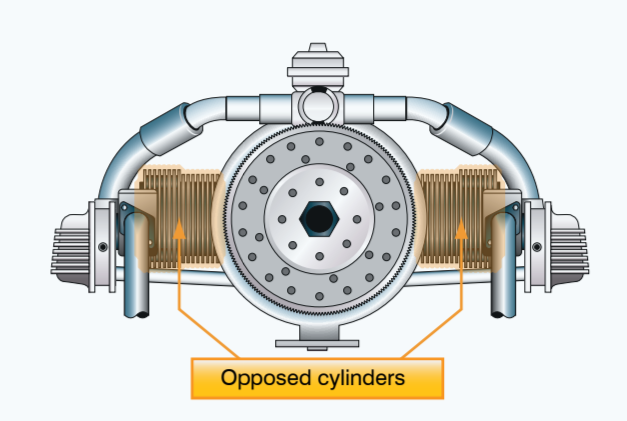
Reciprocating engines, named for the back-and-forth motion of their pistons, are the workhorses of small aircraft. These engines operate by igniting a fuel-air mixture within cylinders, where pistons convert linear motion into the rotary motion of a crankshaft. They come in two primary designs:
- Spark Ignition Engines: These engines use spark plugs to ignite a pre-mixed fuel-air mixture. They are widely used in general aviation due to their reliability and simplicity.
- Compression Ignition Engines: Known as diesel or jet-fueled piston engines, these rely on compressing air within the cylinder to ignite the fuel. They are more fuel-efficient and use widely available diesel or jet fuel, but they are less common in light aircraft.
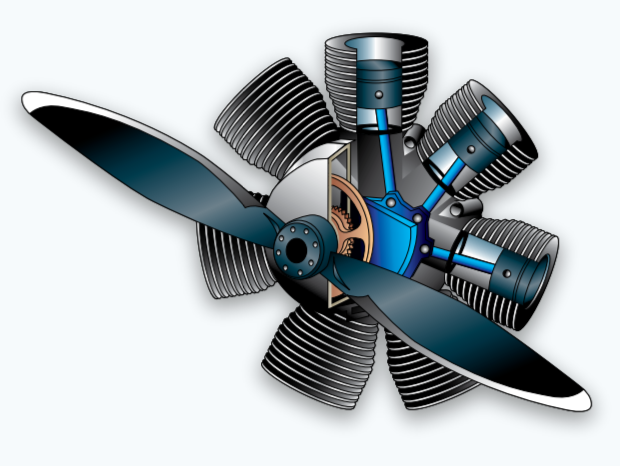
Key classifications for reciprocating engines include:
- Cylinder Arrangement: Radial, in-line, V-type, or horizontally opposed. Horizontally opposed engines are the most common in small aircraft due to their compact, lightweight design and efficient cooling.
- Operating Cycle: Two-stroke (used for some ultralights) or four-stroke (standard for most GA aircraft).
- Cooling Method: Air-cooled systems dominate, with liquid-cooled designs being less common.
Turbine Engines: Power and Efficiency at High Speeds
Turbine engines work by compressing air, mixing it with fuel, and igniting the mixture. The high-speed exhaust gases pass through turbines that sustain engine operation and generate thrust. Turbine engines are smoother and offer a higher power-to-weight ratio than reciprocating engines, making them suitable for more advanced small aircraft.
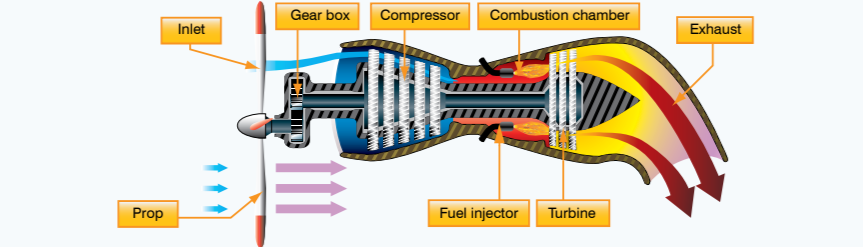
Types of turbine engines include:
- Turbojet: Produces thrust entirely from exhaust gases. Rarely used in small aircraft due to high fuel consumption and limited efficiency at low speeds.
- Turboprop: Combines a turbine engine with a propeller, achieving efficiency at moderate speeds and altitudes, making it ideal for smaller, high-performance aircraft.
- Turboshaft: Used primarily in helicopters, these engines drive a shaft rather than producing thrust directly.
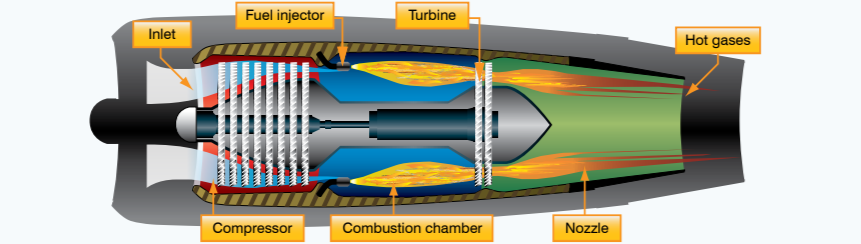
Reciprocating vs. Turbine Engines: Key Differences
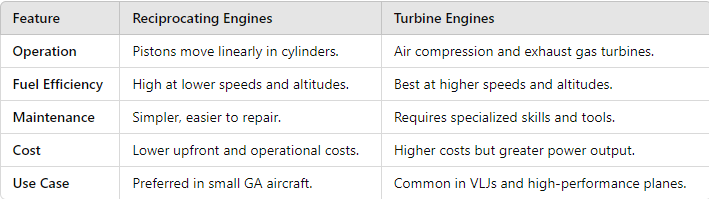
The Role of Engines in Thrust Generation
Engines paired with propellers generate thrust by converting engine power into forward motion, akin to how a wing generates lift. Turbine engines may provide thrust directly through exhaust or indirectly via propellers. Regardless of the type, the engine is vital in maintaining the balance between power, efficiency, and weight.
Conclusion
Small aircraft engines come in various designs, each suited to specific missions and performance needs. Whether it's the robust reciprocating engine or the high-performance turbine, these powerplants ensure pilots can take to the skies safely and efficiently. So next time you hear an engine hum, take a moment to appreciate the engineering marvel that keeps your wings aloft!
See You in the Hangar,
Ben Johnson, Founder,
Flight Nerd Air Force


Responses